


Trichocereus deserticolus subsp. fulvilanus cv. ‘896’ | ‘Cacto’ | Live plant
Trichocereus deserticolus subsp. fulvilanus cv. ‘896’ is one of two genetically distinct sister plants originally obtained from veteran German nurseryman Albert Plapp. The number was supplied by Plapp to distinguish the original seed-grown individual, which we now preserve clonally. Grey-green growth, dense fine reddish-brown spination and Chilean Leucostele deserticola genetics. Live plant.
Currently unavailable.
Product Features
Trichocereus deserticolus subsp. fulvilanus cv. ‘896’ is one of two genetically distinct sister plants we originally obtained from veteran German cactus nurseryman Albert Plapp. Both began as separate seed-grown individuals, with the numbers supplied by Plapp to distinguish the two specimens. We now preserve ‘896’ through vegetative propagation from its original mother plant.
This makes ‘896’ a genuine clonal cultivar designation in our collection. It does not identify a locality or field collection: it distinguishes this particular genotype from its sister plant ‘893’. Every plant we sell as ‘896’ descends vegetatively from that original numbered individual.
The sister plant is maintained independently as Trichocereus deserticolus subsp. fulvilanus cv. ‘893’. Although both came to us together from Albert Plapp and share the same taxonomic identity, they originated as different seedlings and are therefore genetically distinct. Maintaining the original numbers prevents two separate plants from gradually becoming confused as one clone.
‘896’ is a particularly attractive example of this uncommon Chilean lineage. It develops grey-green columnar stems armed with numerous fine reddish-brown to brown spines. Fresh armature can be especially colourful before ageing through softer brown, tan and greyish shades.
The spination becomes increasingly impressive as the plant matures. Successive areoles build up a dense network of relatively fine armature while the subdued grey-green epidermis remains visible beneath it, producing a combination of colour and texture quite different from the heavier, coarser spines of many giant Andean Trichocereus.
The wider deserticolus/fulvilanus group develops upright to branching stems adapted to some of the driest landscapes in South America. Mature plants can eventually become substantial columns, with strongly defined ribs and dense protective spination reflecting their extremely arid Chilean origins.
Flowers are white to whitish and comparatively compact for a columnar Trichocereus. Its sister cultivar ‘893’ has already flowered for us, allowing us to document the mature floral characteristics of this Plapp material in our cactus flower gallery.
Our Trichocereus deserticolus species archive brings together the different pure species material, cultivars and related genetics we maintain within this Chilean group.
Albert Plapp operated a specialist German cactus nursery and maintained an extensive collection of cacti, succulents and other botanical rarities over many years. Kakteengärtnerei Plapp continues today. The provenance of ‘893’ and ‘896’ therefore traces through an established European specialist collection rather than anonymous commercial material.
That European nursery history should not be confused with the geographic origin of the genetics. Deserticolus/fulvilanus is Chilean botanical material, so ‘896’ belongs within our Trichocereus Genetics from South America collection rather than being classified as European genetics simply because our mother plant came through a German nursery.
The ‘893’ and ‘896’ sister plants
The two Plapp plants are especially useful because they preserve two separate genetic individuals from the same historic source. Their shared provenance does not make them clones of one another.
Both began as seed-grown plants. Sexual reproduction produces a new genotype in every seed, so ‘893’ and ‘896’ are sisters rather than duplicates. Once we began propagating each vegetatively, their respective numbers became stable identifiers for the two clonal lines.
This is why retaining cv. ‘896’ is useful. The designation now refers to one consistently reproduced genotype with a known propagation history, rather than a number applied indiscriminately to an entire seed batch.
The same principle applies to ‘893’. Cuttings from ‘893’ remain that clone; cuttings from ‘896’ remain ‘896’. Seed produced by either plant would create a new sexual generation and would not itself be either cultivar.
Keeping both lines separately labelled also allows mature differences in growth, spination, flowering and vigour to be documented without losing track of which original Plapp plant produced them.
Taxonomic note
This Chilean group has accumulated a considerable number of names. Plants associated with fulvilanus have circulated as Trichocereus fulvilanus, Echinopsis fulvilana, Echinopsis deserticola var. fulvilana and Trichocereus deserticolus subsp. fulvilanus, among other combinations.
Current Kew taxonomy treats these plants within the accepted species Leucostele deserticola. Its native range extends through northern and central Chile, from Antofagasta southwards into Coquimbo, where it grows primarily in desert and dry shrubland.
Under that treatment, Trichocereus fulvilanus, Echinopsis fulvilana and Echinopsis deserticola var. fulvilana are included within the synonymy of Leucostele deserticola. The traditional fulvilanus identity nevertheless remains useful horticulturally for preserving the history attached to plants such as these.
We therefore retain Trichocereus deserticolus subsp. fulvilanus prominently in the catalogue while also recording the current accepted species epithet deserticola in our taxonomy.
The spelling change from deserticolus to deserticola reflects grammatical agreement with the feminine genus Leucostele; it does not indicate a different plant.
Our illustrated guide to Leucostele covers the wider modern treatment of the Chilean species historically cultivated under Trichocereus.
Clonal propagation
Our current ‘896’ plants are vegetative propagations from the original seed-grown mother plant. Each cutting therefore preserves the same genotype and remains genuine cv. ‘896’.
This is fundamentally different from a seedling descended from ‘896’. Sexual reproduction would combine its genetics with those of a pollen parent and produce a genetically new plant, even if that offspring strongly resembled its mother.
Vegetative propagation is especially useful with an old provenance plant such as this because it allows the exact individual supplied by Albert Plapp to remain available long after the original mother stem has been divided, propagated or replaced by younger growth.
The cultivar identity therefore depends upon the continuous propagation history, not simply appearance. Another fulvilanus which happens to resemble ‘896’ is not this cultivar unless it descends from the same numbered mother plant.
Cultivation
‘896’ responds well to the conditions we use for other arid Chilean Trichocereus/Leucostele: strong light, excellent airflow and a very freely draining substrate.
Water thoroughly during active warm-weather growth and then allow the substrate to dry substantially before watering again. This is a cactus adapted to extremely dry environments, so persistent moisture around the roots is considerably more dangerous than temporary drought.
Strong light promotes sturdy stems and the dense, colourful armature which makes mature fulvilanus so attractive. Plants moved from protected cultivation should nevertheless be acclimatised gradually before prolonged exposure to intense direct sunlight.
Feed moderately during active growth. Excessive feeding combined with insufficient light can encourage soft extension rather than the compact, strongly armed growth characteristic of well-grown plants.
Our cactus cold-hardiness reference currently places T. deserticolus and its fulvilanus material at approximately -7°C / 19.4°F. This is a comparative reference rather than a guaranteed minimum.
Cold tolerance depends on plant size, health, acclimatisation, duration of exposure, humidity and particularly substrate moisture. Reduce watering sharply as temperatures fall and avoid exposing the root system to prolonged cold while saturated.
Cuttings should be allowed to callus thoroughly before rooting. Warm active-growing conditions are preferable for establishment, after which rooted ‘896’ can be treated much like our other Chilean Leucostele genetics.
About Trichocereus
‘896’ is exactly the sort of cultivated genetic line worth keeping properly documented. It combines an uncommon Chilean cactus, a traceable Albert Plapp source, an original numbered seed-grown individual, a genetically distinct sister cultivar and a continuous clonal propagation history.
Preserving those details means the plant remains considerably more informative than an anonymous deserticolus/fulvilanus. It also allows the relationship with ‘893’ to remain clear without pretending that the two sisters are genetically identical.
Explore our complete Trichocereus collection for the wider range of species, locality material, documented accessions, cultivars, clones and hybrids maintained in the nursery.
Unless stated otherwise, plants ship bare-root to supported EU destinations. Outside our delivery area? Ask about seed-only orders or join our email list for shipping updates. Photos are representative unless an exact specimen is specified; ask for current specimen photos. Some plants are cut to order where noted. Save 10-35% automatically on qualifying live plants, with bonus seeds and at least one bonus cactus in every live plant order.
Product Details
| Product Type | |
|---|---|
| Amount | 1 rooted plant |
| Size | ~4 cm diameter, ~14 cm tall |
| Common Name | |
| Family | |
| Genus | |
| Species | |
| Subspecies | |
| Clone/Variety/Cultivar | |
| Form | |
| Flower | |
| Collection |
Only logged in customers who have purchased this product may leave a review.
You May Also Appreciate
-
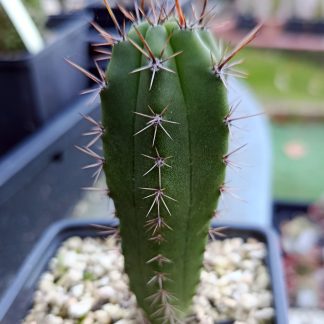

Trichocereus knuthianus | Live plant
€20.00 Add to basket -
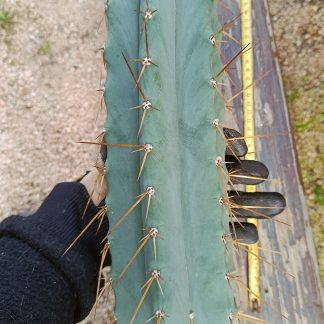
Trichocereus bridgesii cv. ‘Deutsche’ | Unrooted Cutting | Exact Specimen FCES0002
€66.00 Add to basket -

Trichocereus atacamensis subsp. pasacana ‘TB 1099.3’ | ‘Cardón Grande’ | Live plant
10% OFF until 30 Nov Original price was: €18.00.€16.20Current price is: €16.20. Add to basket -

Trichocereus bridgesii f. semi-monstrosa cv. ‘RAP’ | ‘Monstrose Bolivian Torch’ | Live plant
10% OFF until 30 Nov Original price was: €81.00.€72.90Current price is: €72.90. Add to basket -

Trichocereus cordobensis cv. ‘Helon’ | Australian Clone | Live plant
10% OFF until 30 Nov Original price was: €55.00.€49.50Current price is: €49.50. Add to basket -

Lophophora williamsii ‘RS 378’ | ‘Peyote’ | Live plant
€32.00 Add to basket -
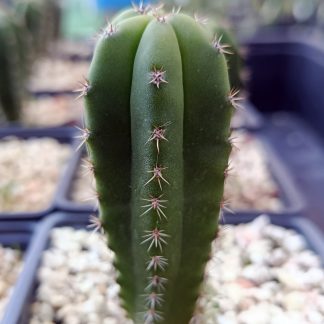
Trichocereus cordobensis | Live plant
€14.00 Add to basket -

Opuntia microdasys cv. ‘Rufida’ | ‘Mexican Bunny Ears Cactus’ | Live plant
€11.25 Add to basket -

Trichocereus rowleyi ‘P134’ (ex. var. pumila) | ‘Red Torch’ | Live plant
€18.00 Add to basket -

Trichocereus pachanoi cv. ‘Mujica’ | ‘San Pedro’ | Live plant
10% OFF until 30 Nov Original price was: €22.50.€20.25Current price is: €20.25. Add to basket -

Trichocereus faundezii ‘GM 1849’ | Live plant
From €21.00 Browse options This product has multiple variants. The options may be chosen on the product page -

Trichocereus atacamensis ‘TB 1320.2’ | ‘Cardón Grande’ | Live plant
€8.00 Add to basket
Reviews
There are no reviews yet