
Most Trichocereus pachanoi (San Pedro) grows in upright, ribbed columns. The plants here have taken rather different paths: crests, divided growing points, knobbly monstrose stems and patches of yellow or cream variegation. All were photographed at Freaky Cacti, including a few plants we no longer grow.
Two plants can produce similar distortions without being the same clone. The familiar abbreviations TPC (crested pachanoi), TPM (monstrose pachanoi) and TPMC (monstrose-crested pachanoi) describe how a plant grows, not its ancestry. We have kept the labels by which our individual accessions are known, including some older descriptive names.
Taxonomic note: we use Trichocereus pachanoi, the name familiar to most growers. Kew’s Plants of the World Online accepts Echinopsis pachanoi; other treatments have included it within Trichocereus macrogonus. Those differences do not settle the ancestry of individual cultivated clones. See our Trichocereus versus Echinopsis overview for the naming history.
Jump to: Mutation terminology · Crested forms · Monstrose forms · Monstrose crests · Variegated plants · Mutant hybrids · Cultivation & propagation
Crests, Monstrose Growth, Divided Apices & Variegation
Crested growth, often labelled cristata, begins when the growing point lengthens sideways into a ridge. It may develop as a flat fan, a rippling edge or a tightly folded mass. Some crests remain that way for years; others send out ordinary-looking columns which may themselves become distorted.
Monstrose growth is a looser term for persistent irregular development. Ribs can merge, fragment or swell into knobs, with growing points appearing in unexpected places. We use semi-monstrosa when a plant repeatedly switches between fairly normal and markedly distorted growth.
Polytomous growth describes an apex dividing into several growing points. Division into two is dichotomous. A cluster of growing heads can resemble a crest in a photograph, though the two forms develop differently. Inermis refers to absent or much-reduced spination, whether or not the stem is otherwise unusual.
Variegation produces contrasting green, yellow, cream or lime-green tissue, often because some areas contain less chlorophyll. The pattern may change from one cutting or branch to another, even on the same clone. Very pale growth can be weak enough to require grafting. We use combinations such as cristata variegata as growers’ descriptions, not formal botanical names.
The cause of a particular abnormal shoot is often impossible to determine from its appearance. Genetic changes, chimeric tissue and disturbances to normal development can produce similar results; damage or disease may sometimes imitate them.
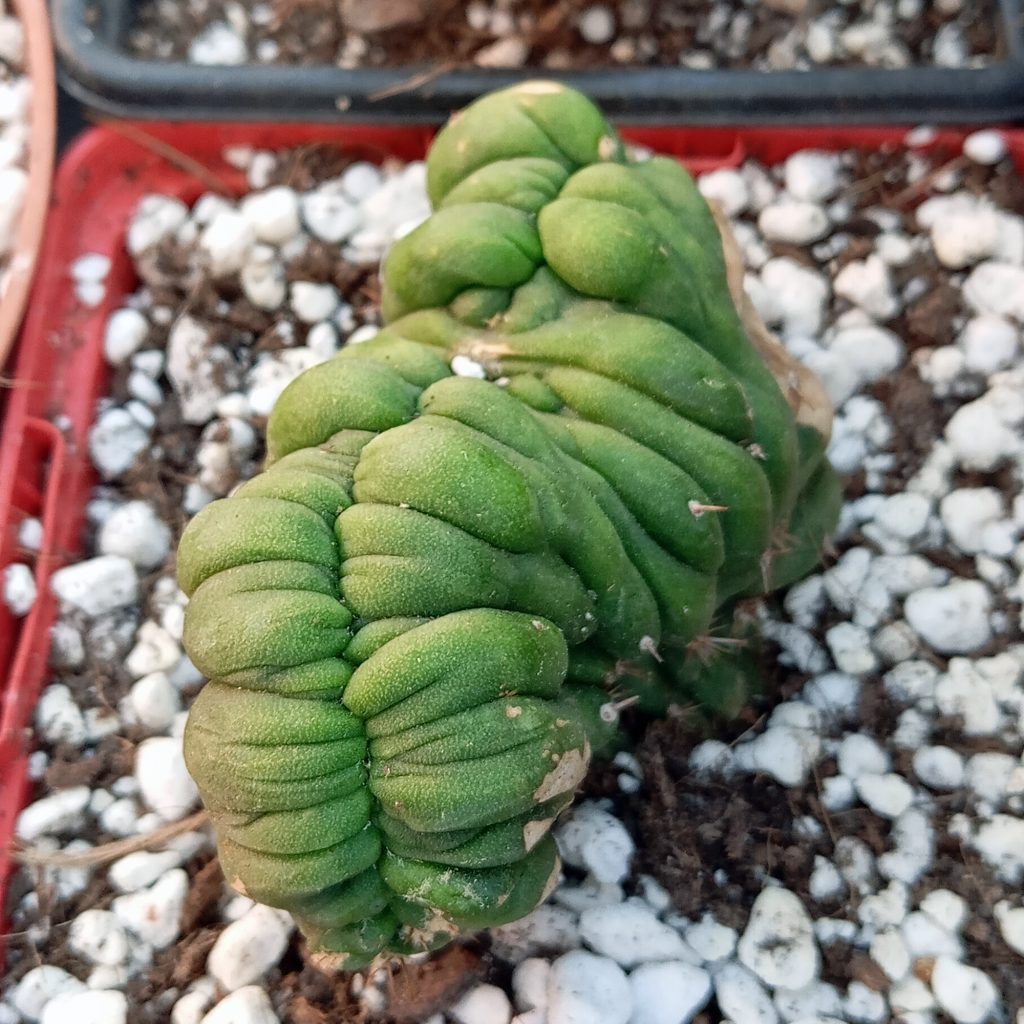
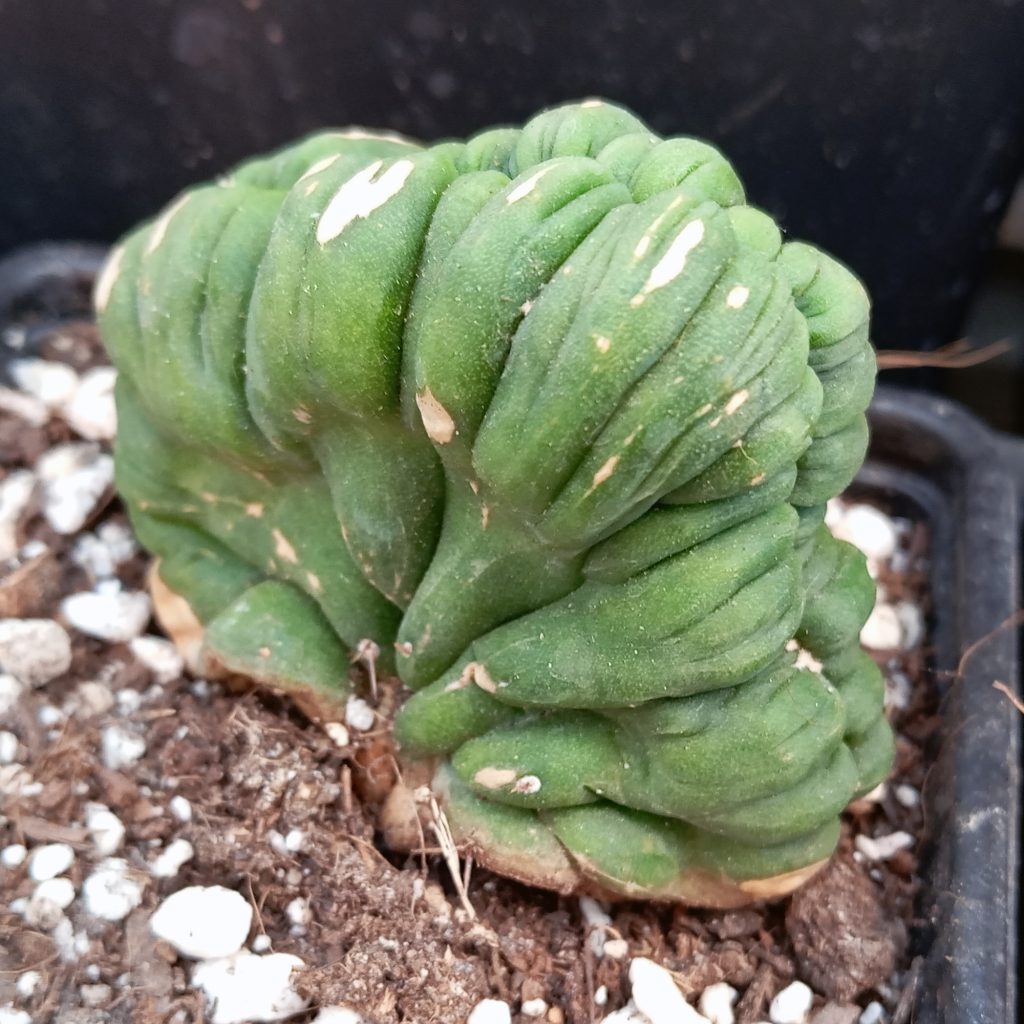
Trichocereus pachanoi f. cristata: Crested San Pedro
Our green crested T. pachanoi grows in rippling fans. As the edge lengthens, it folds back on itself, produces new lobes and occasionally develops short sections with recognisable ribs. The two photographs show different views of the same cultivated crest.


Nearly Spineless Crests & Other Low-Spined Forms
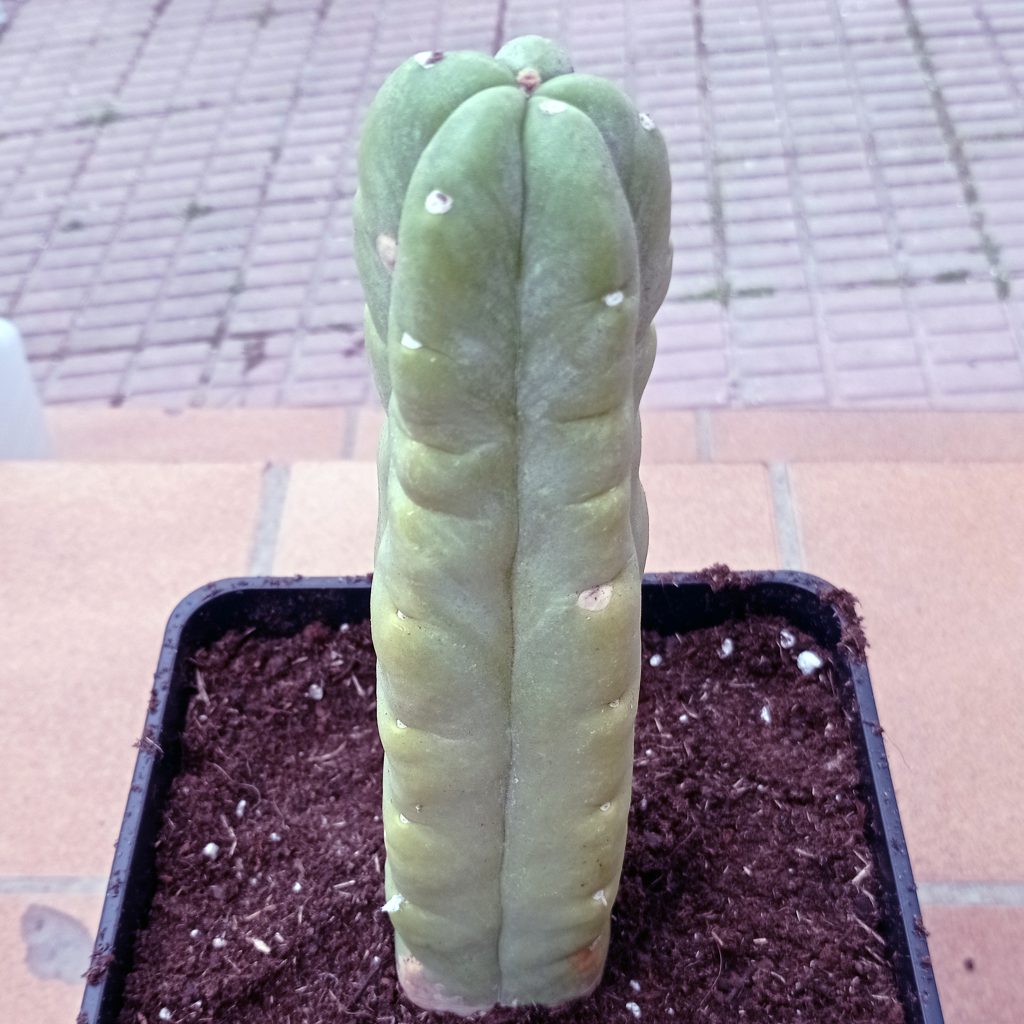
A second crest in our collection has very little visible spination and carries the label cristata inermis. The separate ‘TPI’ plant shown beside it has similarly reduced spination but remains largely upright. Reduced spination and cresting are separate characteristics.
Divided Growing Points
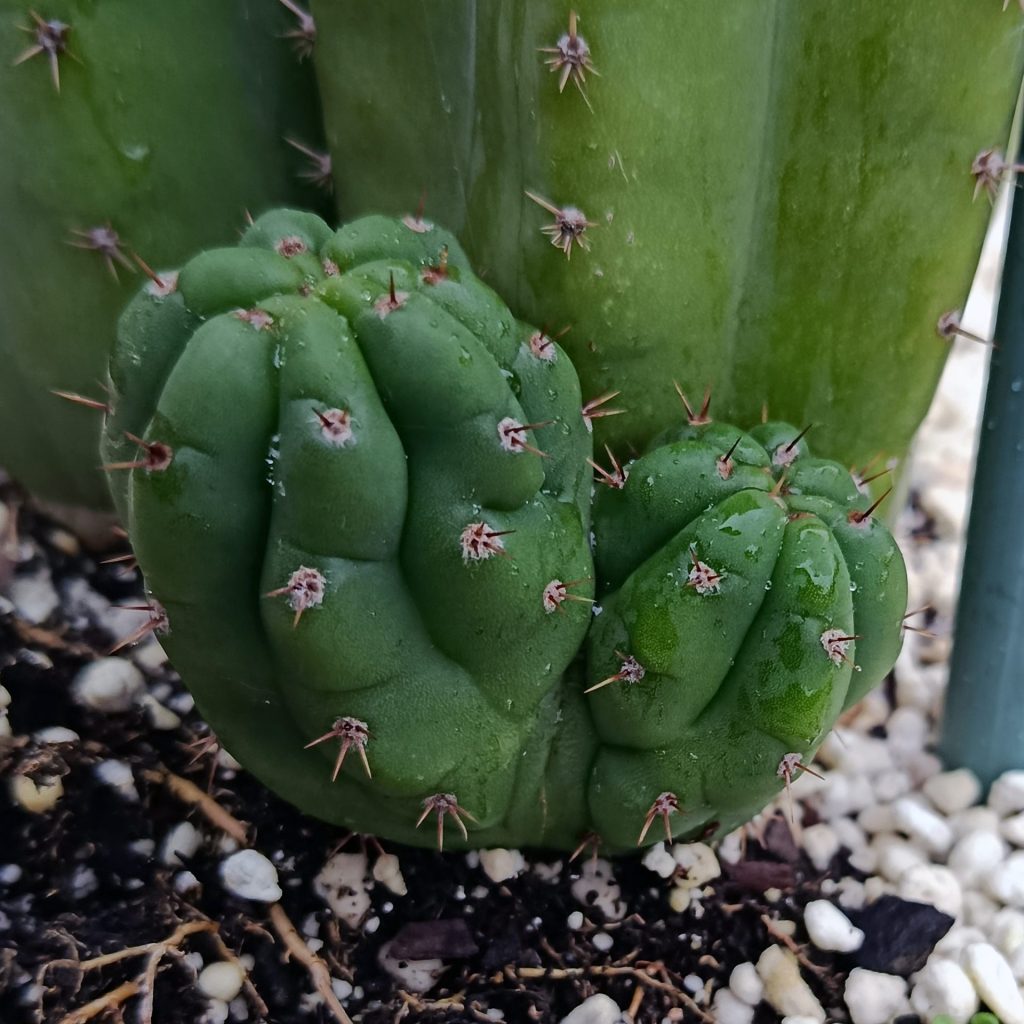
The divided basal shoot on ‘Juul’s Giant’ offers a useful contrast with our material labelled polytomica and cristata polytomica. In one case a growing point has divided; in another, several heads crowd together; in the last, division and cresting occur together.
Trichocereus pachanoi f. monstrosa: Monstrose & Semi-Monstrose Forms
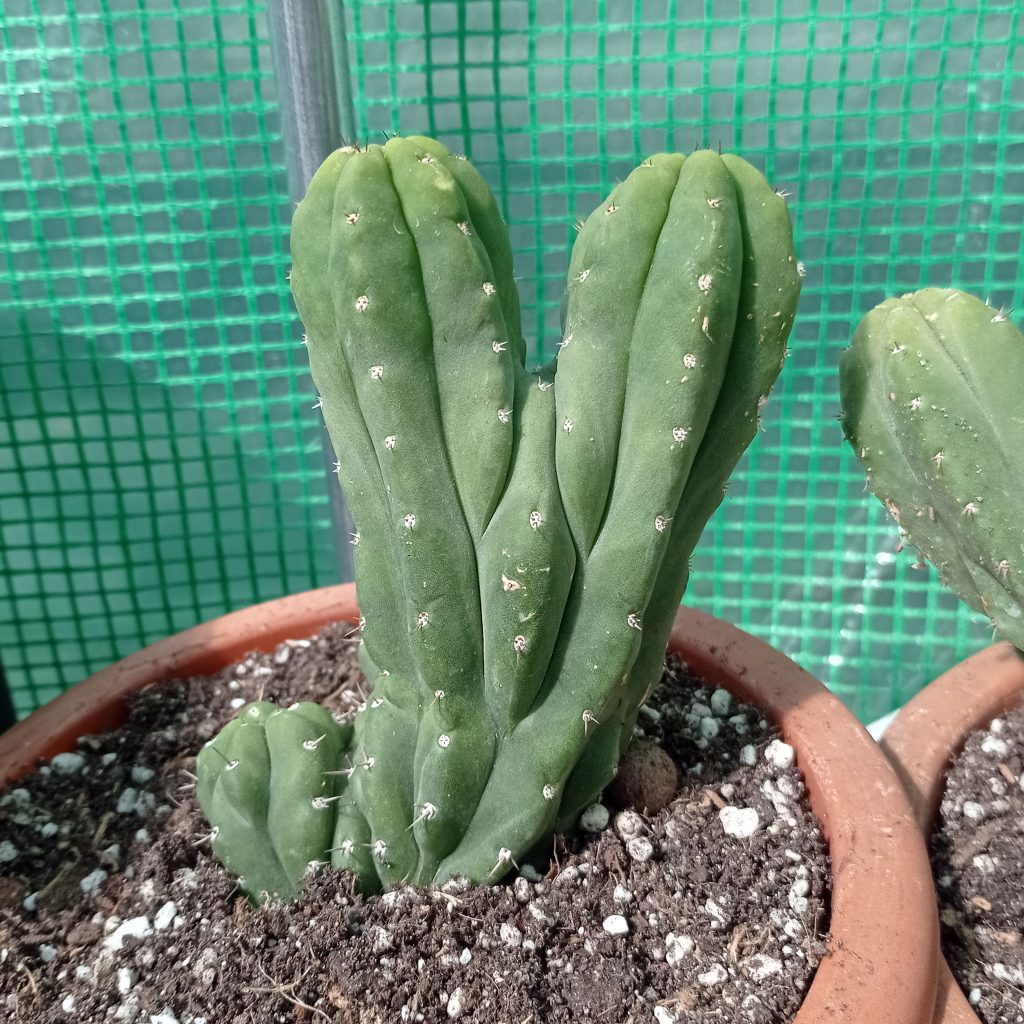
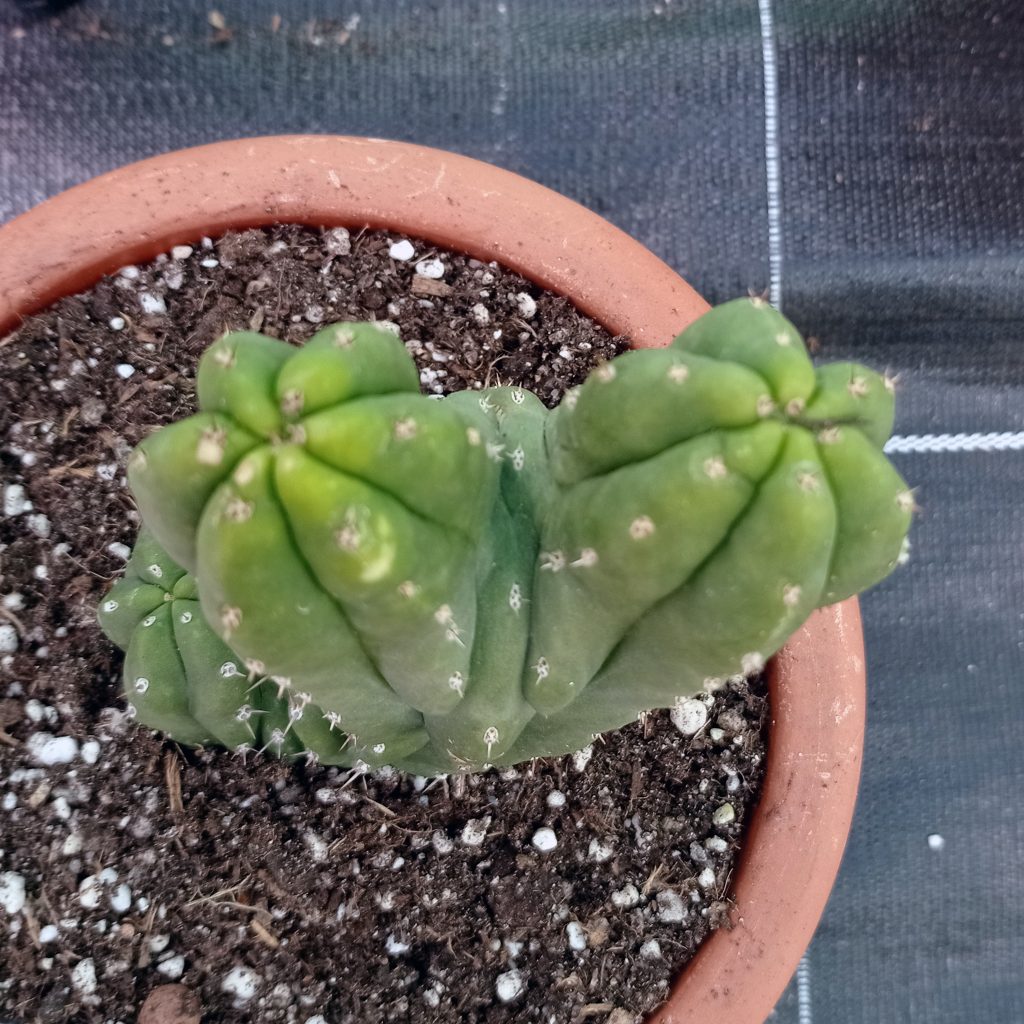
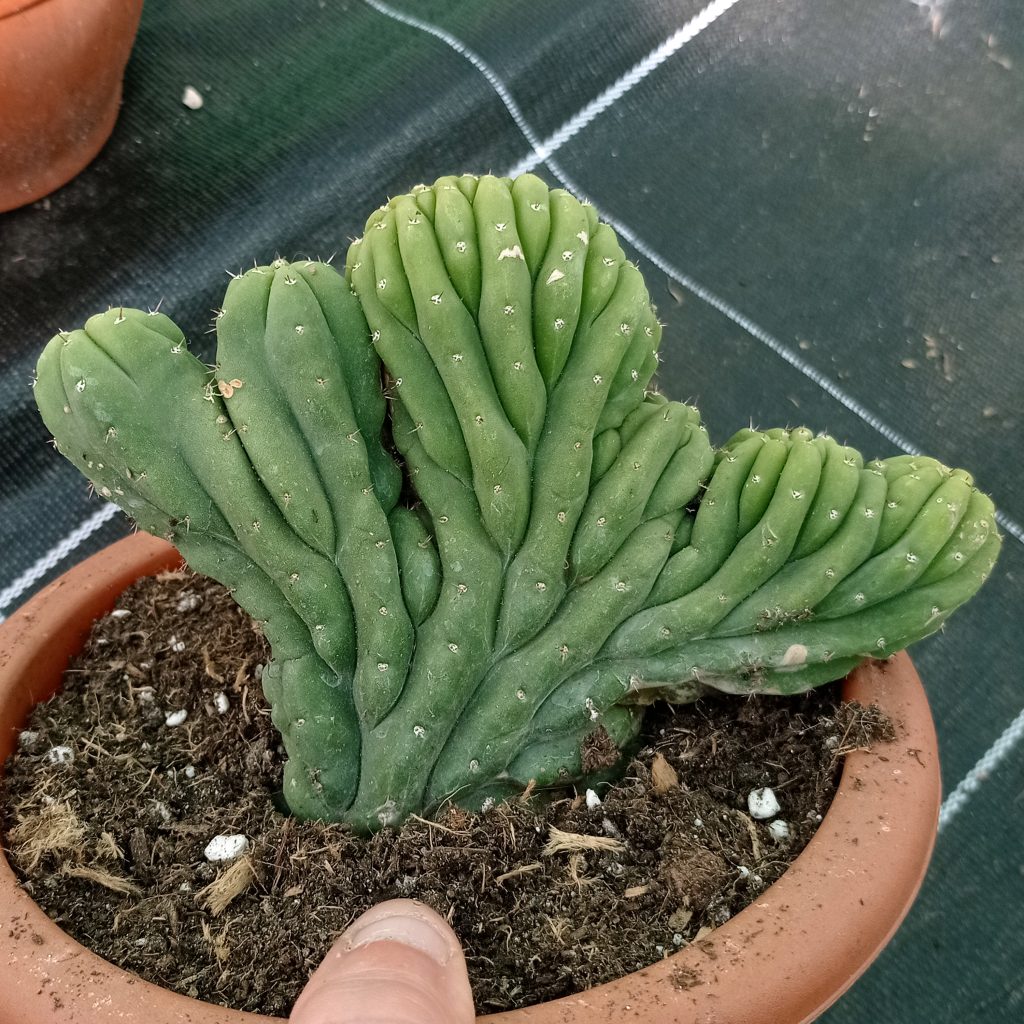
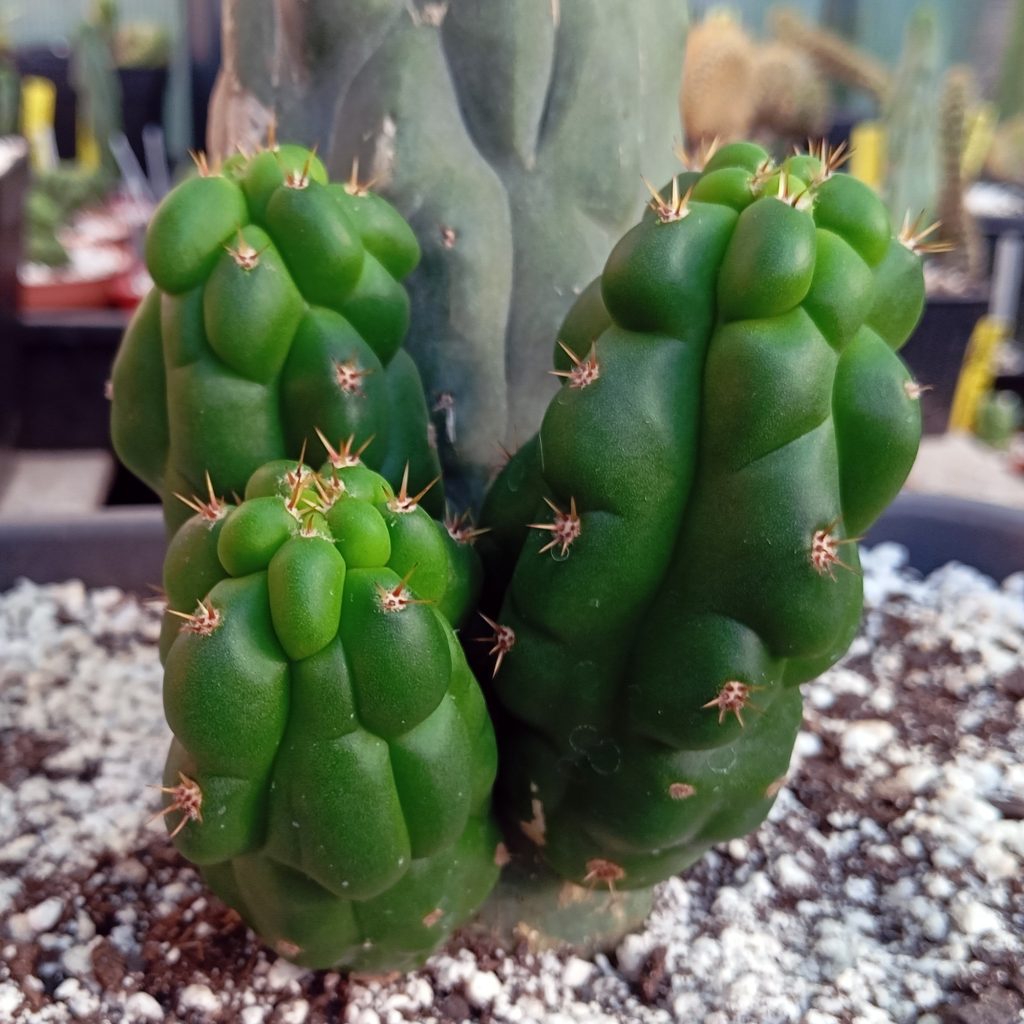
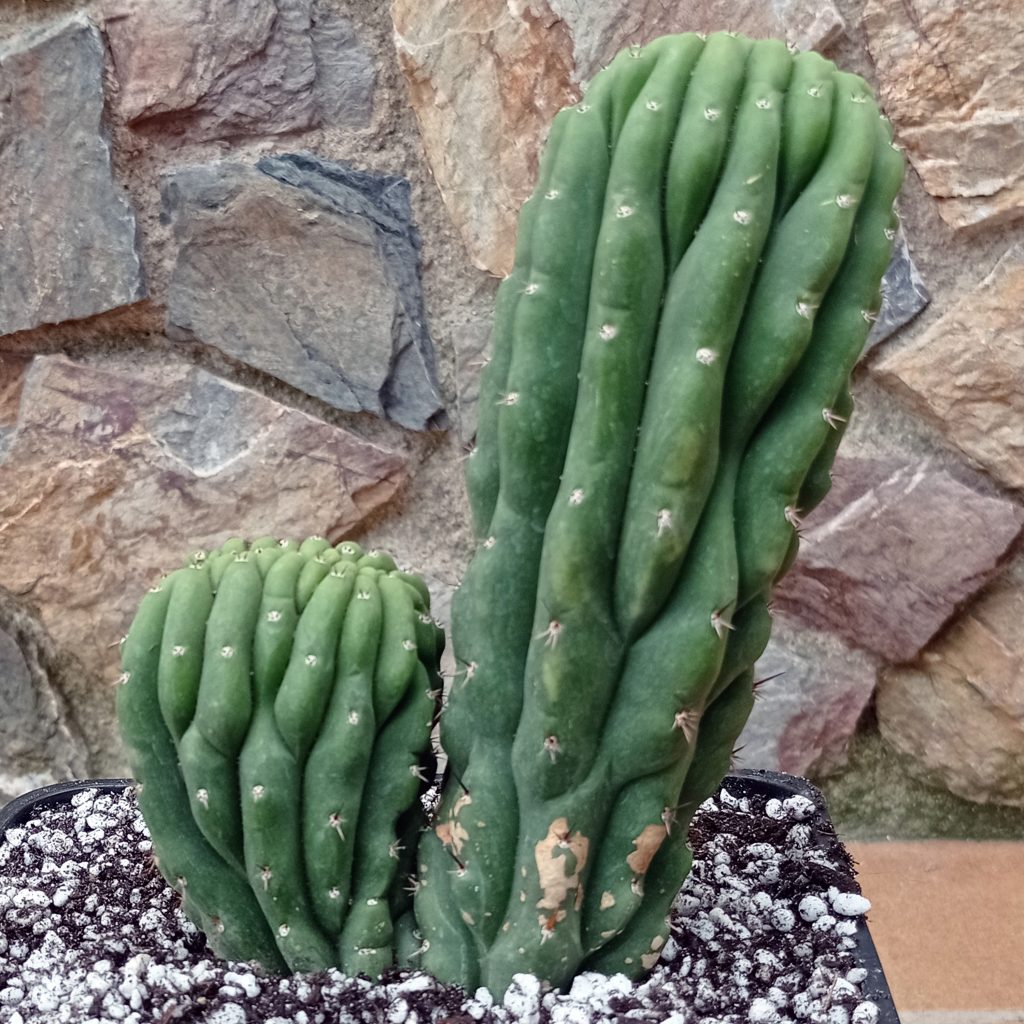
Monstrose T. pachanoi may develop swollen ridges, interrupted ribs, rounded knobs and crooked stems. The degree of distortion can change as a plant grows. Some produce quite ordinary columns for a while before the next shoot becomes conspicuously abnormal.
‘Altman’s TPM’ is a familiar American selection showing this variable habit. Our ‘TPC Revert’ tells a different story. It began as upright shoots emerging from crested material, but subsequent growth developed crowded rounded lobes, folded tips, irregular ribs and divided apices. We have kept the name because it records the line’s origin, even though the supposedly reverted shoots have proved anything but consistently normal.
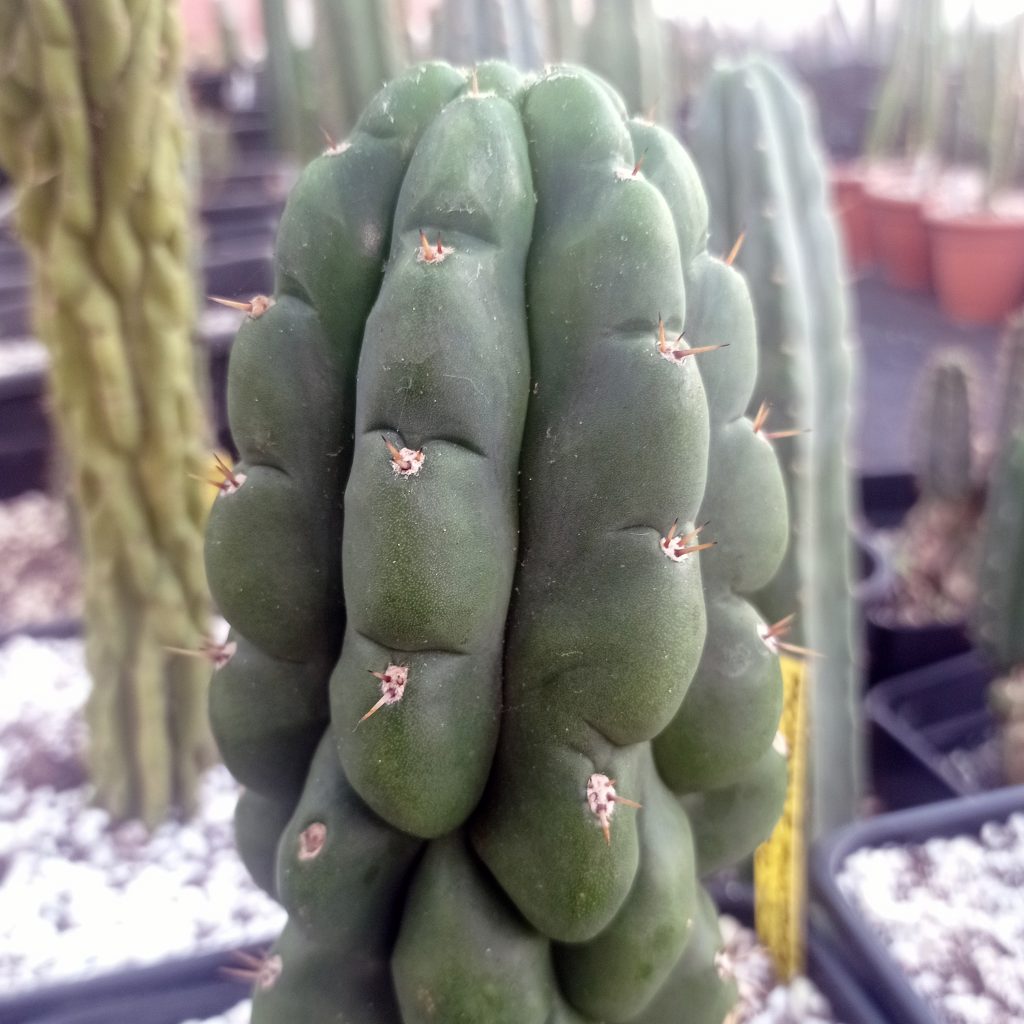

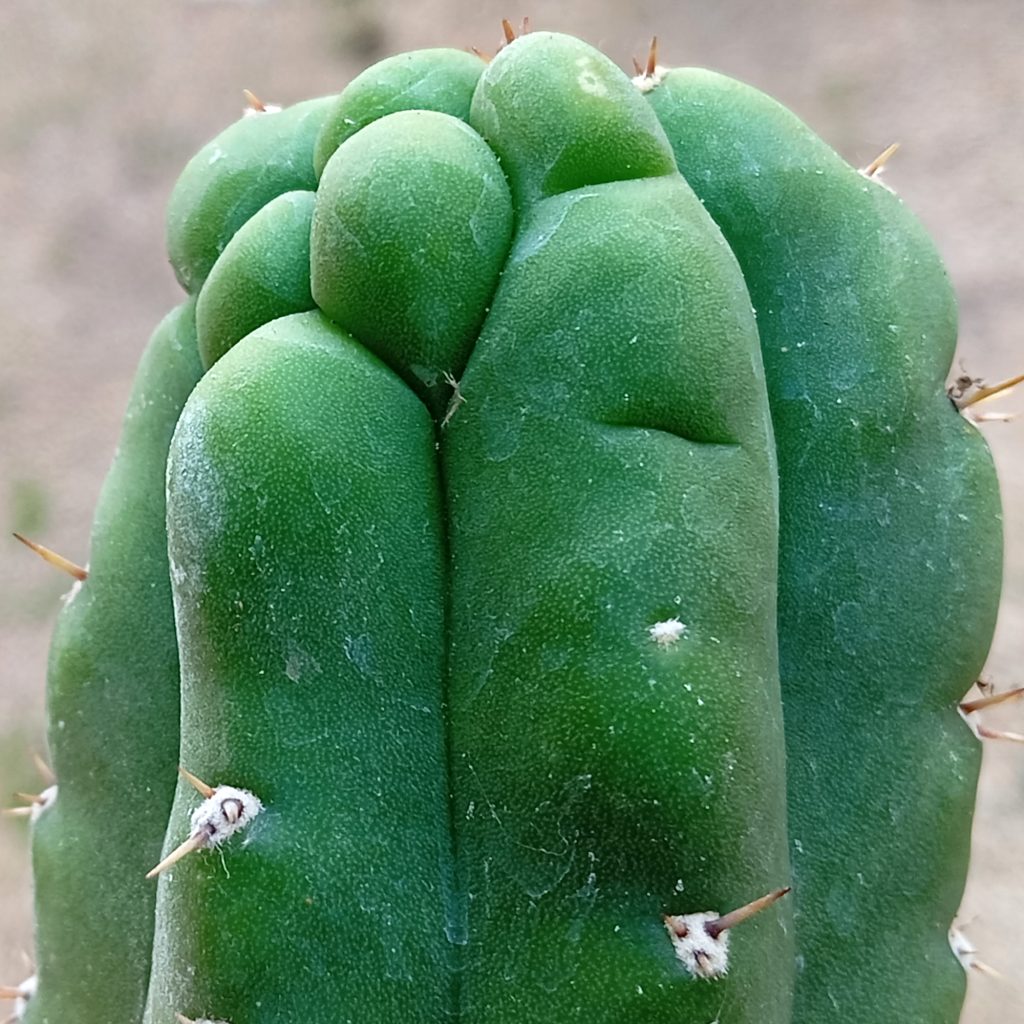
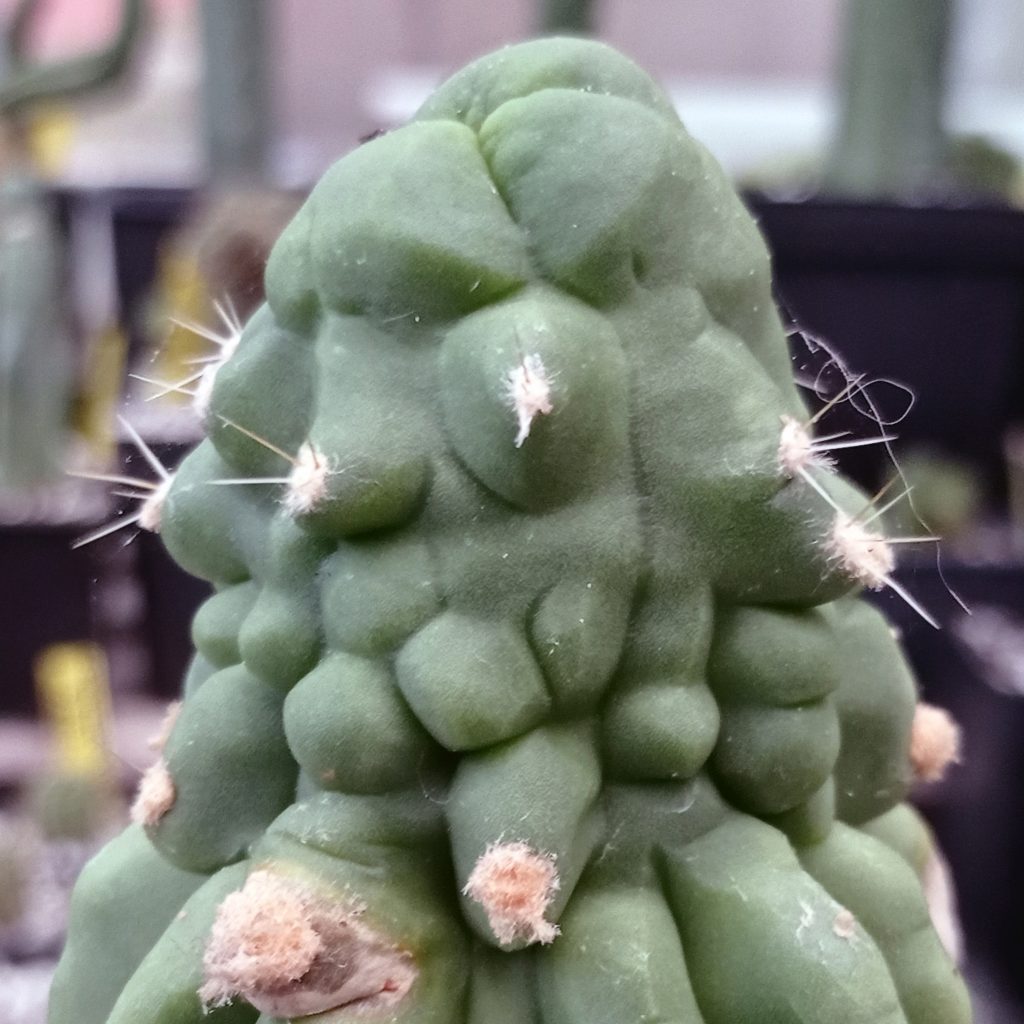
Monstrose Crests & ‘Shape-Shifter’
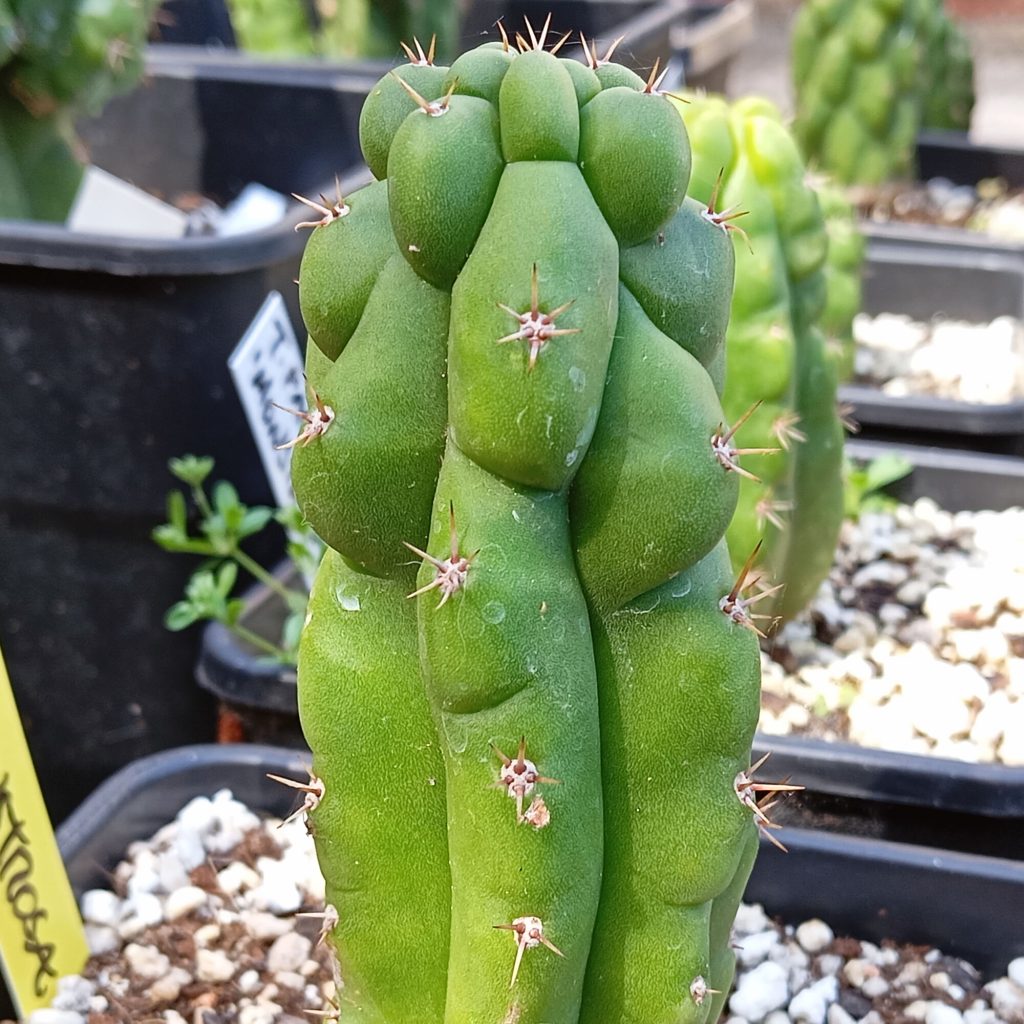
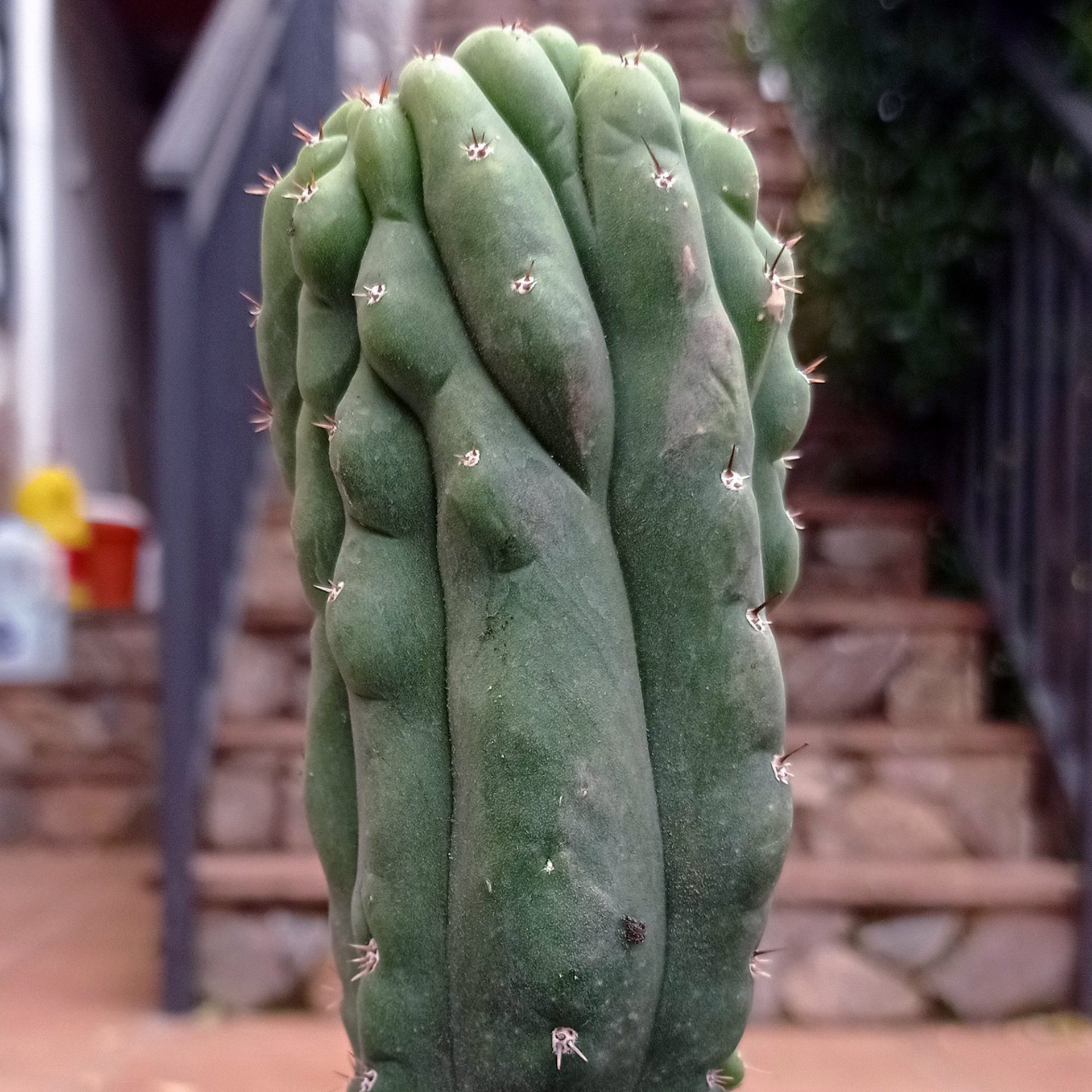
Some pachanoi combine monstrose growth with true cresting. Our TPMC [form 1] is one example. The separately sourced ‘Shape-Shifter’ is especially variable, producing crests, twisted shoots and comparatively ordinary-looking columns from the same line. Another plant photographed below remains largely upright, but its broad, twisting ribs and crowded tip are far from conventional San Pedro growth. Our ‘Shape-Shifter’ listing gives further details of that clone.
We also have an older photograph labelled monstrosa cristata dicotomica. It records a divided growing point alongside the irregular, crested growth. Lengthy labels like this can be clumsy, but they preserve what the grower thought worth noting at the time.
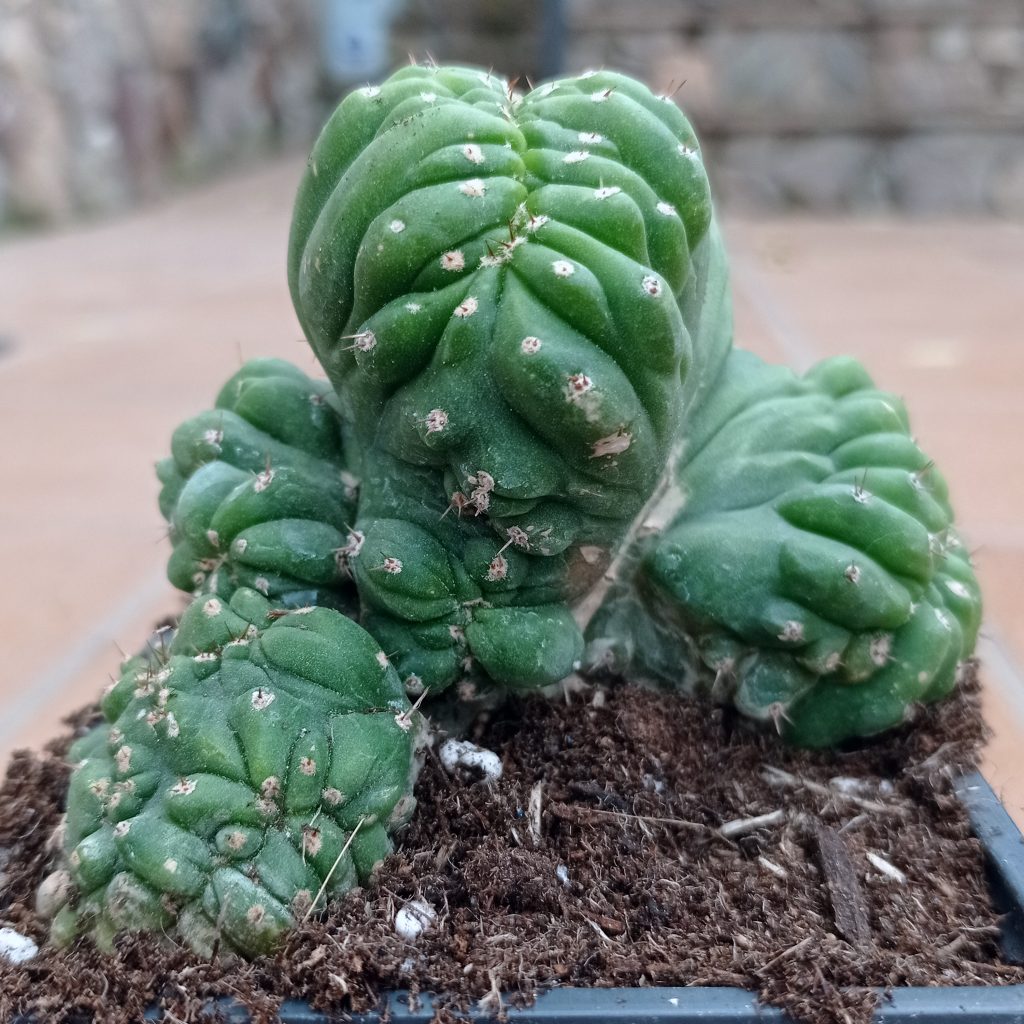

Trichocereus pachanoi f. cristata variegata: Variegated Crests
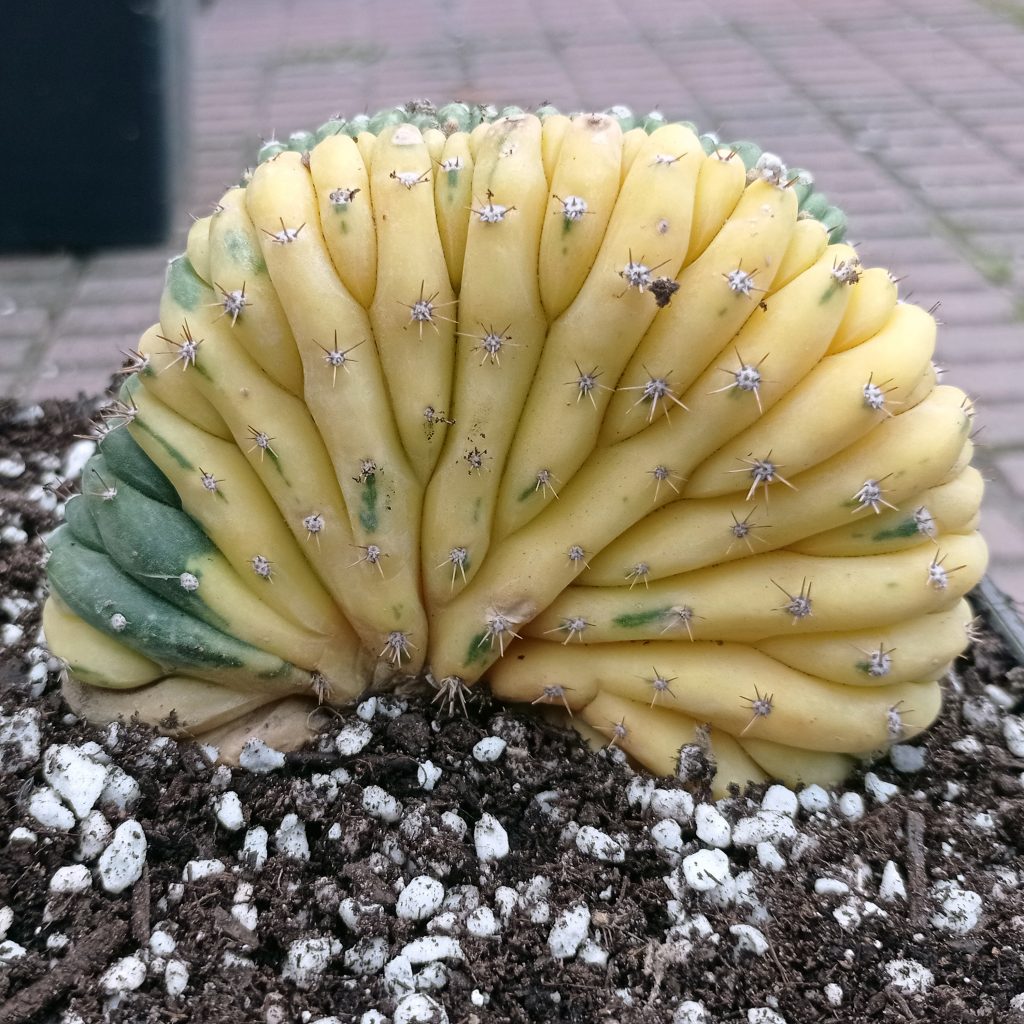
Our variegated crest combines a folding growth ridge with green and pale yellow tissue. The greener parts can grow more strongly than the lightest sections, creating an uneven, shifting shape as the crest expands. We maintain this as form 1 in our records.

‘Dr Funk’: A Variegated Monstrose Crest
Our variegated, monstrose-crested ‘Dr Funk’ was lost to rot after a greenhouse flood in winter 2025. We have kept the photograph in the gallery. It records a plant we grew, not a mother plant that can still supply cuttings.

Trichocereus pachanoi f. variegata: Columnar Variegates
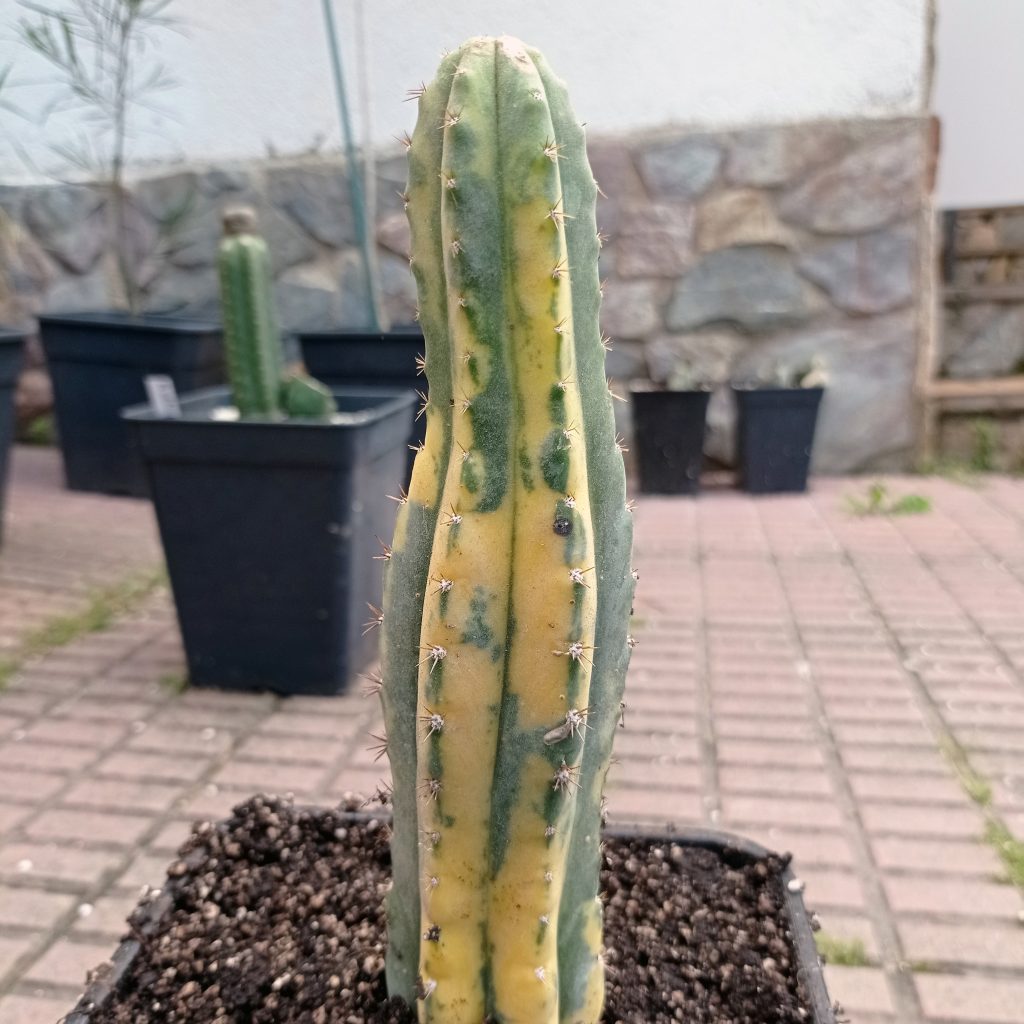
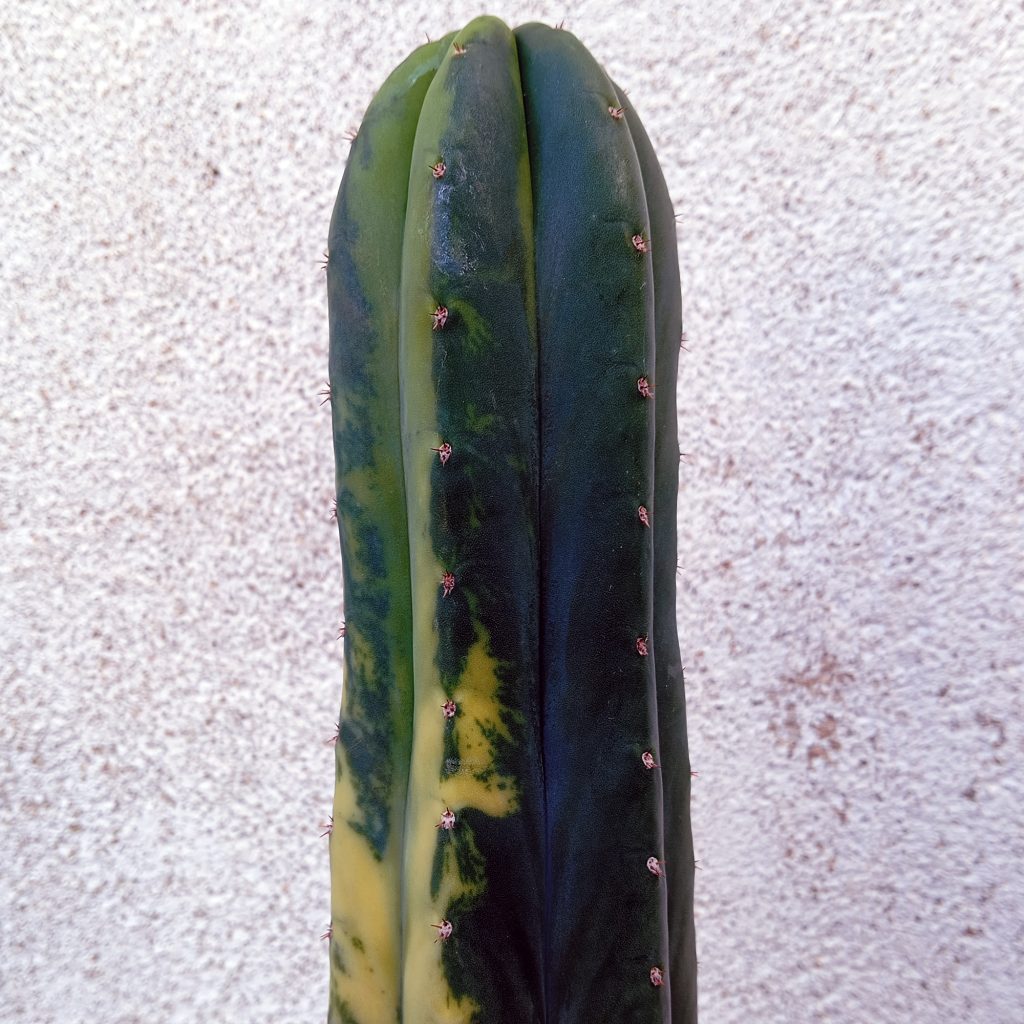
Variegation also occurs on otherwise upright San Pedro. Broad yellow sectors, marbling, patches and thin stripes can appear without cresting or monstrose growth. Our unnamed variegate, ‘Butter Up’, ‘T102 / Ogrod’ and ‘Saquarema Variegate’ are different accessions, not four names for one clone.
We selected and named ‘Butter Up’ for its yellow, lime and cream markings. ‘T102 / Ogrod’ came to us with its existing name, although the earlier history of that designation is incomplete; its catalogue listing preserves the received label. Even cuttings from one mother plant can differ substantially in the balance of green and pale tissue.
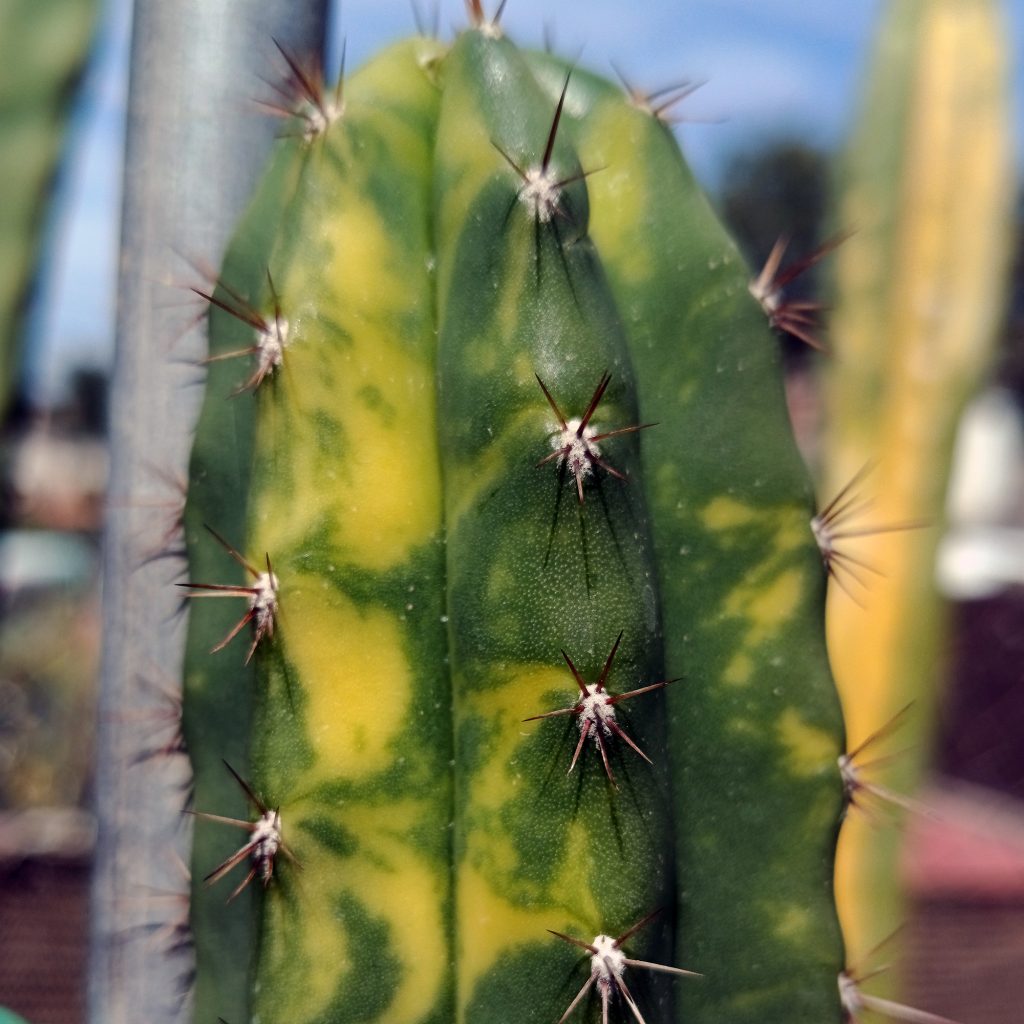
‘Saquarema Variegate’, shown at the end of the gallery, differs again. Irregular yellow bands run along its upright ribs, sometimes enclosing green patches, while the upper stem is largely green. It is a useful comparison with the finer, more mixed markings of the other named plants.
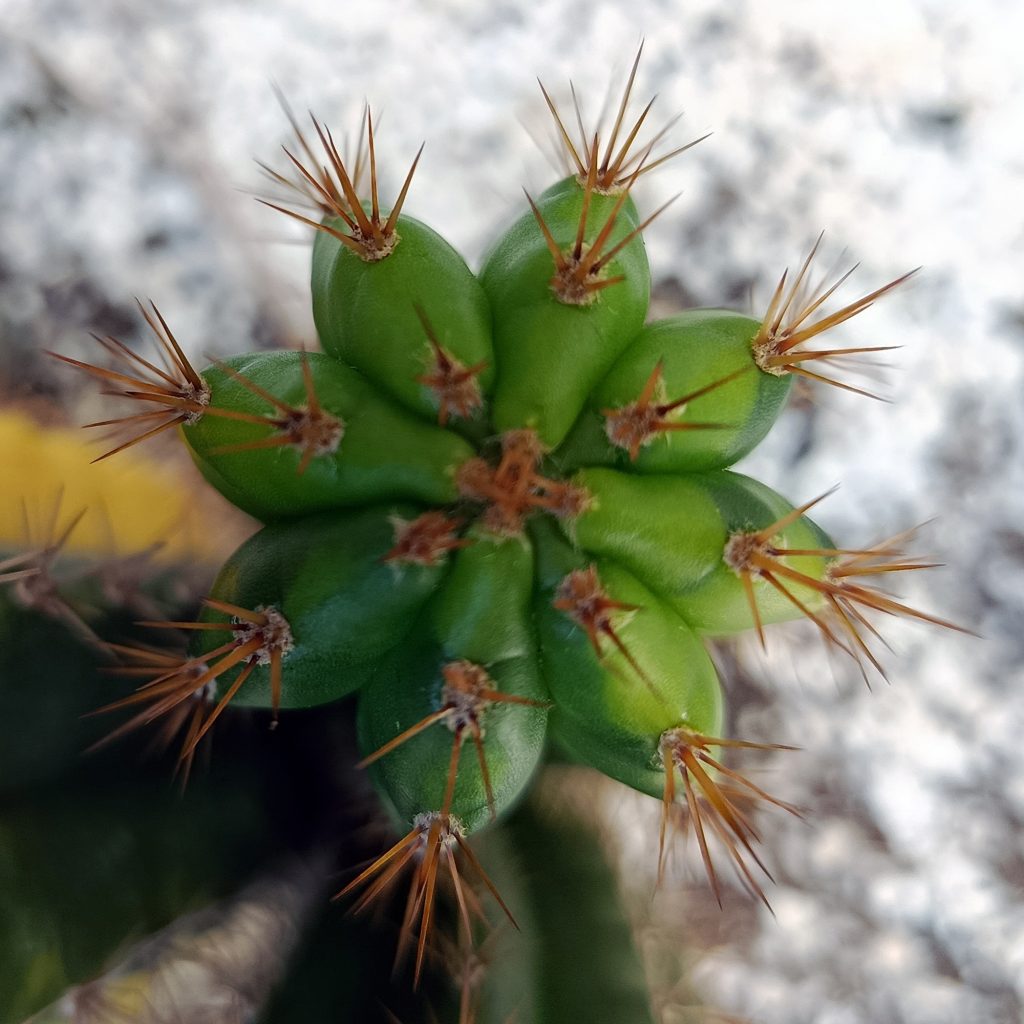

Mutant Hybrids Involving Trichocereus pachanoi
Not every plant in this section is T. pachanoi itself. ‘Chosca’ is our monstrose-crested selection from a Misplant cross of Trichocereus chalaensis × Trichocereus pachanoi ‘Oscar’. The original seed-grown plant came to us through another collector. We now propagate that individual vegetatively, preserving its crested and monstrose growth.

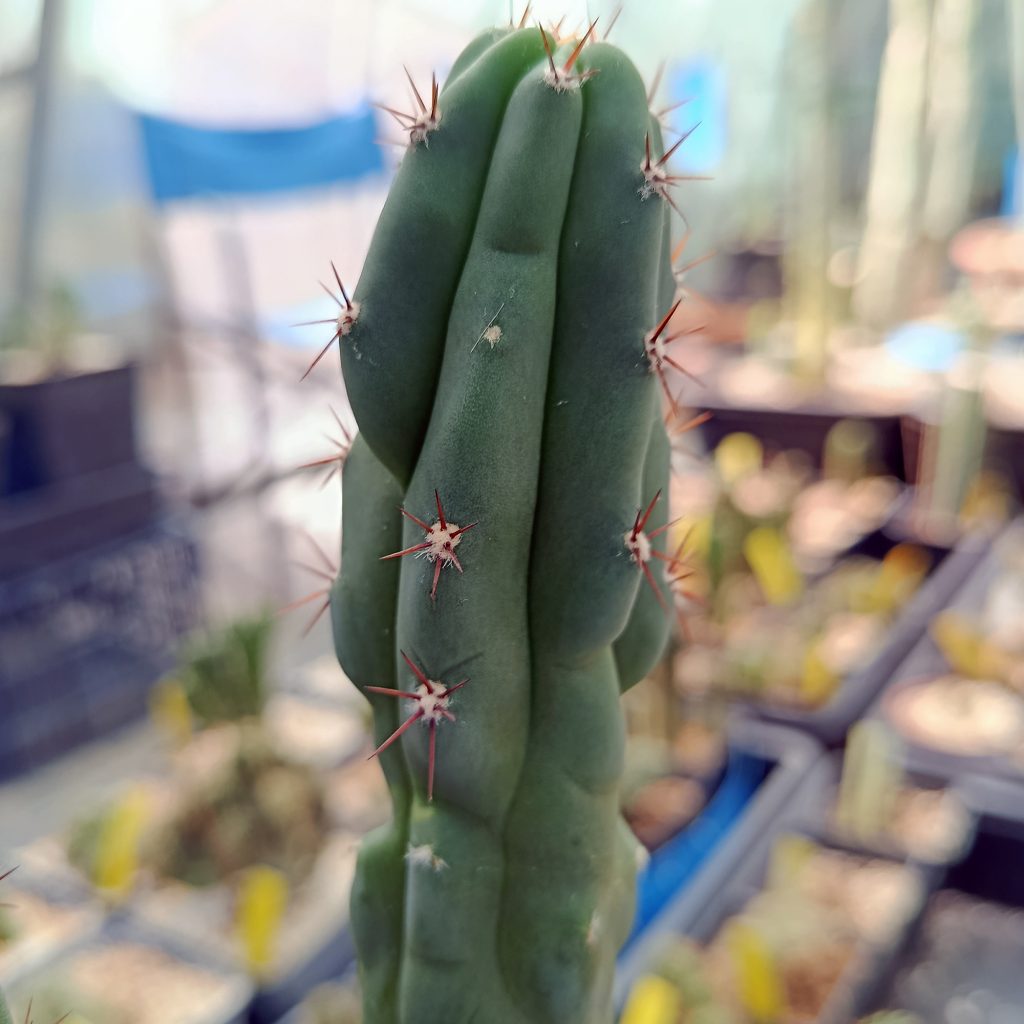
‘Edna’: A Monstrose pachanoi × macrogonus Hybrid
We grow ‘Edna’ under the recorded cross Trichocereus pachanoi × Trichocereus macrogonus. We named her in memory of our grandmother. Her lower stem is heavily knobbled, with compressed ribs and swollen projections; above it, a newer column has developed much more regular growth. The photographs show the change from the knobbled base to the straighter upper growth. Our macrogonus catalogue archive covers other material associated with that species.
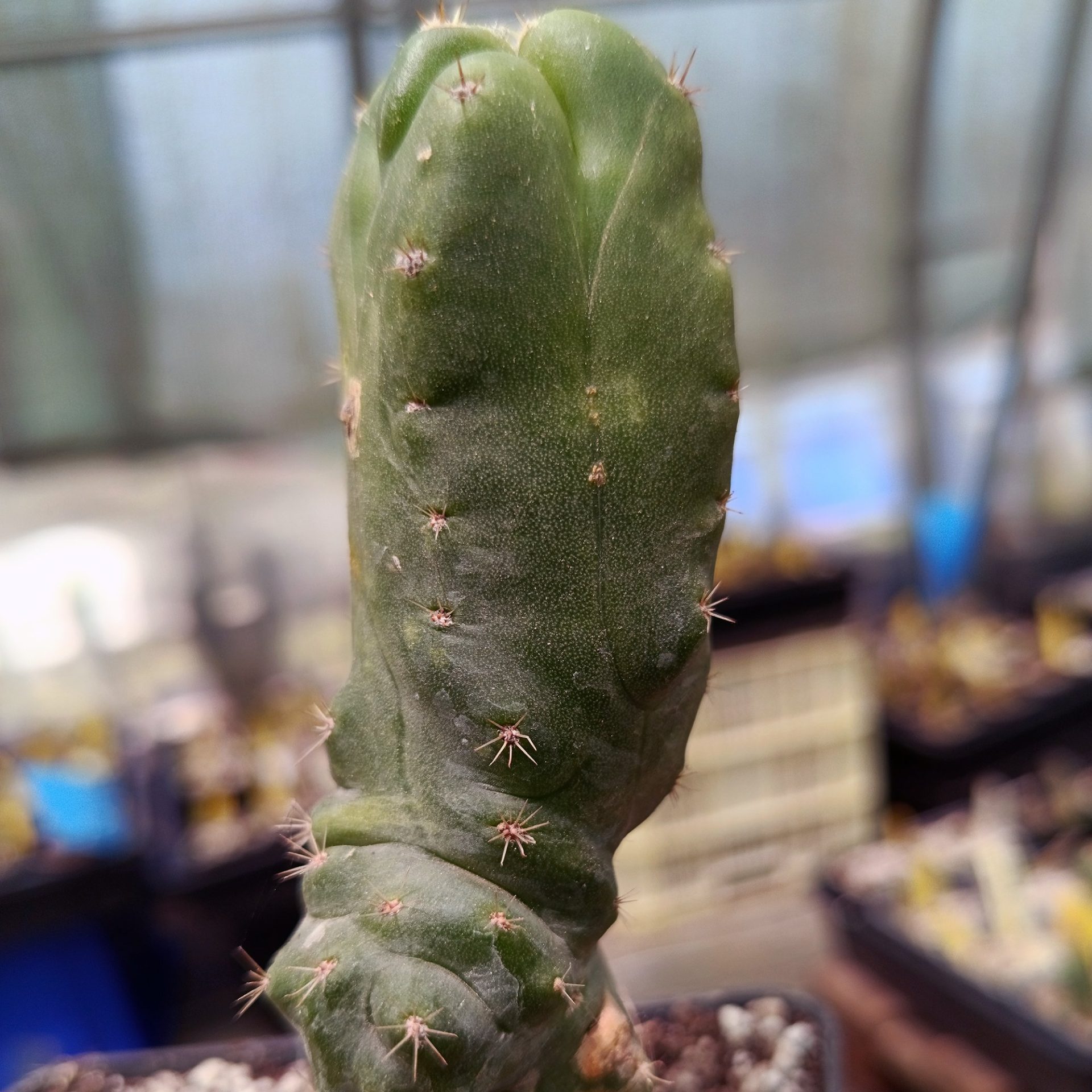
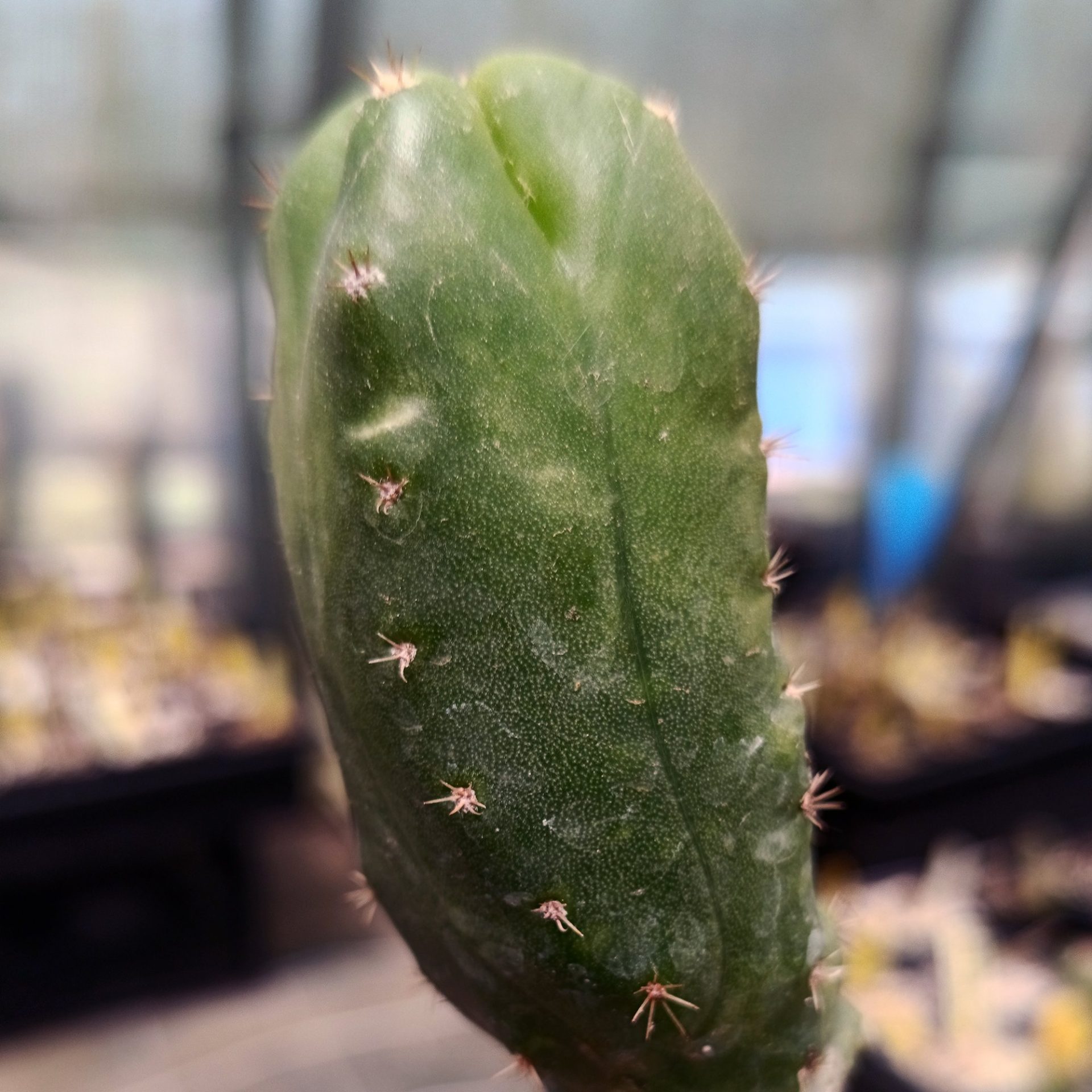
An Unusual Seed-Grown pachanoi × bridgesii Hybrid
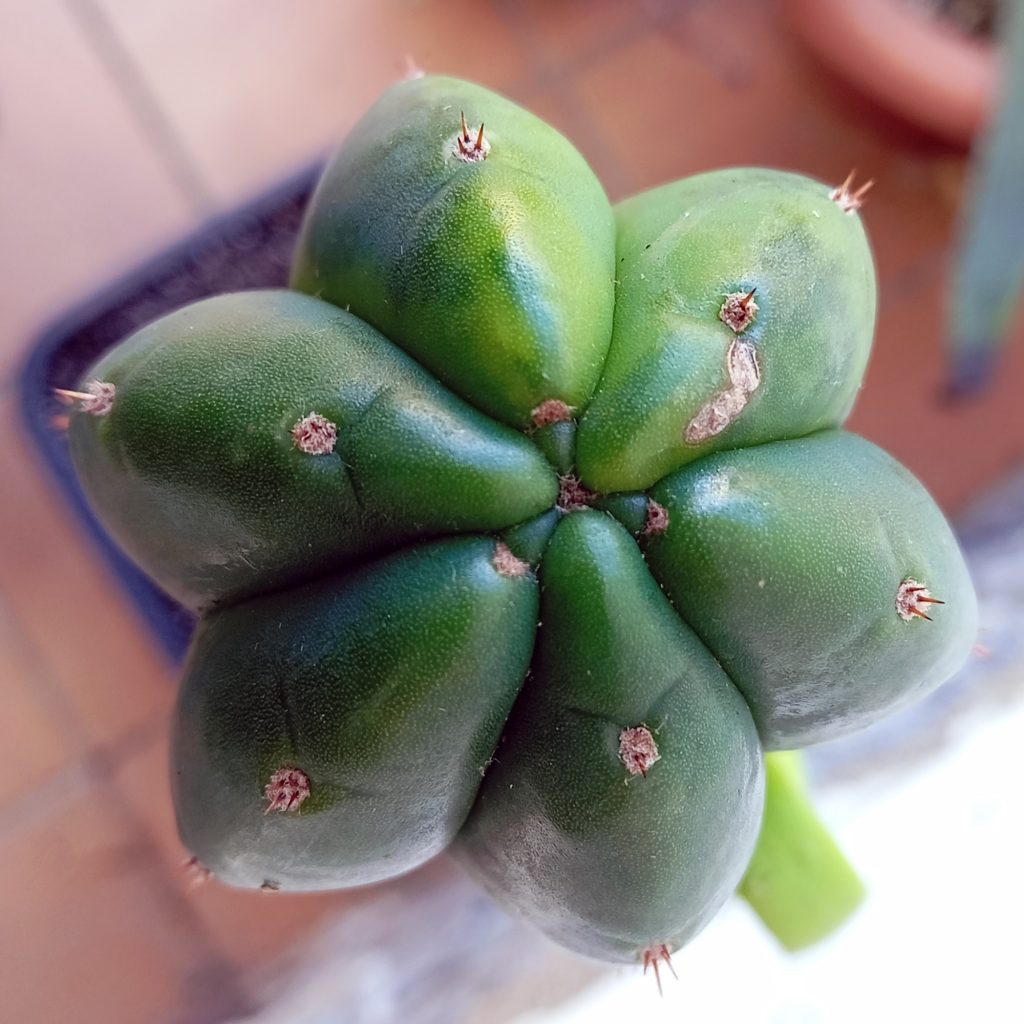
One seedling raised under the label Trichocereus pachanoi × Trichocereus bridgesii has formed an asymmetric, compressed apex with overlapping young ribs. We have photographed it because the development is unusual, although it is too young to know whether the shape will persist. Our bridgesii catalogue archive covers other plants associated with that species.

Cultivating & Propagating Mutant San Pedro
Green crested and monstrose T. pachanoi generally take much the same care as ordinary San Pedro: a freely draining medium, good light, water and feeding while actively growing, followed by a suitably dry rest if winter conditions are cool. What changes is the inspection. Folds and crowded heads can trap moisture, debris and pests where a straight stem would be easy to check.
We take winter wetness and ventilation seriously. The loss of ‘Dr Funk’ after the 2025 flood was a particularly unwelcome reminder of how damaging prolonged saturation can be. Pale variegated sections also need gradual acclimatisation to strong sun, as they can scorch more readily than healthy green growth.
To preserve a named mutant clone, we propagate from the appropriate parent plant. Seedlings are genetically new individuals, while a cutting from a reverted column may not recover the crest that made its parent distinctive. Variegated plants need some thought about where a cutting is taken: all-green and nearly chlorophyll-free sections may behave very differently, and the palest growth sometimes needs grafting. Our Trichocereus mutations article examines abnormal growth in more detail. The Cultivation Advice library and San Pedro cactus FAQ cover routine care.
Related Galleries & Collection Material
Our other galleries cover mutant T. bridgesii, T. schickendantzii, T. spachianus and variegated Trichocereus. We also have a separate ‘Chosca’ accession page.
Browse the pachanoi catalogue or our Mutants & Unusual Forms archive for nursery material, and the wider Trichocereus catalogue and illustrated species reference for context. Gallery photographs document our plants; they do not indicate current stock.