
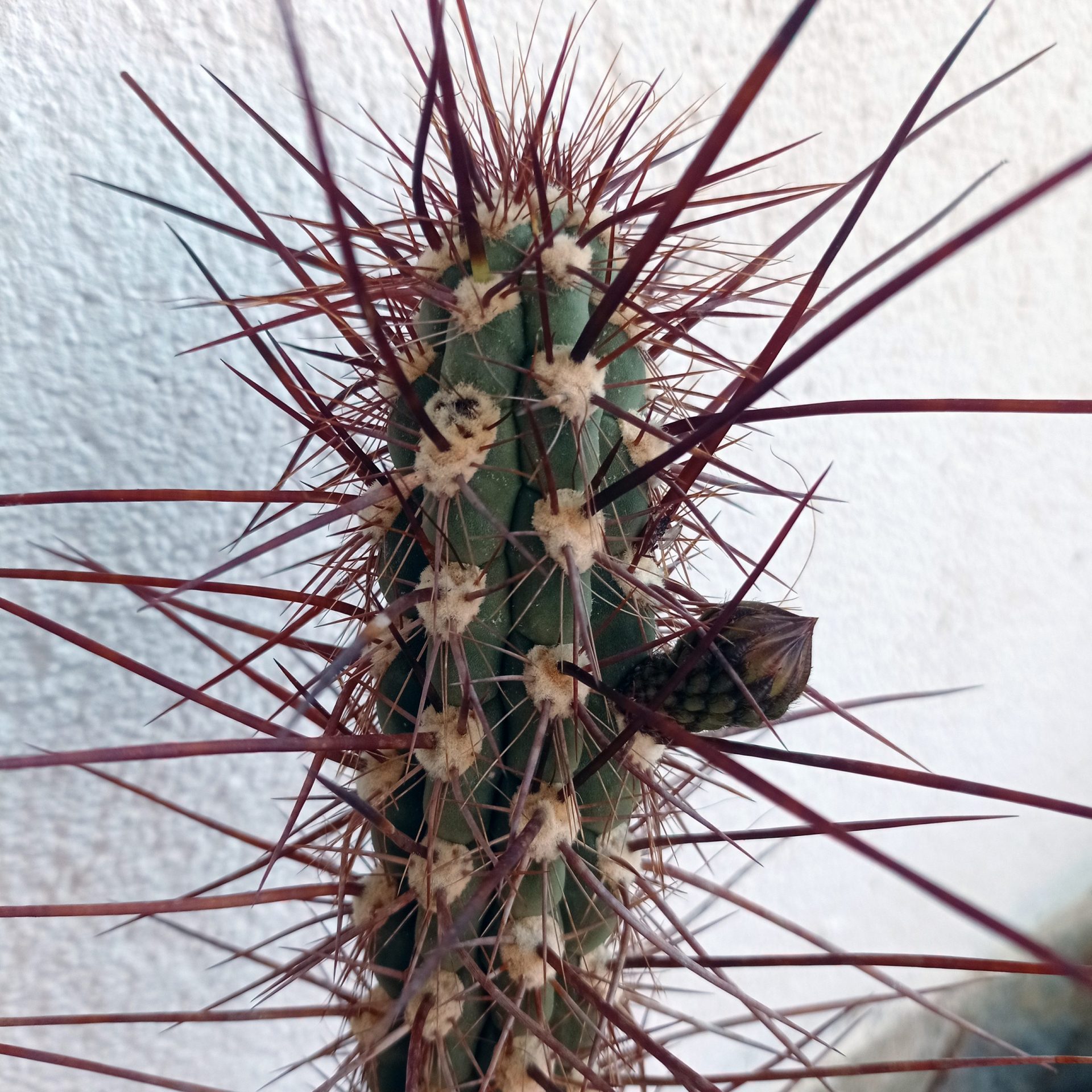
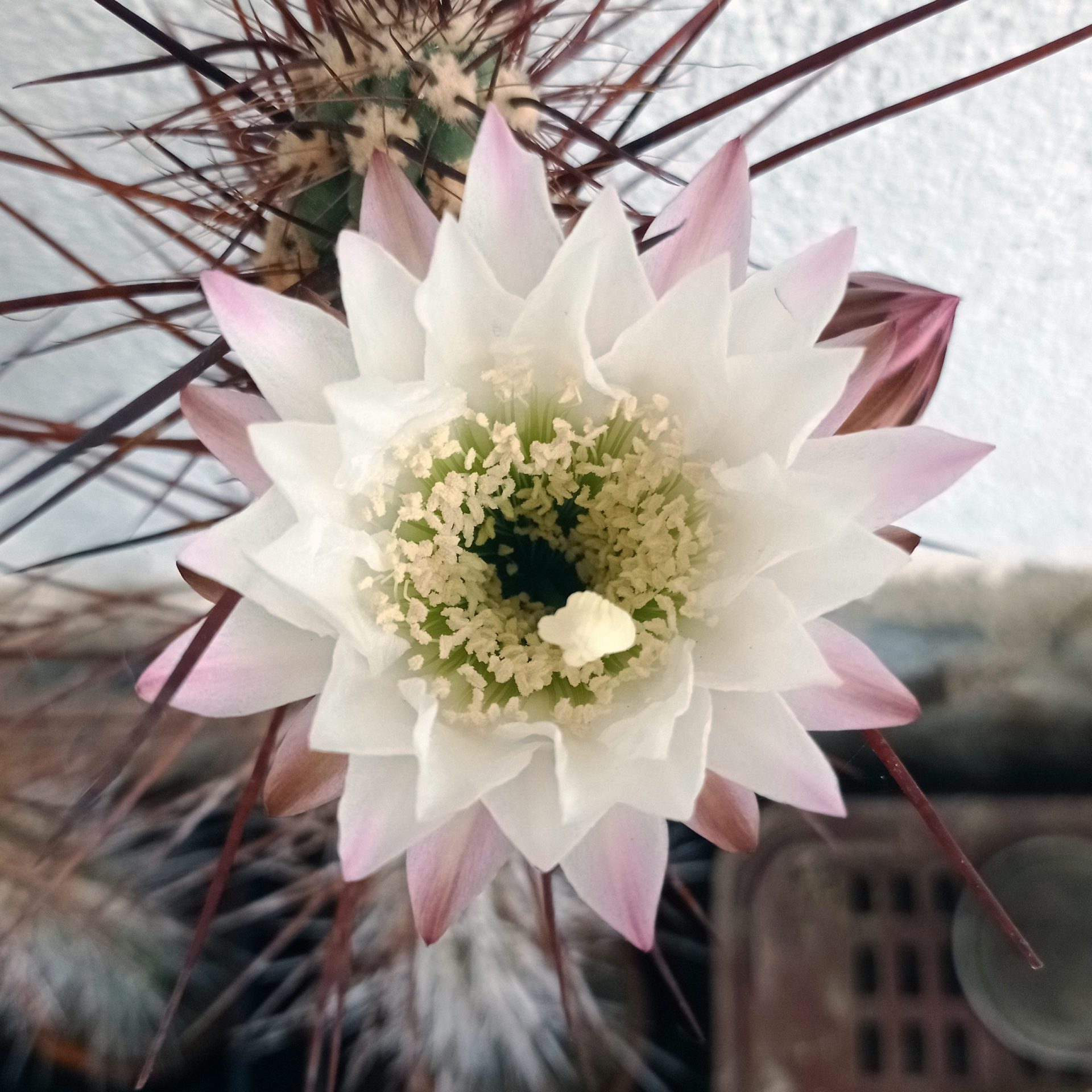

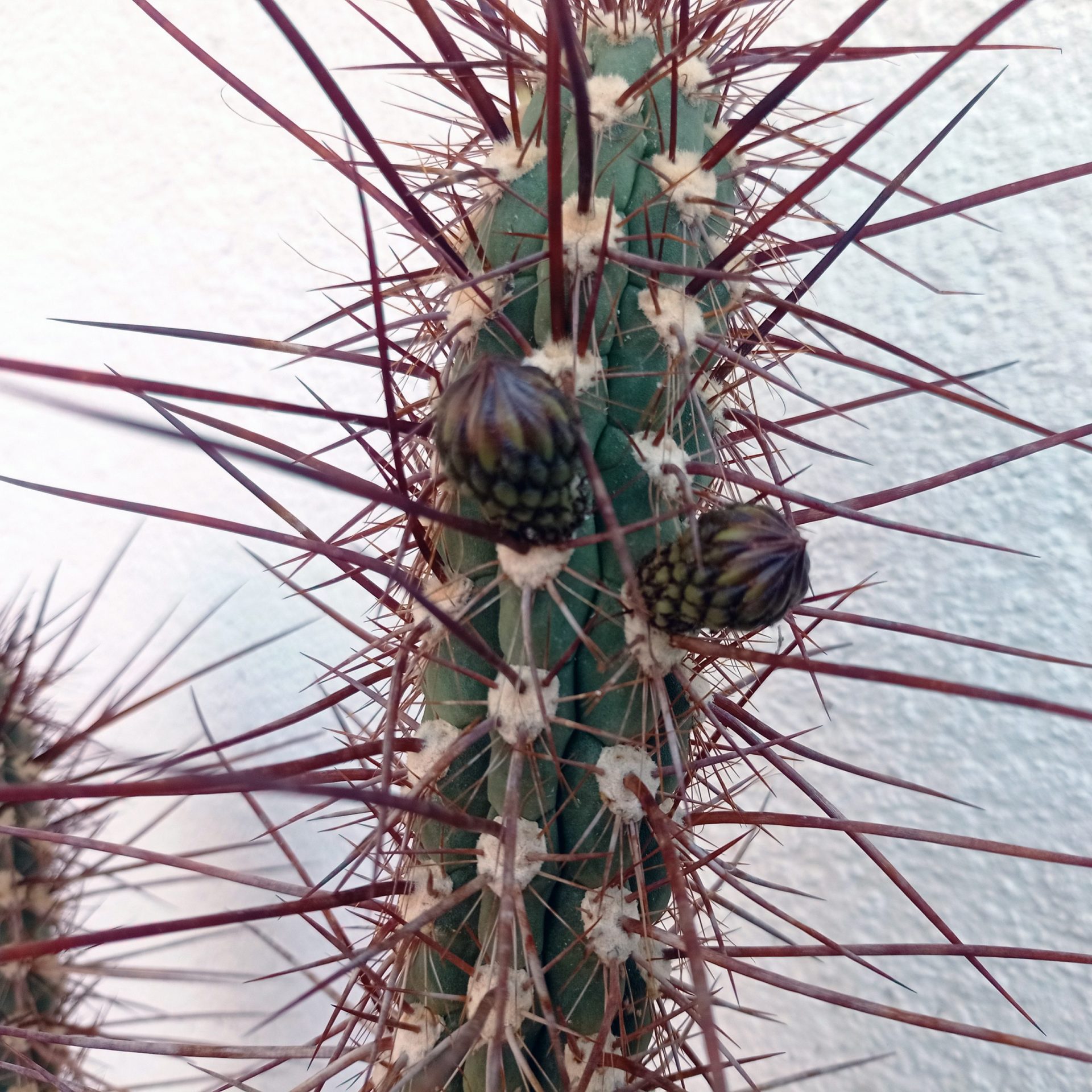
Trichocereus deserticolus subsp. fulvilanus cv. ‘893’ | ‘Cacto’ | Live plant
Trichocereus deserticolus subsp. fulvilanus cv. ‘893’ is one of two genetically distinct sister plants we originally obtained from noted long-time German cactus breeder and nurseryman Albert Plapp. Now propagated clonally from the ‘893’ mother, it develops handsome grey-green columns, dense fine reddish-brown spination and white to whitish flowers. Live plant.
Currently unavailable.
Product Features
Trichocereus deserticolus subsp. fulvilanus cv. ‘893’ is one of two sister plants we originally obtained from noted long-time German cactus breeder and nurseryman Albert Plapp. Both began as separate seed-grown plants, with the numbers supplied by Plapp to distinguish the two individuals. We maintain and sell both separately, while our present ‘893’ stock consists of vegetative propagations from this particular mother plant, preserving it as a distinct clone.
The provenance is worth retaining in full. Albert Plapp operated his specialist German cactus nursery for decades; period German cactus literature documents his nursery and extensive cactus, succulent and botanical-rarity collection at least as far back as the 1990s. The nursery continues today as Kakteengärtnerei Plapp. Our two numbered fulvilanus plants therefore came to us from an established German specialist collection rather than being anonymous horticultural material.
‘893’ is an especially handsome example of this relatively uncommon Chilean cactus. It develops grey-green columnar stems armed with numerous fine reddish-brown to brown spines, creating a dense, intricate covering quite different from the heavier armature of many of the large Andean Trichocereus. New spines are particularly colourful before ageing through softer brown, tan and greyish shades.
The plant becomes increasingly impressive with age. Successive areoles add layers of fine armature around the stem while the subdued grey-green epidermis remains visible beneath it, producing a combination of colour and texture that is characteristic of good fulvilanus material. It is a distinctly spiny plant without the armature appearing excessively coarse.
Our ‘893’ mother plant has reached flowering maturity and produces the relatively compact white to whitish flowers characteristic of this group. We have documented flowering of this exact plant in our Gallery of Cactus Flowers, providing a useful record of the mature reproductive characteristics of the clone rather than relying solely on descriptions of the taxon.
The original Plapp sister plant is maintained separately rather than being merged into this listing. Although both share the same source and taxonomic identity, they began as different seed-grown individuals and are therefore genetically distinct. The numbers are important precisely because they preserve that distinction. Plants sold here as ‘893’ are clonal descendants of the ‘893’ mother, not a generic mixture of the two Plapp plants.
Our ‘893’ archive preserves that accession identity within the catalogue, while the broader Trichocereus deserticolus species archive brings together the different genetics we maintain within this taxonomic group.
We also maintain other deserticolus/fulvilanus material independently. Our standard Trichocereus deserticolus provides a useful comparison with the wider species concept, while T. deserticolus subsp. fulvilanus cv. ‘Villain’ is our separately maintained named clone, selected and named by us for the formidable mature spination of its mother plant. None of these identities should be collapsed together simply because modern taxonomy places them within a broader species.
Wild deserticolus/fulvilanus material originates in northern Chile, with the historic deserticolus concept particularly associated with Antofagasta and the extremely arid landscapes of the Atacama region. The plants are adapted to intense sunlight, low rainfall and highly mineral conditions, characteristics reflected in their relatively compact columnar growth, glaucous to grey-green epidermis and substantial protective armature.
Although our ‘893’ reached us through Albert Plapp’s German collection, that is its immediate horticultural provenance rather than the geographic origin of the species. Its underlying botanical genetics are Chilean, so it belongs with our Trichocereus Genetics from South America rather than being classified as European genetics merely because the mother plant passed through a German nursery.
Taxonomic note
The taxonomy of these Chilean plants has changed repeatedly. Material has circulated under names including Cereus fulvilanus, Trichocereus fulvilanus, Trichocereus deserticolus subsp. fulvilanus, Echinopsis fulvilana, Echinopsis deserticola var. fulvilana and Leucostele fulvilana.
Our catalogue retains Trichocereus deserticolus subsp. fulvilanus because this is the historically informative identity associated with the material and distinguishes it from our other deserticolus genetics. The broader modern treatment places these plants within Leucostele deserticola.
The change from deserticolus to deserticola reflects the grammatical gender of the generic name rather than a fundamentally different plant. Our Leucostele species guide provides the wider context for the Chilean species that have historically been cultivated as Trichocereus.
The number 893 is also important taxonomically and horticulturally. It is not a locality and should not be interpreted as a botanical variety. It was supplied with this particular Plapp plant to distinguish it from its sister specimen. Because the present plants are vegetative descendants of that individual, ‘893’ now functions as the stable identifying designation for the clone in our collection.
Cultivation
T. deserticolus subsp. fulvilanus cv. ‘893’ is straightforward to grow provided its naturally arid background is respected. Use a very freely draining cactus substrate, provide excellent air movement and give the plant plenty of light. Water thoroughly during active growth and then allow the substrate to dry substantially before watering again.
Strong light is particularly worthwhile with this clone because it promotes sturdy growth and the dense, colourful spination that makes mature plants so attractive. Plants moving from sheltered or indoor conditions should nevertheless be acclimatised gradually before being placed in intense direct sun.
Our cactus cold-hardiness reference currently places both T. deserticolus and T. deserticolus subsp. fulvilanus at approximately -7°C / 19.4°F. This is an approximate reference rather than a target temperature: plant health, hydration, acclimatisation, duration of cold, humidity and substrate moisture can all alter the outcome considerably.
Winter moisture is especially important. Reduce watering sharply as temperatures fall and avoid leaving the root system saturated during cold weather. A healthy, established plant in dry substrate can tolerate conditions that would be much more dangerous to a recently rooted or waterlogged specimen.
Our sale plants are propagated vegetatively from ‘893’, so they preserve the mother plant’s genetics. Cuttings should be allowed to callus thoroughly before rooting and are best established during warm, active growing conditions. Once rooted, the clone can be cultivated much like our other arid Chilean Trichocereus/Leucostele.
About Trichocereus
‘893’ is exactly the sort of plant for which maintaining old collection information matters. It combines an uncommon Chilean taxon with a traceable European horticultural history, a numbered identity supplied by Albert Plapp, a genetically distinct sister plant retained separately and a mature mother whose flowering we have documented ourselves. Explore our complete Trichocereus collection for the wider range of species, locality material, historic accessions, cultivars, clones and hybrids.
Unless stated otherwise, plants ship bare-root to supported EU destinations. Outside our delivery area? Ask about seed-only orders or join our email list for shipping updates. Photos are representative unless an exact specimen is specified; ask for current specimen photos. Some plants are cut to order where noted. Save 10-35% automatically on qualifying live plants, with bonus seeds and at least one bonus cactus in every live plant order.
Product Details
| Product Type | |
|---|---|
| Amount | 1 unrooted cutting |
| Size | ~4 cm diameter, ~18 cm tall |
| Common Name | |
| Family | |
| Genus | |
| Species | |
| Subspecies | |
| Clone/Variety/Cultivar | |
| Form | |
| Flower | |
| Collection |
1 review for Trichocereus deserticolus subsp. fulvilanus cv. ‘893’ | ‘Cacto’ | Live plant
Only logged in customers who have purchased this product may leave a review.
You May Also Appreciate
-


Trichocereus bridgesii f. semi-monstrosa cv. ‘RAP’ | ‘Monstrose Bolivian Torch’ | Live plant
10% OFF until 30 Nov Original price was: €81.00.€72.90Current price is: €72.90. Add to basket -

Trichocereus atacamensis ‘TB 1320.2’ | ‘Cardón Grande’ | Live plant
€8.00 Add to basket -
Trichocereus cordobensis | Live plant
€14.00 Add to basket -

Opuntia microdasys cv. ‘Rufida’ | ‘Mexican Bunny Ears Cactus’ | Live plant
€11.25 Add to basket -

Trichocereus rowleyi ‘P134’ (ex. var. pumila) | ‘Red Torch’ | Live plant
€18.00 Add to basket -

Trichocereus faundezii ‘GM 1849’ | Live plant
From €21.00 Browse options This product has multiple variants. The options may be chosen on the product page -

Trichocereus cordobensis cv. ‘Helon’ | Australian Clone | Live plant
10% OFF until 30 Nov Original price was: €55.00.€49.50Current price is: €49.50. Add to basket -

Trichocereus pachanoi cv. ‘Mujica’ | ‘San Pedro’ | Live plant
10% OFF until 30 Nov Original price was: €22.50.€20.25Current price is: €20.25. Add to basket -
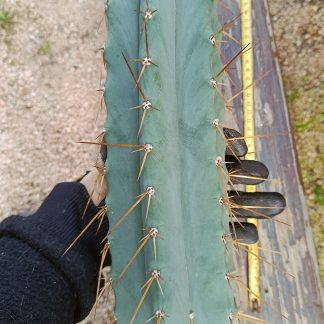
Trichocereus bridgesii cv. ‘Deutsche’ | Unrooted Cutting | Exact Specimen FCES0002
€66.00 Add to basket -
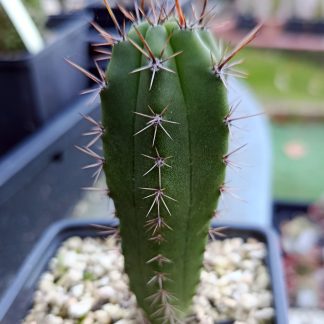
Trichocereus knuthianus | Live plant
€20.00 Add to basket -

Trichocereus atacamensis subsp. pasacana ‘TB 1099.3’ | ‘Cardón Grande’ | Live plant
10% OFF until 30 Nov Original price was: €18.00.€16.20Current price is: €16.20. Add to basket -

Lophophora williamsii ‘RS 378’ | ‘Peyote’ | Live plant
€32.00 Add to basket
gjcosta93 (verified owner) –
I bought this plant recently and wow what a stunner! The images are true to the specimen and the spines are quite fierce as well. The plant came very well packed, as these spines occupy quite a lot of “empty” volume. Still, I couldnt save my finger from getting pricked, but thats what you get from handling this beauty. Can’t wait to see it grow and flowers!