
Trichocereus thelegonus hybrid cv. ‘Papagei’ | Live plant
Trichocereus hybrid cv. ‘Papagei’ is a distinctive older European cultivar associated with Trichocereus thelegonus, featuring strongly ribbed green stems, horizontal notching, woolly white areoles and short, dark spines. Known for its reported large, unusually ruffled white to whitish flowers. Its breeder and exact pedigree remain unknown, although a relationship with the historic hybrid ‘Theleflora’ has been suggested. Maintained clonally in our collection.
Currently unavailable.
Product Features
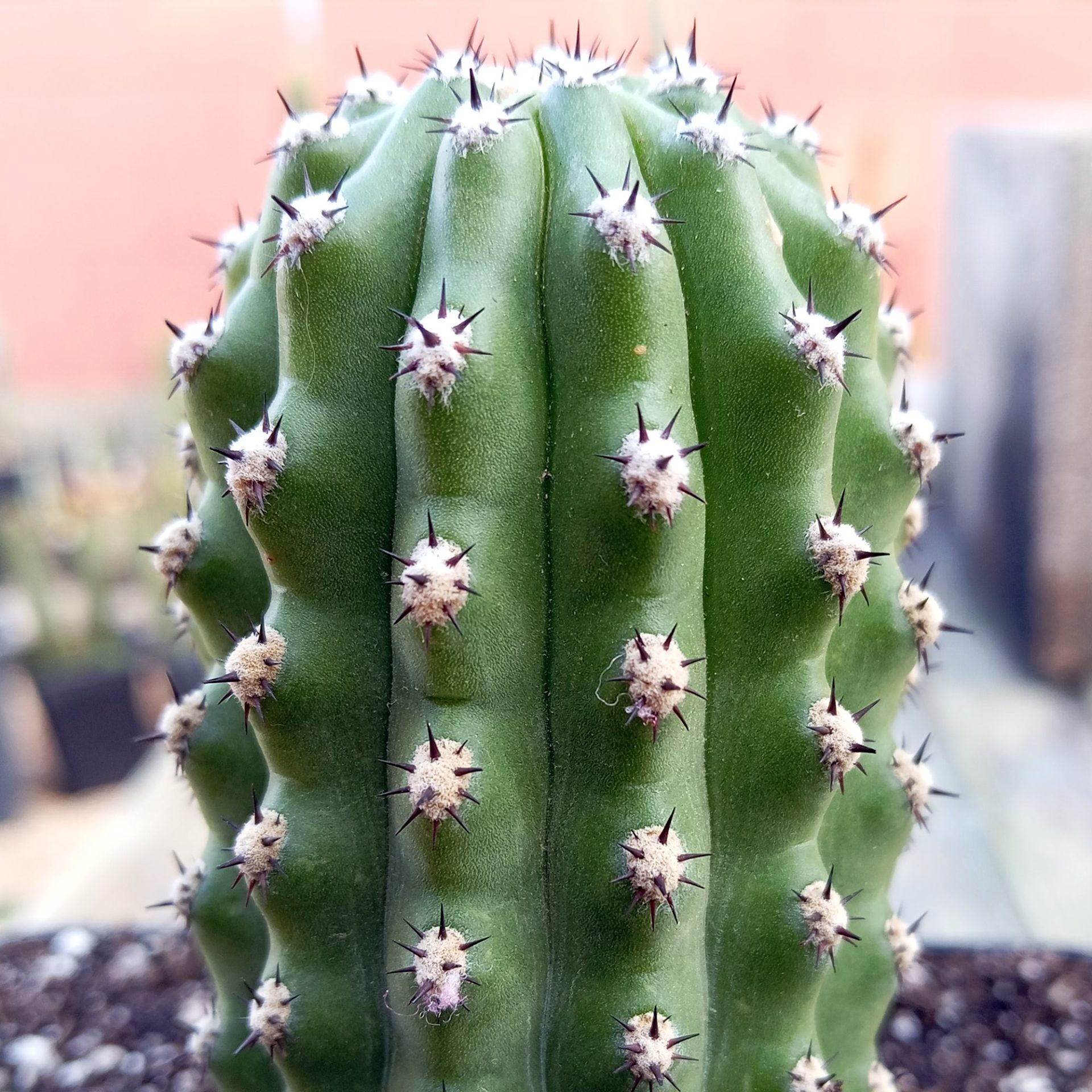
Trichocereus hybrid cv. ‘Papagei’ is a distinctive older European cactus hybrid traditionally associated with Trichocereus thelegonus. It is characterised by strongly ribbed green stems, pronounced horizontal notching around the areoles, contrasting white wool and short, dark spines. The cultivar is also known for its reported large, white to whitish flowers, which can develop unusually ruffled, ragged or irregularly arranged petals.
We maintain ‘Papagei’ through vegetative propagation from our mother plant, preserving this established cultivated selection rather than offering seed-grown plants of uncertain identity. Its exact pedigree and original breeder remain unknown, although its similarities to the historic German hybrid ‘Theleflora’ provide an interesting clue to its possible ancestry.
Growth and Appearance
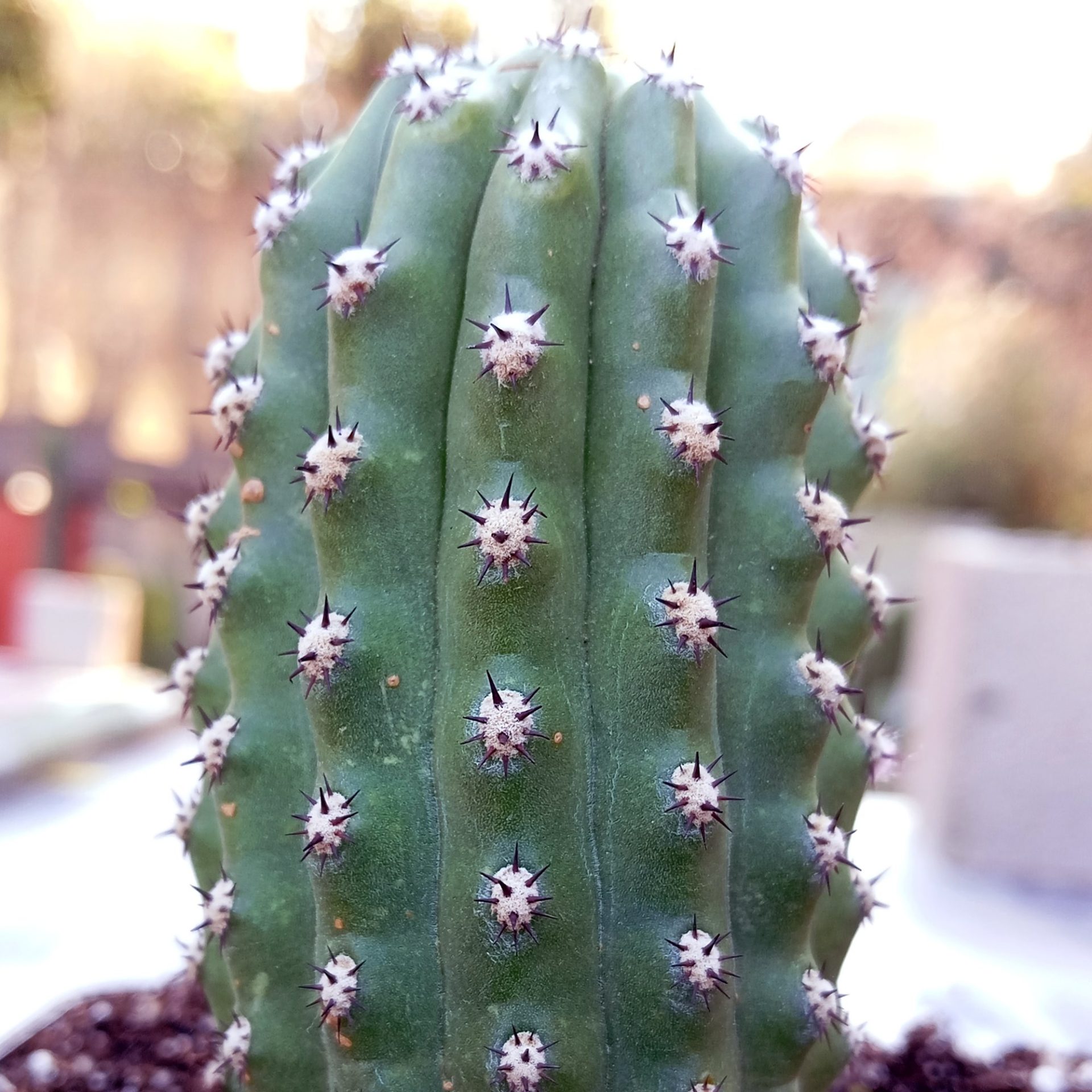
‘Papagei’ develops substantial, upright stems with a deep green to slightly grey-green epidermis and broad, well-defined ribs. The rib surfaces are gently rounded, with distinct vertical grooves and a characteristic tendency to develop transverse indentations around the areoles. As the stems mature, these horizontal notches can become more pronounced, giving the ribs a subtly scalloped or segmented appearance.
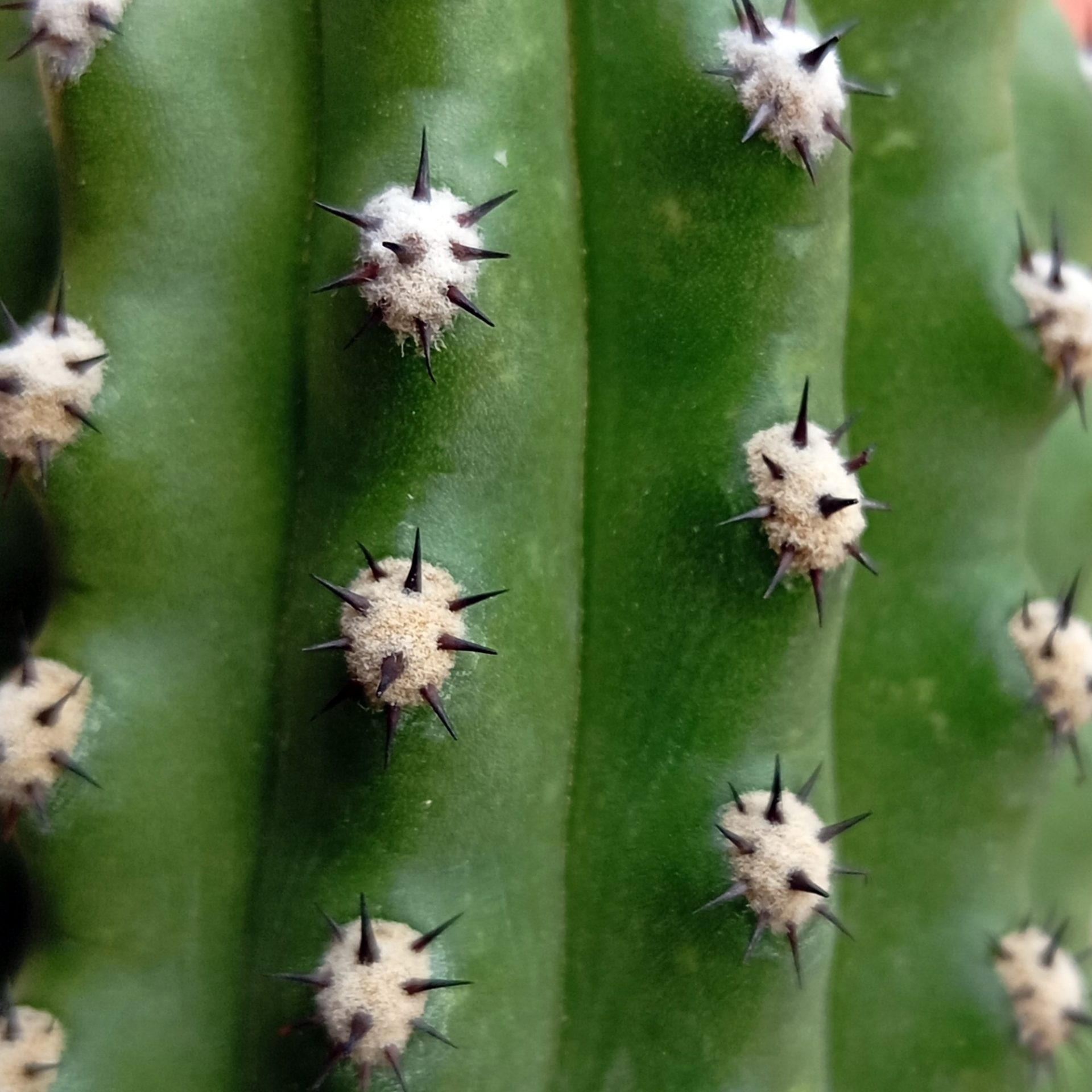
Our plants show particularly conspicuous areoles, each surrounded by a dense cushion of white to cream-coloured wool. The spines are relatively short, stiff and sharply pointed, ranging from reddish-brown to almost black. They form compact, radiating clusters which stand out against the pale wool and green stem surface.
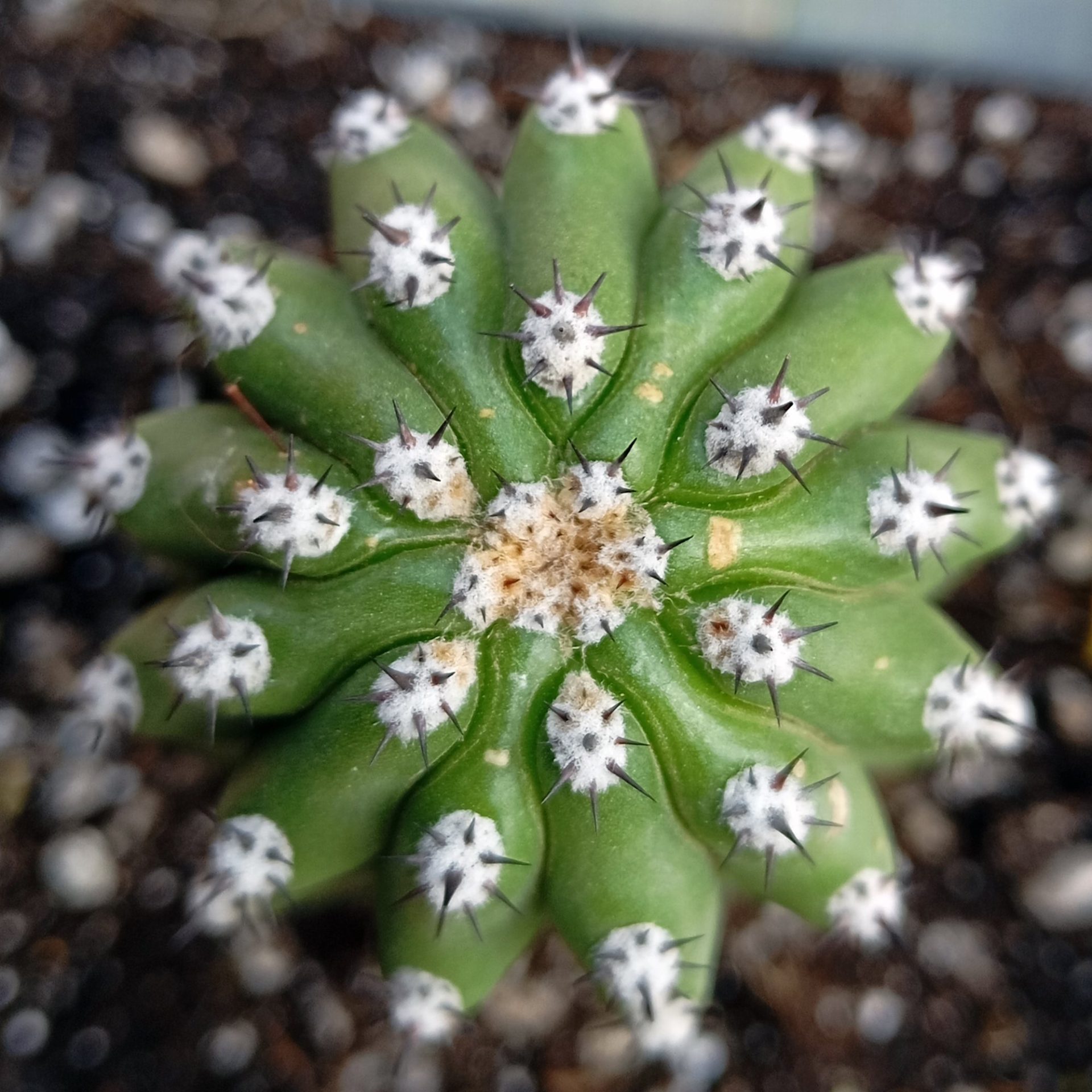
Viewed from above, the growing point has a regular arrangement of rounded ribs, with successive woolly areoles forming radial rows around the crown. The combination of dark spines, white areoles and sculpted ribbing is attractive even before the plant reaches flowering maturity.
The transverse notching is especially interesting from a horticultural perspective. It resembles the interrupted rib structure seen in certain T. thelegonus hybrids, although the precise expression of this character can vary with age, growth conditions and the development of individual stems.
Flowers
‘Papagei’ has been described in specialist cultivation as producing large, predominantly white to whitish flowers, sometimes with conspicuously irregular or frilled petals. Rather than forming a consistently regular arrangement, portions of the flower may become ruffled, curled or ragged, giving individual blooms an unusual appearance.
This flowering tendency contributes significantly to the cultivar’s interest, although the degree of irregularity should not be regarded as identical in every flower. Our photographs illustrate the vegetative characteristics of the clone rather than documenting its flowers.
Origin and Hybrid History
The history of ‘Papagei’ is somewhat obscure. The German name means ‘parrot’, but neither the original breeder nor the reason for the cultivar’s name has been securely established.
German specialist nursery records describe ‘Papagei’ as a hybrid of unknown parentage, first presented commercially in 2005. Earlier records have been interpreted as suggesting that the original selection may date from the beginning of the 1990s or even earlier. These are retrospective horticultural accounts rather than a surviving original breeding record.
The same records draw attention to the horizontal indentation above the areoles, suggesting a possible relationship with ‘Theleflora’, the historic Trichocereus thelegonus × Echinopsis eyriesii var. grandiflora hybrid bred by Robert Gräser.
‘Theleflora’ is well known for its strongly ribbed, notched stems and enormous flowers, and the morphological resemblance to ‘Papagei’ is certainly worth noting. However, this does not establish that ‘Theleflora’ was a parent, nor does it prove that T. thelegonus occurred directly in the original ‘Papagei’ cross.
We therefore retain ‘Papagei’ under its established horticultural identity without inventing a precise pedigree. The name identifies a cultivated selection, not a documented cross formula.
Related Trichocereus thelegonus Hybrids
The influence of Trichocereus thelegonus in ornamental cactus breeding is particularly interesting because its unusual stem architecture can remain conspicuous in hybrid offspring. The rounded, interrupted or tuberculate rib structures of several established cultivars provide useful comparisons with ‘Papagei’.
Alongside ‘Theleflora’, we maintain ‘Thelesina’, another historic hybrid involving T. thelegonus, this time crossed with Echinopsis kermesina. Its documented pedigree and pink to purple flowering background distinguish it from the much less securely documented ‘Papagei’.
Another interesting comparison is ‘Trichopsis’ from Sacred Succulents, a Ben Kamm selection with recorded T. thelegonus × E. eyriesii var. grandiflora parentage. Its distinctly geometric, tuberculate stem growth provides a different expression of the unusual rib architecture associated with this breeding group.
These are separate cultivated selections, not interchangeable names for the same plant. Comparing them is useful for understanding their morphology and horticultural histories, but a shared appearance does not establish an undocumented genetic relationship.
Cultivation
We grow ‘Papagei’ in a freely draining cactus substrate with good ventilation and plenty of light. Established plants benefit from regular watering during active growth, allowing the growing medium to dry appropriately between applications rather than remaining persistently wet.
Good light encourages firm, well-proportioned stems and healthy spine development. Plants previously grown under cover or in relatively shaded conditions should be acclimatised gradually before exposure to intense direct sunshine, particularly during summer.
Moderate feeding during the growing season can support healthy development, while watering should be reduced substantially as temperatures fall and growth slows. Prolonged cold combined with wet roots is best avoided, and plants should be protected according to their local climate and growing conditions.
As with many large-flowered ornamental cactus hybrids, flowering depends on maturity, seasonal growth and appropriate cultivation. A bright growing position, adequate nutrition and a comparatively dry winter rest can help established plants develop towards flowering maturity, although these conditions do not guarantee flowering within a particular period.
About Trichocereus thelegonus
Trichocereus thelegonus is a distinctive branching columnar cactus native to north-western Argentina, particularly associated with the provinces of Jujuy, Salta and Tucumán. It develops unusually sculpted ribs, prominent areoles and substantial white flowers, characteristics which have made it an interesting subject for ornamental hybridisation.
Originally described as Cereus thelegonus F.A.C.Weber, the species was later transferred to Trichocereus by Britton and Rose. It has also been treated under Echinopsis thelegona and Soehrensia thelegona, reflecting the different taxonomic approaches applied to this group of South American columnar cacti.
Although the precise genetic contribution of T. thelegonus to ‘Papagei’ remains unresolved, the cultivar is a worthwhile part of this wider horticultural history. Its unusual ribbing, contrasting dark spines, reported flowering characteristics and uncertain early provenance make it a particularly interesting named hybrid to maintain separately in cultivation.
Unless stated otherwise, plants ship bare-root to supported EU destinations. Outside our delivery area? Ask about seed-only orders or join our email list for shipping updates. Photos are representative unless an exact specimen is specified; ask for current specimen photos. Some plants are cut to order where noted. Save 10-35% automatically on qualifying live plants, with bonus seeds and at least one bonus cactus in every live plant order.
Product Details
| Product Type | |
|---|---|
| Amount | 1 unrooted cutting |
| Size | Size is added here when this item is in stock. |
| Family | |
| Genus | |
| Species | |
| Clone/Variety/Cultivar | |
| Form | |
| Flower | |
| Collection |
Only logged in customers who have purchased this product may leave a review.
You May Also Appreciate
-


Echinopsis hybrid cv. ‘Gypsy’ × Echinopsis hybrid cv. ‘Pooka’ | Live plant
€10.00 Add to basket -

Trichocereus pachanoi ‘Pumacayán’ (MT07) × Trichocereus ‘Lemmy’ (MT19) | Live plant
From €17.50 Browse options This product has multiple variants. The options may be chosen on the product page -

Trichocereus hybrid cv. ‘Herzog Gold’ | Live Plant
€10.00 Add to basket -

Trichocereus hybrid cv. ‘Imperialis’ | Live plant
€16.00 Add to basket -

Echinopsis hybrid cv. ‘Romance’ | Robert Schick | Live plant
€6.00 Add to basket -

Echinopsis hybrid cv. ‘Gossamer’ | Live plant
€7.50 Add to basket -

Trichocereus pachanoi hybrid cv. ‘Schöne’ | ‘San Pedro’ | Live plant
10% OFF until 30 Nov Original price was: €48.00.€43.20Current price is: €43.20. Add to basket -
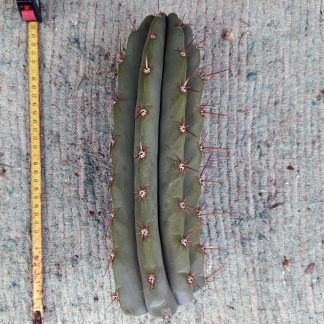
Trichocereus bridgesii cv. ‘Lumberjack’ × Trichocereus peruvianus cv. ‘Sharxx Blue’ | Unrooted Cutting | Exact Specimen FCES0001
€67.50 Add to basket -

Echinopsis hybrid cv. ‘Pooka’ | Live plant
10% OFF until 30 Nov Original price was: €7.50.€6.75Current price is: €6.75. Add to basket -

Echinopsis hybrid f. monstrosa cristata cv. ‘Circle’ | Live plant
10% OFF until 30 Nov Original price was: €15.75.€14.17Current price is: €14.17. Add to basket -
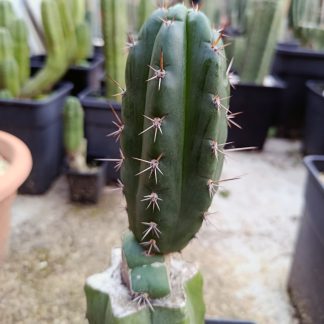
Trichocereus chalaensis × Trichocereus pachanoi f. monstrosa (on ‘Emilio’) | Grafted Plant | Exact Specimen FCES0003
€75.00 Add to basket -

Trichocereus peruvianus ‘Icaros DNA’ × Trichocereus cv. ‘Colossus’ | Live plant
€56.00 Add to basket
Reviews
There are no reviews yet