
Trichocereus bridgesii cv. ‘Lumberjack’ × Trichocereus peruvianus cv. ‘Sharxx Blue’ | Unrooted Cutting | Exact Specimen FCES0001
€67.50
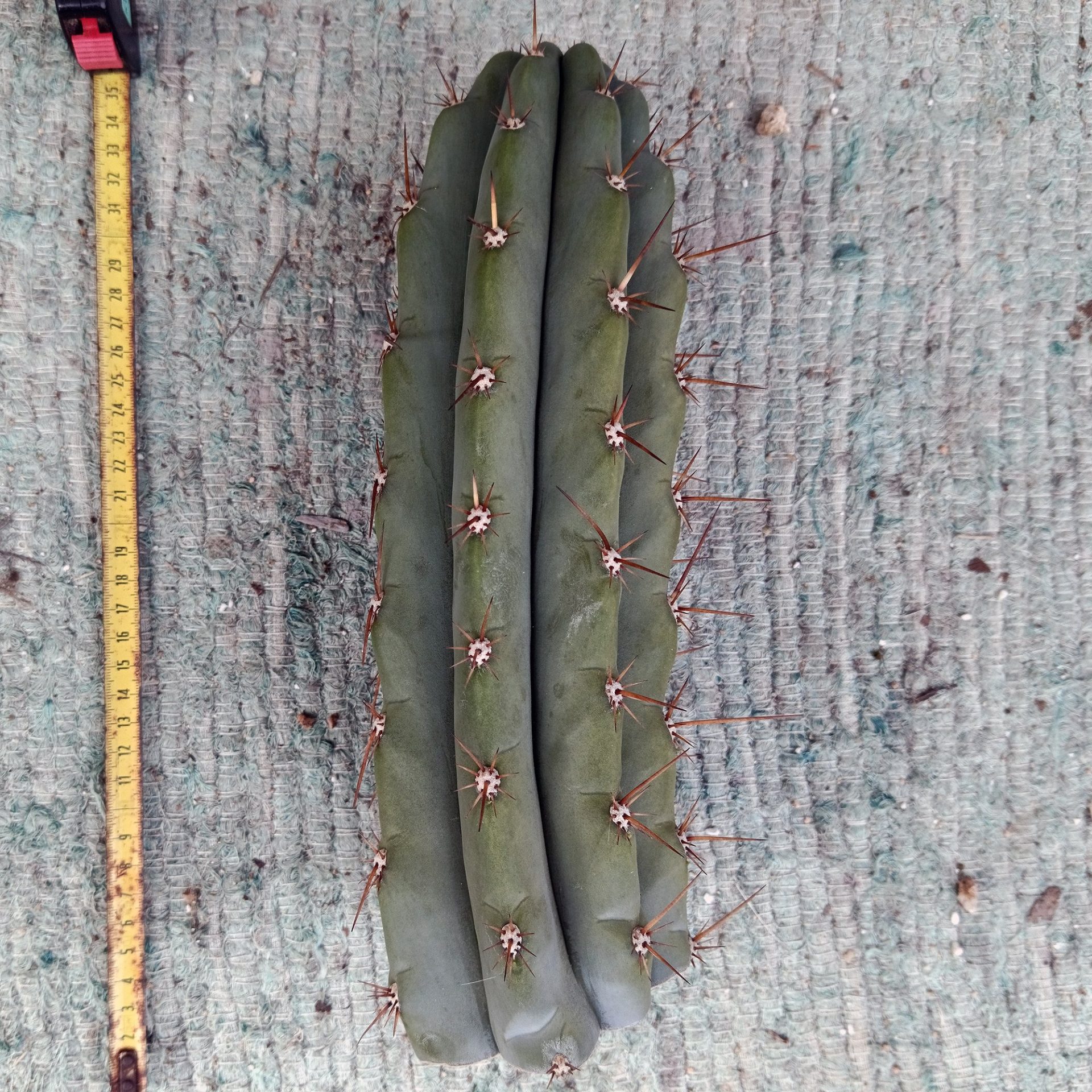
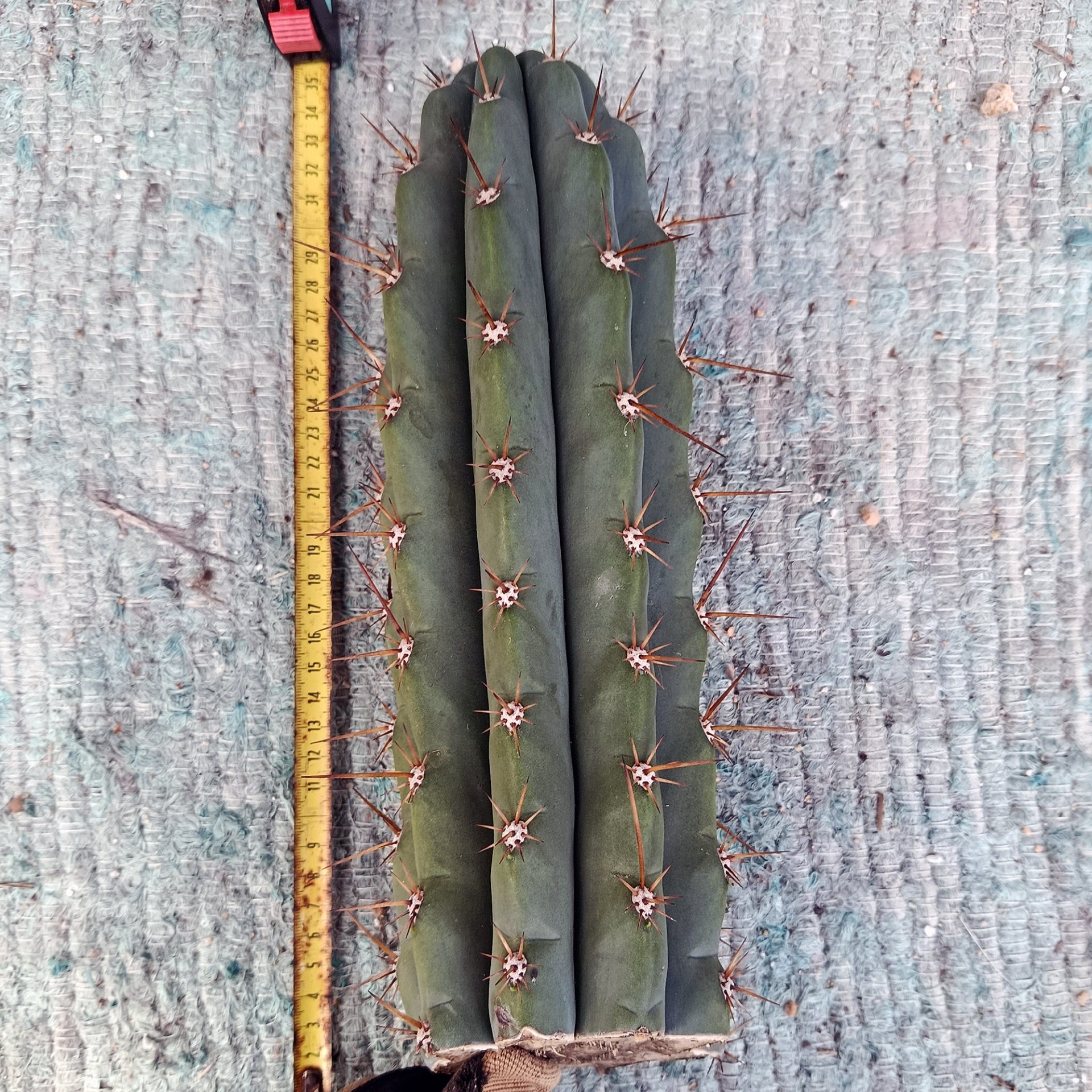
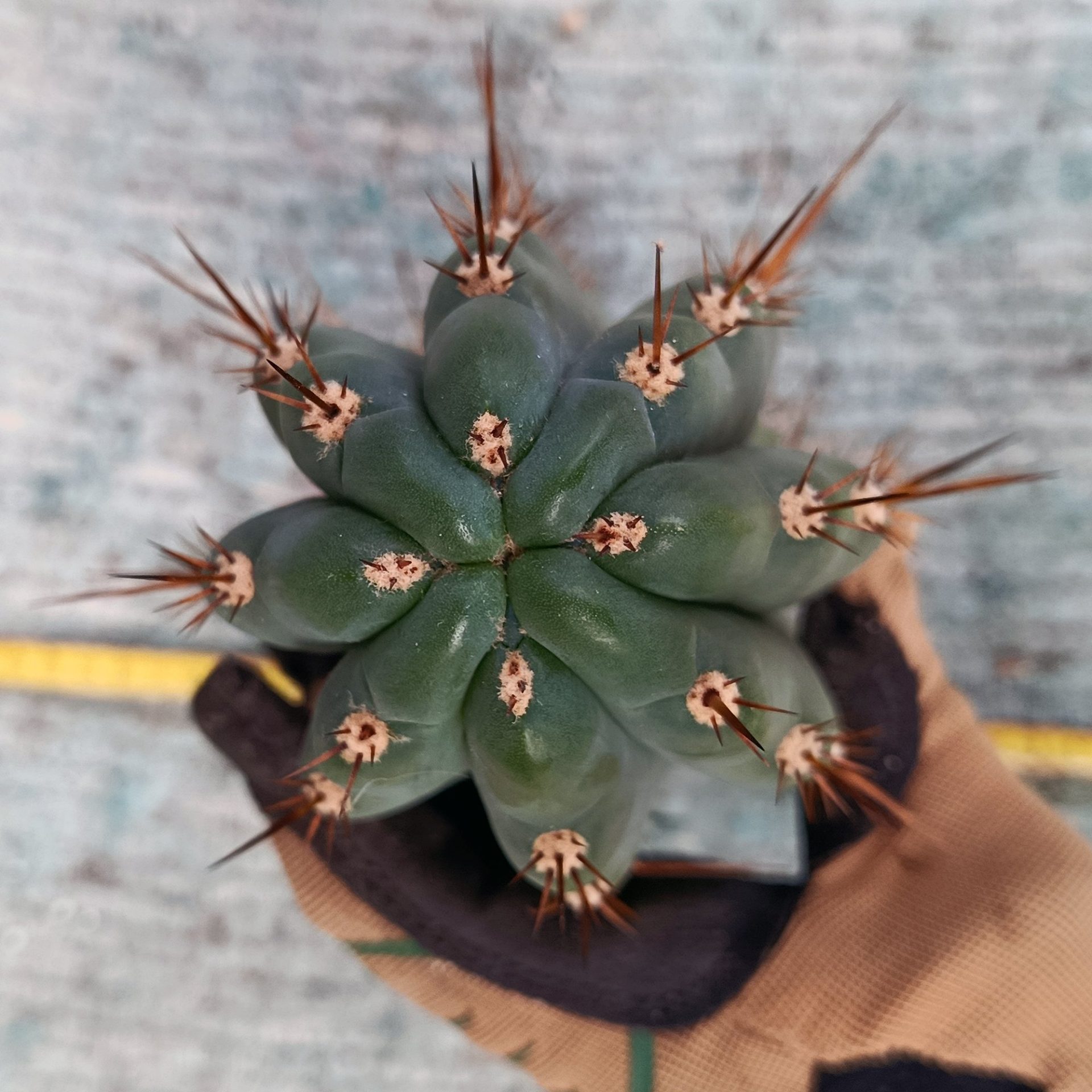
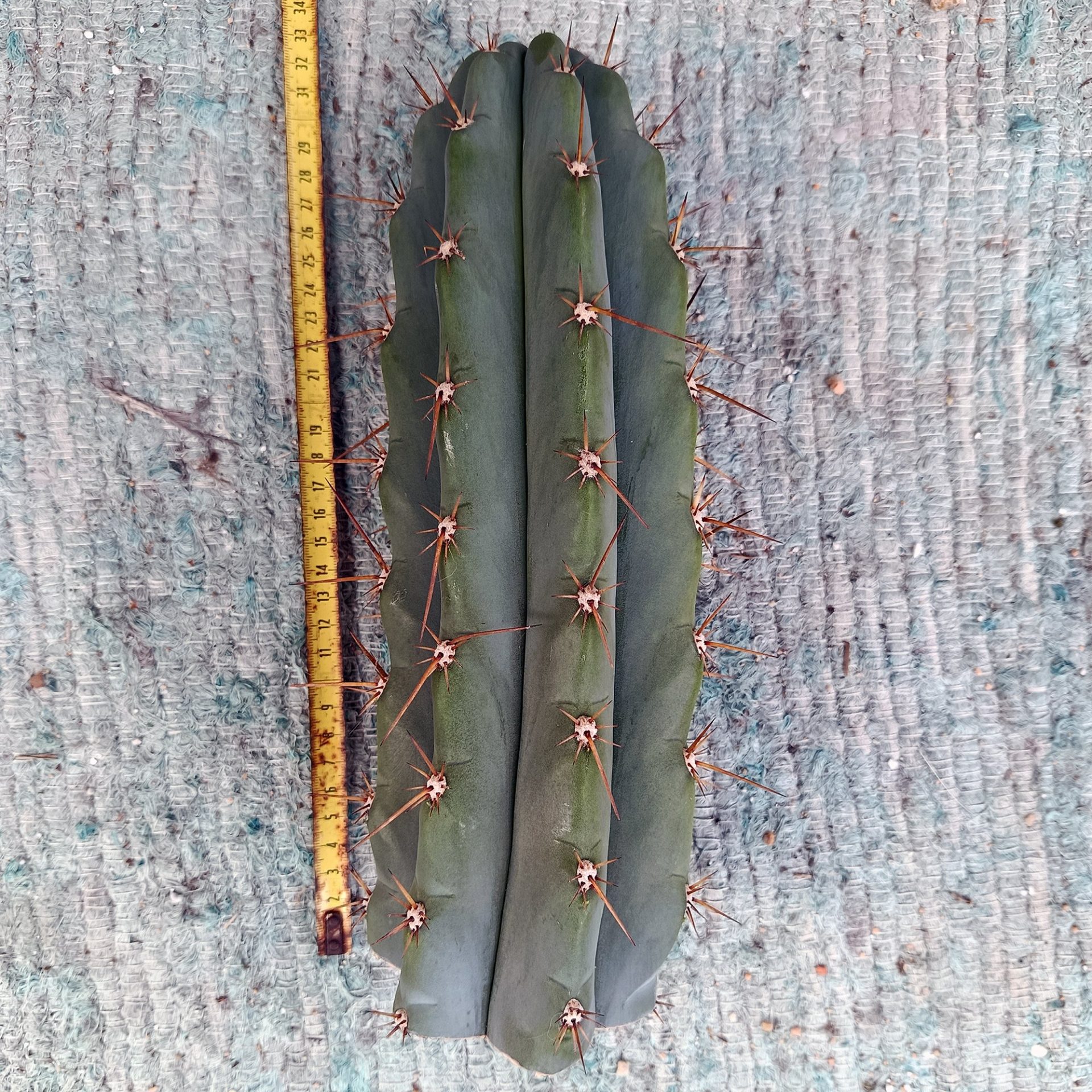
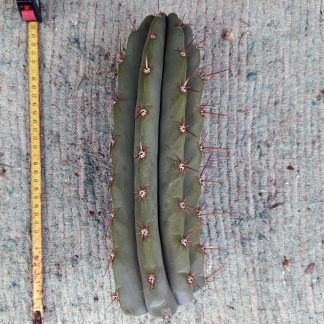
Exact Specimen FCES0001. A substantial, unrooted cutting of our Trichocereus bridgesii cv. ‘Lumberjack’ × Trichocereus peruvianus cv. ‘Sharxx Blue’ hybrid. Thick, glaucous blue-grey growth with pronounced ribs, pale areoles and long reddish-brown spines. A clonal propagation of our established seed-grown mother plant. The exact cutting pictured is supplied.
Plant photos are representative unless an exact specimen is specified. Want to see a particular available plant? Ask for current specimen photos.
Product Features
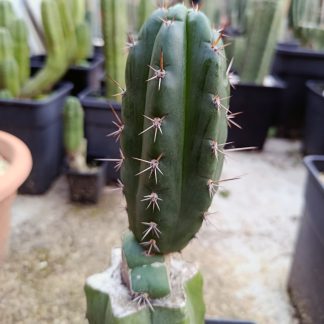
Exact Specimen FCES0001. A thick, unrooted cutting from our Trichocereus bridgesii cv. ‘Lumberjack’ × Trichocereus peruvianus cv. ‘Sharxx Blue’ selection. This column has broad, well-defined ribs, a heavy blue-grey bloom and long reddish-brown spines set against pale, woolly areoles. The growing tip is intact. The cutting shown is the one you will receive.
Our mother plant was raised from seed of this cross and has been propagated vegetatively ever since. The cutting therefore carries the same genetics as our established mother, rather than being another seedling from the same parents. ‘Lumberjack’ is the recorded seed parent and ‘Sharxx Blue’ the pollen parent.
Parentage and history
We associate the original cross with Australian breeder Rodni Kisar, although we no longer have the original seed packet to confirm the attribution. The parentage itself has been retained under the ‘Lumberjack’ × ‘Sharxx Blue’ label in our collection. Our Rodni Kisar archive brings together other material associated with his breeding work.
‘Lumberjack’ has an unusual history. In the 1990s, California grower Joe Lev obtained the plant from a Lumberjack building-supply store in Rancho Cordova. He later circulated it under the name ‘lumberjackius’, which gradually became ‘Lumberjackus’ and then ‘Lumberjack’. Its precise earlier ancestry is unknown. Although usually treated in collections as Trichocereus bridgesii, Lev also noted traits suggesting a possible bridgesii × peruvianus background. That remains an interpretation of its appearance, not a documented earlier cross.
The clone is known for thick, blue-green growth and conspicuous spines, often with some of the paired-spine character familiar from bridgesii-associated plants. It is a useful contrast to the other parent here, the Australian ‘Sharxx Blue’. Other material carrying its genetics can be found in our ‘Lumberjack’ archive.
‘Sharxx Blue’ is a well-known T. peruvianus clone associated with Dawson’s cactus collection and the Australian Trichocereus community. Its dense glaucous coating, substantial stems and relatively restrained spination made it particularly recognisable in cultivation. The details of its early circulation and naming are not entirely settled, and suggestions of a specific Peruvian locality remain unproven. Our ‘Sharxx Blue’ archive groups related material carrying this parentage.
The two names identify particular parent clones. Their offspring are genetically distinct seedlings, not copies of either parent. We selected and retained one of those seedlings as our mother plant, and the cuttings we take from it preserve that individual hybrid. The cross also belongs in our Trichocereus Genetics from Australasia collection.
Growth and appearance
Our clone develops thick columnar growth with a pronounced blue to blue-green waxy surface and well-spaced areoles. The specimen offered here is a particularly substantial piece of that growth, with a rounded, well-developed tip and reddish spines that stand out sharply against the stem.
The blue coating is natural epicuticular wax. Its appearance varies with light, weather, age and handling, and rubbing the surface can leave permanent-looking green marks until new growth develops. Spine colour and length also change as a column matures. Those differences are part of the plant’s growth, not a change in its genetic identity.
Clonal identity and taxonomy
‘Lumberjack’ and ‘Sharxx Blue’ are the parents of this hybrid, not alternative names for it. Every cutting taken from our original seed-grown selection preserves the same hybrid genotype, whereas another seedling of the original cross could have quite different ribs, colour and spines.
We retain the familiar Trichocereus names because they carry the useful horticultural identity of the two parents. In Kew’s current broader treatment, T. bridgesii is included under Echinopsis lageniformis and T. peruvianus under Echinopsis macrogona. These taxonomic combinations do not replace the named clones in a meaningful breeding record. Our Trichocereus bridgesii archive and Trichocereus peruvianus archive cover other material associated with those taxa and their hybrid descendants.
Rooting and cultivation
FCES0001 is an unrooted cutting. Place such a cut in a freely draining rooting medium, keeping it protected from persistent moisture while roots form. It should not be watered as though it were already an established potted plant.
Once rooted, this clone responds well to strong light, good air movement and thorough watering during active growth, provided the medium dries properly between waterings. Acclimatise newly rooted material gradually to intense sun. Give an established column enough root space and nutrition to support its growth, and reduce watering substantially during cold weather.
About Trichocereus
Trichocereus remains an important horticultural name for a group of mostly South American columnar cacti, despite the placement of many species within Echinopsis in broader botanical treatments. Their variation in stem form, spination and surface colour is part of the reason so many individual clones and crosses have been maintained by growers. This particular line connects a Californian collection plant with one of Australia’s better-known blue clones, and preserves one seedling from that pairing through cuttings. Our wider Trichocereus collection includes further named clones, species and crosses.
Unless stated otherwise, plants ship bare-root to supported EU destinations. Outside our delivery area? Ask about seed-only orders or join our email list for shipping updates. Photos are representative unless an exact specimen is specified; ask for current specimen photos. Some plants are cut to order where noted. Save 10-35% automatically on qualifying live plants, with bonus seeds and at least one bonus cactus in every live plant order.
Product Details
| Product Type | |
|---|---|
| Amount | 1 unrooted cutting |
| Size | ~10 cm diameter, ~30 cm tall |
| Common Name | |
| Family | |
| Genus | |
| Species | |
| Clone/Variety/Cultivar | |
| Form | |
| Flower | |
| Breeder/Source | |
| Collection |
Only logged in customers who have purchased this product may leave a review.
You May Also Appreciate
-


Echinopsis hybrid cv. ‘Romance’ | Robert Schick | Live plant
€6.00 Add to basket -

Echinopsis hybrid cv. ‘Statesman’ | Live plant
10% OFF until 30 Nov Original price was: €7.00.€6.30Current price is: €6.30. Add to basket -

Echinopsis hybrid cv. ‘Pooka’ | Live plant
10% OFF until 30 Nov Original price was: €7.50.€6.75Current price is: €6.75. Add to basket -

Trichocereus peruvianus ‘Icaros DNA’ × Trichocereus cv. ‘Colossus’ | Live plant
€56.00 Add to basket -

Trichocereus pachanoi ‘Pumacayán’ (MT07) × Trichocereus ‘Lemmy’ (MT19) | Live plant
From €17.50 Browse options This product has multiple variants. The options may be chosen on the product page -

Echinopsis hybrid f. monstrosa cristata cv. ‘Circle’ | Live plant
10% OFF until 30 Nov Original price was: €15.75.€14.17Current price is: €14.17. Add to basket -

Trichocereus pachanoi hybrid cv. ‘Schöne’ | ‘San Pedro’ | Live plant
10% OFF until 30 Nov Original price was: €48.00.€43.20Current price is: €43.20. Add to basket -

Trichocereus hybrid cv. ‘Herzog Gold’ | Live Plant
€10.00 Add to basket -

Echinopsis hybrid cv. ‘Gypsy’ × Echinopsis hybrid cv. ‘Pooka’ | Live plant
€10.00 Add to basket -

Trichocereus hybrid cv. ‘Imperialis’ | Live plant
€16.00 Add to basket -

Echinopsis hybrid cv. ‘Gossamer’ | Live plant
€7.50 Add to basket -
Trichocereus chalaensis × Trichocereus pachanoi f. monstrosa (on ‘Emilio’) | Grafted Plant | Exact Specimen FCES0003
€75.00 Add to basket
Reviews
There are no reviews yet