
Trichocereus pachanoi ‘Mallorca’ | ‘San Pedro’ | Live plant
Trichocereus pachanoi ‘Mallorca’ is a distinctive blue-green San Pedro obtained from a highly respected Spanish grower. It develops broad, rounded ribs, a glaucous epidermis and modest, short spination. ‘Mallorca’ records its horticultural provenance rather than a formal cultivar identity. Our plants are vegetative propagations of this particular accession. Live plant.
Currently unavailable.
Product Features
Trichocereus pachanoi ‘Mallorca’ is a handsome, blue-green San Pedro which we originally obtained from an established Spanish grower whose plants and growing experience we hold in particularly high regard. We have retained this material as a distinct accession and propagate it clonally, preserving the genetics of the original plant.
‘Mallorca’ is a horticultural source designation rather than a formal cultivar name. We grow several different plants associated with Mallorca, and the shared geographical label should not be taken to mean that they all represent the same clone. The plants offered through this particular listing are vegetative propagations of one maintained genetic individual.
Growth & appearance
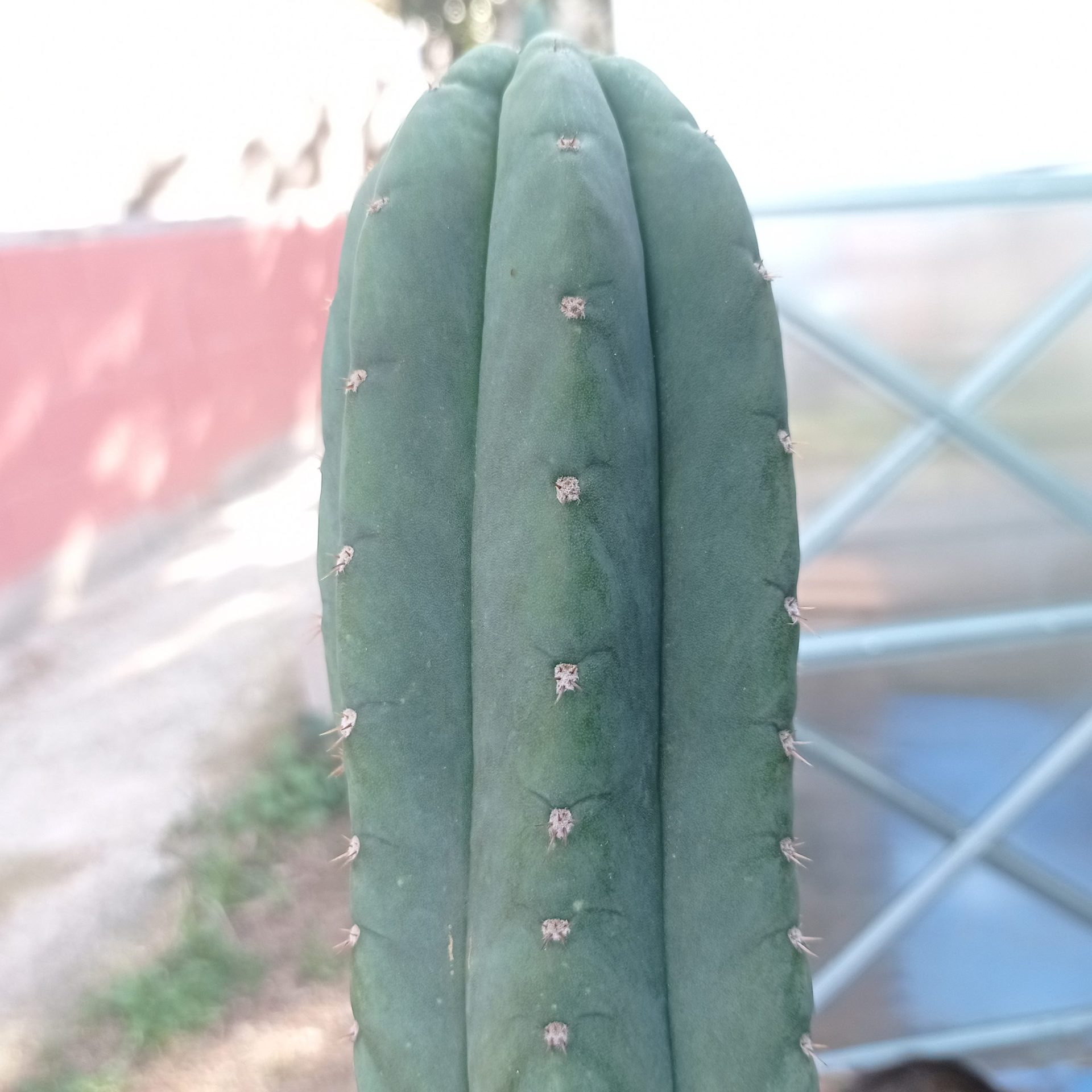
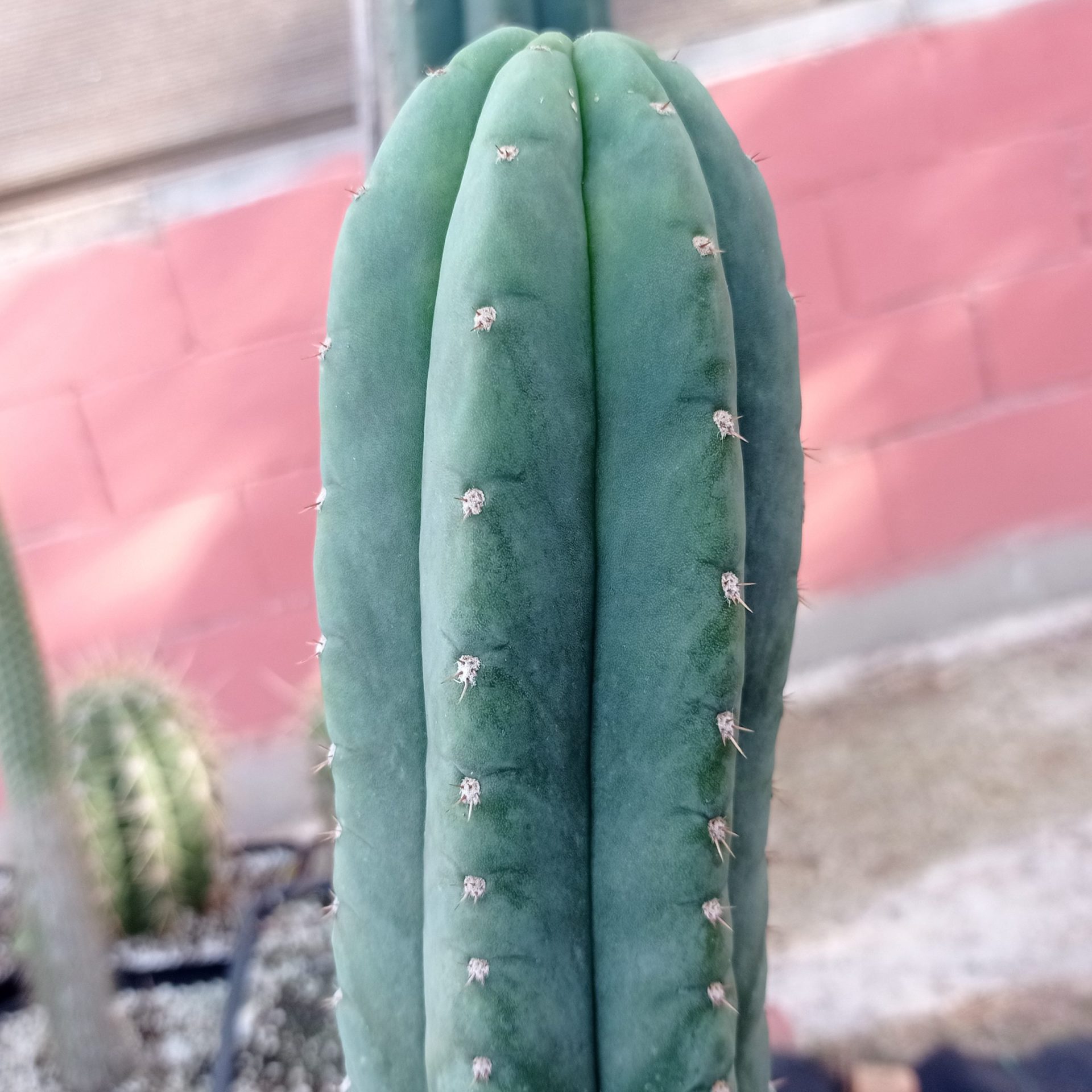
Our ‘Mallorca’ develops substantial upright columns with broad, smoothly rounded ribs and a particularly attractive blue-green epidermis. Under suitable growing conditions, the surface develops a pronounced glaucous bloom, giving the stems a muted turquoise to bluish-grey appearance. Fresh growth around the apex can be noticeably lighter.
The ribs are relatively straight and full, with shallow depressions and occasional crescent-shaped notching above the areoles. This gives the stems some definition without the strongly scalloped or deeply notched appearance found in certain other T. pachanoi selections.
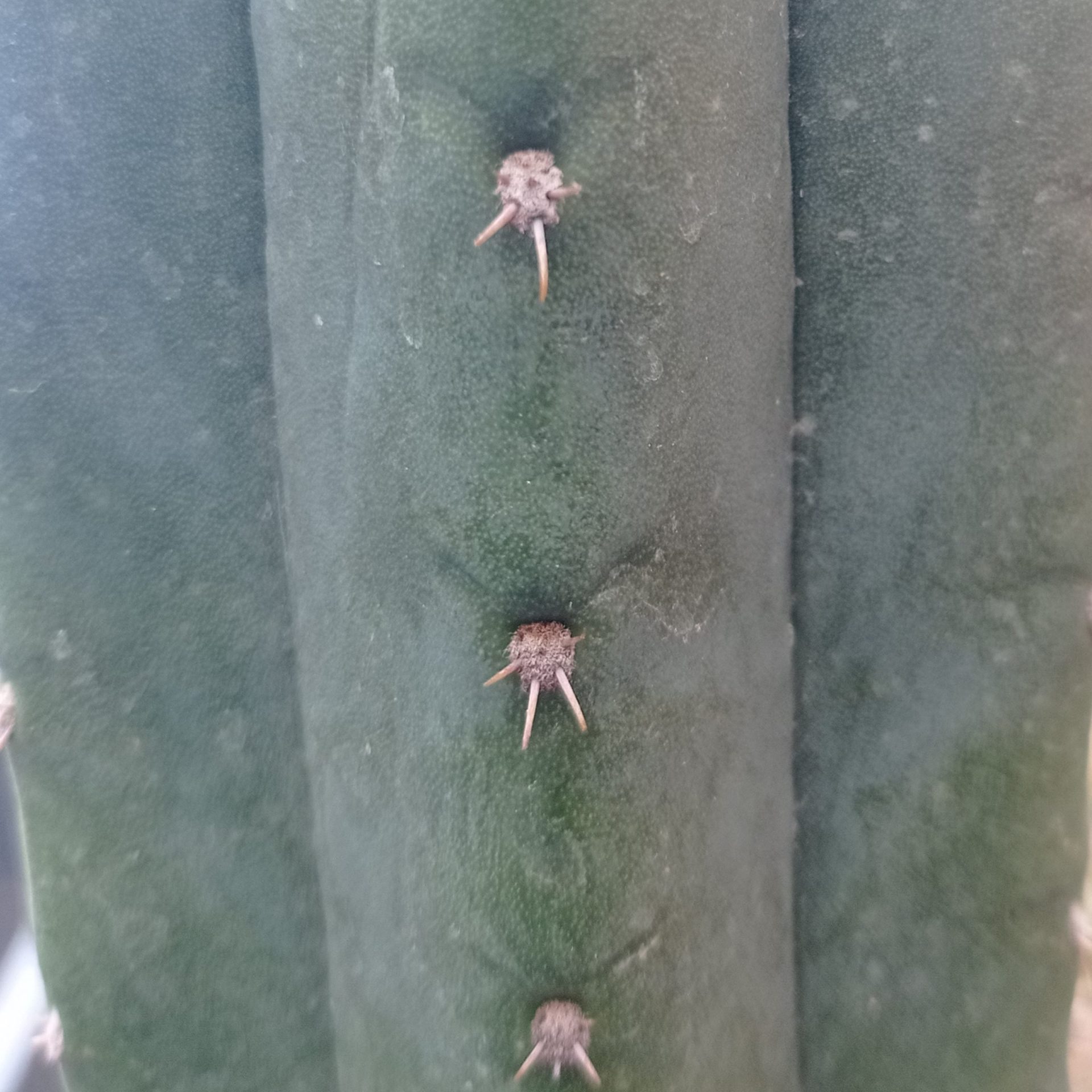
The areoles are small and slightly woolly, with pale cream to brownish felt and generally a few short, slender spines. These are initially pale tan to brownish and may become greyer with age. Spination is modest but clearly present, distinguishing this plant from the nearly spineless San Pedro clones commonly encountered in cultivation.
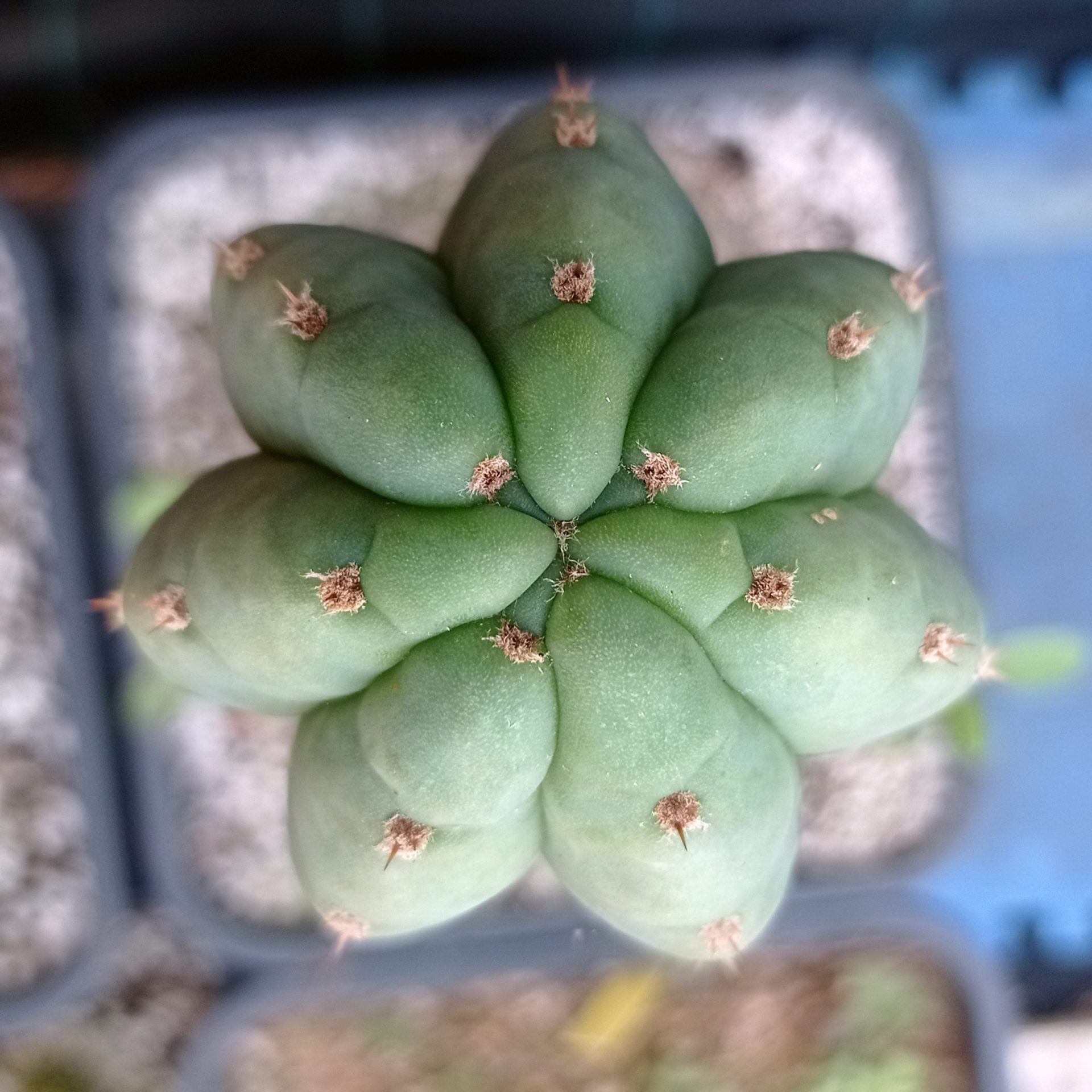
The rounded apex, relatively broad ribs and restrained spination give this accession a recognisable T. pachanoi appearance. Its blue-green colouring is particularly evident in our photographs, although the strength of the glaucous bloom will vary with growing conditions.
As with other columnar Trichocereus, stem thickness, rib number, areole spacing and spine development can change as plants mature. Young propagations may therefore look somewhat different from established mother stems, especially while developing their own root systems.
About ‘Mallorca’
Our original material came from an experienced Spanish grower whom we greatly respect. We have retained the ‘Mallorca’ designation to preserve that horticultural provenance, rather than inventing a formal cultivar history for a plant whose earlier ancestry is not independently documented.
Mallorca is, of course, a Mediterranean island rather than a native locality for Trichocereus pachanoi. The designation records the plant’s association with Spanish cultivation. It does not establish where its ancestors were originally collected in South America, nor does it identify a botanical variety peculiar to the island.
This distinction matters because we maintain other plants bearing the same geographical designation, including material with different growth forms. A shared source name does not, by itself, establish a shared clonal identity.
For this listing, however, the propagation lineage is straightforward: our plants are produced vegetatively from the original accession and are not seed-grown offspring. This preserves the particular genetic individual illustrated in our photographs.
The accession belongs within our European Trichocereus genetics collection, which records material associated with European growers, collections and breeding rather than suggesting that the species itself is native to Europe.
About Trichocereus pachanoi
Trichocereus pachanoi, commonly known as ‘San Pedro’, is a vigorous South American columnar cactus native principally to the Andes of Ecuador and Peru. It has been cultivated for centuries and is now represented by numerous distinct clones, horticultural selections and locality-associated lines.
Established specimens can develop substantial branching stems, sometimes forming large shrubs or small cactus trees in suitable climates. Typical plants have relatively few broad ribs, modest spination and large white to whitish flowers which generally open during the evening and night.
The flowers develop on sufficiently mature stems and have the elongated, hairy floral tubes characteristic of many Trichocereus. We do not assume that every individual cultivated clone will flower at the same age or under identical conditions.
Our San Pedro Cactus FAQ covers the identification, taxonomy and cultivation of T. pachanoi and its close relatives in greater detail.
Taxonomy
We retain the traditional name Trichocereus pachanoi, which remains widely used among cactus growers and collectors. The species is also encountered as Echinopsis pachanoi and has been included within broader interpretations of Trichocereus macrogonus, including as T. macrogonus subsp. pachanoi.
The ‘Mallorca’ designation is independent of these botanical classifications. It identifies the source-associated clonal material maintained in our collection, without suggesting a separate species, botanical variety or formally established cultivar.
Cultivation
We grow this accession under the same general conditions as our other vigorous T. pachanoi clones. It appreciates abundant light, adequate root space and an open, freely draining but reasonably nutritious growing medium.
During active growth, established plants benefit from thorough watering followed by an appropriate drying period, together with moderate feeding. Good light encourages firm, substantial stems, although newly acquired plants should be acclimatised gradually before exposure to intense direct sun.
Reduce watering considerably during cool winter conditions, particularly where light levels are low. Like other San Pedro cacti, mature, well-acclimatised plants can tolerate comparatively cool temperatures, but prolonged cold combined with wet soil is best avoided.
Our Trichocereus cultivation guide provides more detailed advice on substrates, watering, feeding, winter care and acclimatisation.
About Trichocereus
Trichocereus comprises a diverse group of South American columnar cacti, including numerous species, natural populations, old nursery clones, cultivated selections and hybrids. The long cultivation history of T. pachanoi has produced a particularly large number of horticultural identities, some well documented and others known principally through the growers who have preserved them. Our ‘Mallorca’ is one such accession, maintained clonally with its Spanish source history intact.
Unless stated otherwise, plants ship bare-root to supported EU destinations. Outside our delivery area? Ask about seed-only orders or join our email list for shipping updates. Photos are representative unless an exact specimen is specified; ask for current specimen photos. Some plants are cut to order where noted. Save 10-35% automatically on qualifying live plants, with bonus seeds and at least one bonus cactus in every live plant order.
Product Details
| Product Type | |
|---|---|
| Amount | 1 rooted plant |
| Size | Size is added here when this item is in stock. |
| Common Name | |
| Family | |
| Genus | |
| Species | |
| Clone/Variety/Cultivar | |
| Form | |
| Flower | |
| Collection | Trichocereus Genetics from Europe, Trichocereus Genetics from Spain |
Only logged in customers who have purchased this product may leave a review.
You May Also Appreciate
-
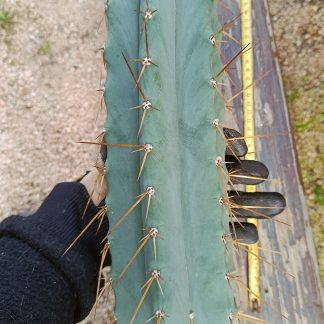

Trichocereus bridgesii cv. ‘Deutsche’ | Unrooted Cutting | Exact Specimen FCES0002
€66.00 Add to basket -

Opuntia microdasys cv. ‘Rufida’ | ‘Mexican Bunny Ears Cactus’ | Live plant
€11.25 Add to basket -

Trichocereus bridgesii f. semi-monstrosa cv. ‘RAP’ | ‘Monstrose Bolivian Torch’ | Live plant
10% OFF until 30 Nov Original price was: €81.00.€72.90Current price is: €72.90. Add to basket -
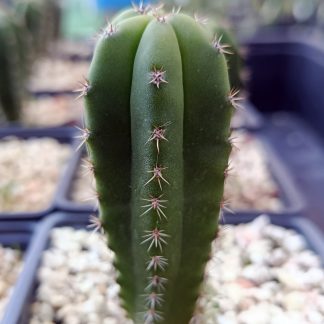
Trichocereus cordobensis | Live plant
€14.00 Add to basket -
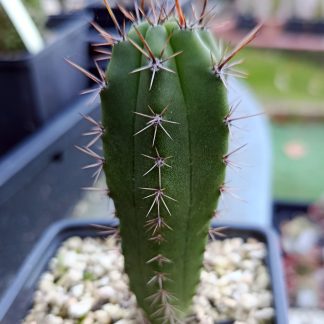
Trichocereus knuthianus | Live plant
€20.00 Add to basket -

Trichocereus atacamensis ‘TB 1320.2’ | ‘Cardón Grande’ | Live plant
€8.00 Add to basket -

Trichocereus cordobensis cv. ‘Helon’ | Australian Clone | Live plant
10% OFF until 30 Nov Original price was: €55.00.€49.50Current price is: €49.50. Add to basket -

Lophophora williamsii ‘RS 378’ | ‘Peyote’ | Live plant
€32.00 Add to basket -

Trichocereus pachanoi cv. ‘Mujica’ | ‘San Pedro’ | Live plant
10% OFF until 30 Nov Original price was: €22.50.€20.25Current price is: €20.25. Add to basket -

Trichocereus faundezii ‘GM 1849’ | Live plant
From €21.00 Browse options This product has multiple variants. The options may be chosen on the product page -

Trichocereus rowleyi ‘P134’ (ex. var. pumila) | ‘Red Torch’ | Live plant
€18.00 Add to basket -

Trichocereus atacamensis subsp. pasacana ‘TB 1099.3’ | ‘Cardón Grande’ | Live plant
10% OFF until 30 Nov Original price was: €18.00.€16.20Current price is: €16.20. Add to basket
Reviews
There are no reviews yet