
Trichocereus pachanoi cv. ‘Blue Epidermis’ | ‘San Pedro’ | Live plant
Trichocereus pachanoi cv. ‘Blue Epidermis’ is a strikingly glaucous ‘San Pedro’ clone obtained from a German cactus nursery. Its stout blue-grey stems, broad rounded ribs, reddish-brown areoles and exceptionally short ivory-coloured spines give it a distinctive, almost spineless appearance. Live plant.
Currently unavailable.
Product Features
Trichocereus pachanoi cv. ‘Blue Epidermis’ | ‘San Pedro’ | Live plant
(syn. Echinopsis pachanoi, Trichocereus macrogonus subsp. pachanoi)
Trichocereus pachanoi cv. ‘Blue Epidermis’ is a strikingly glaucous, exceptionally short-spined ‘San Pedro’ clone which we originally obtained from a German cactus nursery. We have maintained the same genetic line through vegetative propagation, preserving the distinctive combination of blue-grey epidermis, broad ribs and minimal spination that first attracted us to this plant.
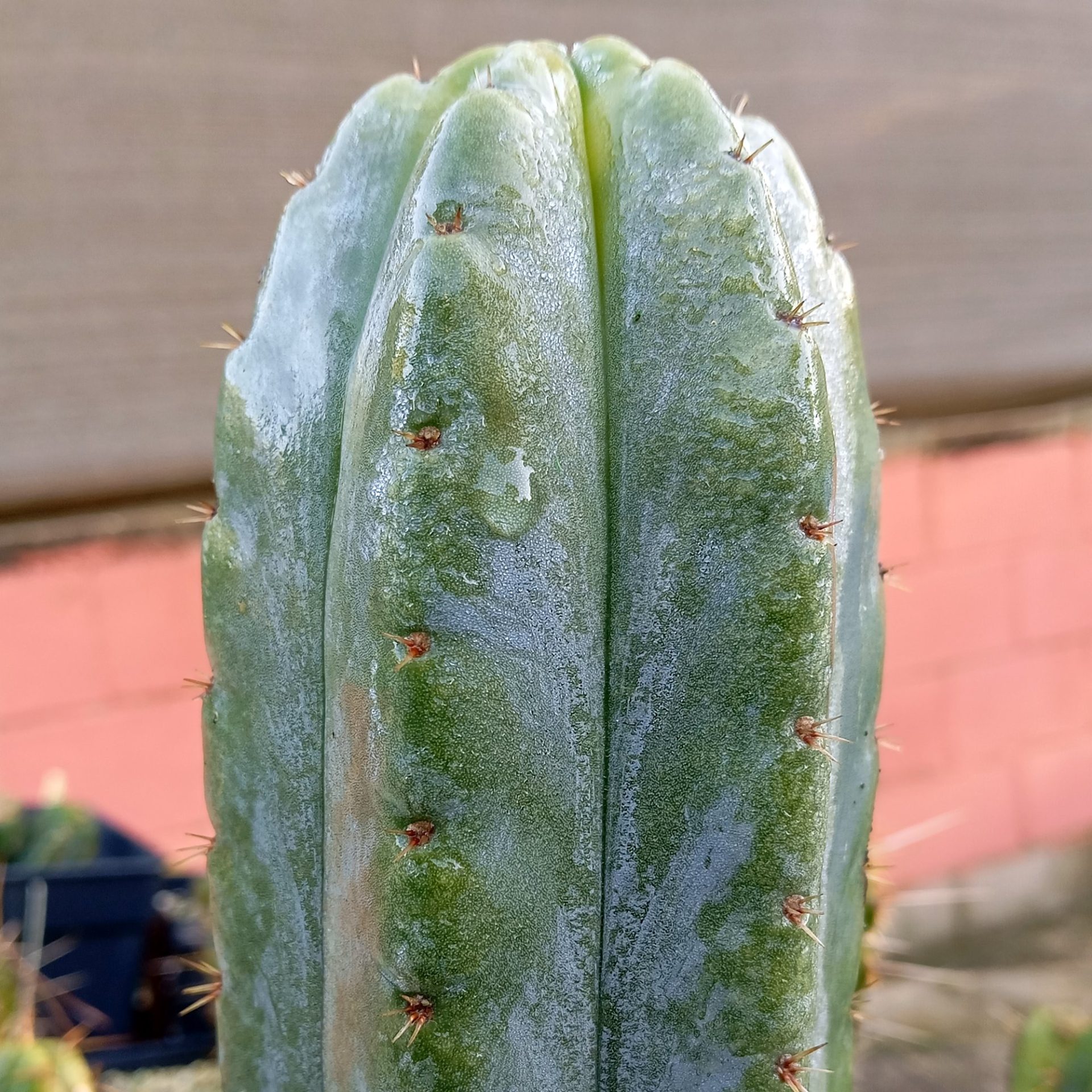
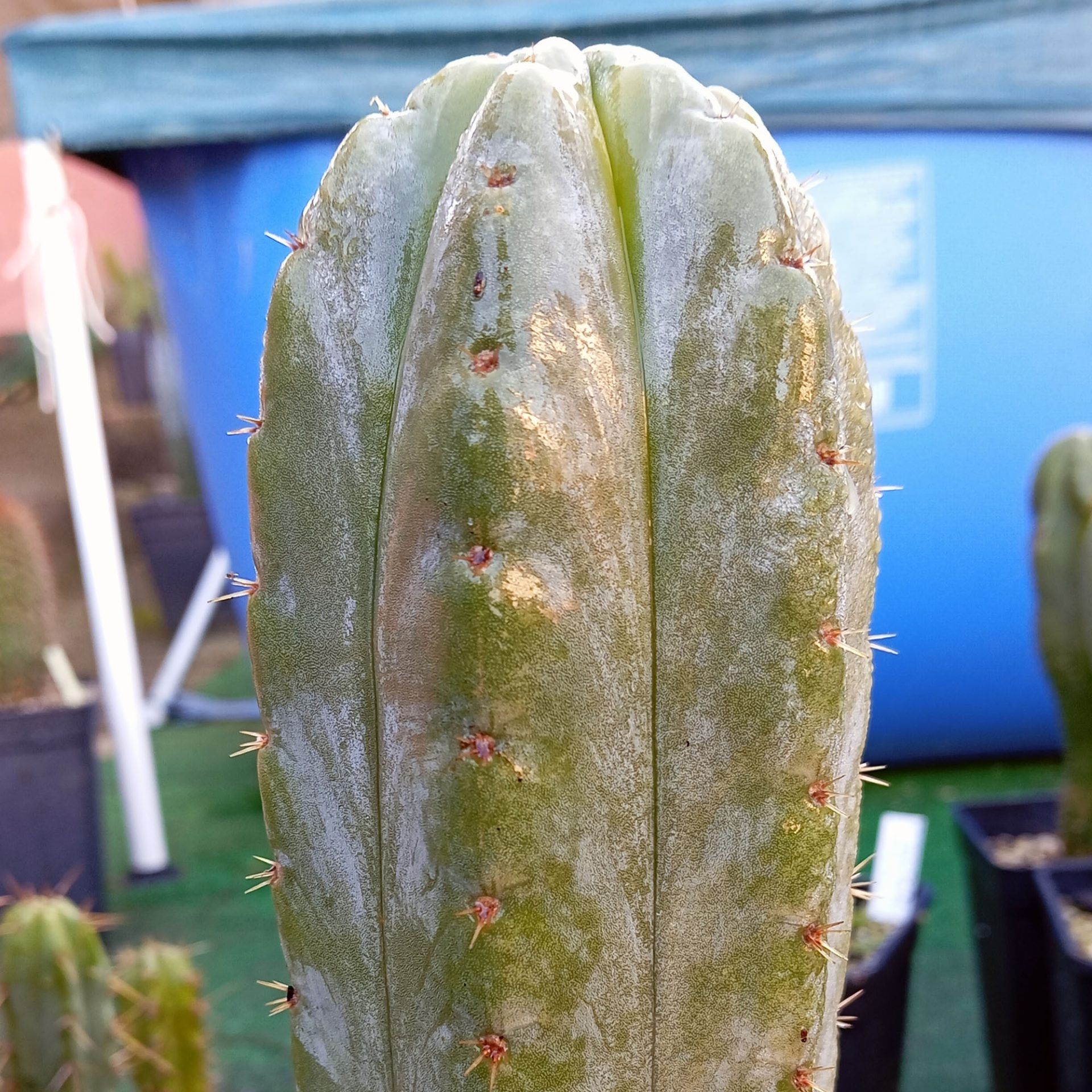
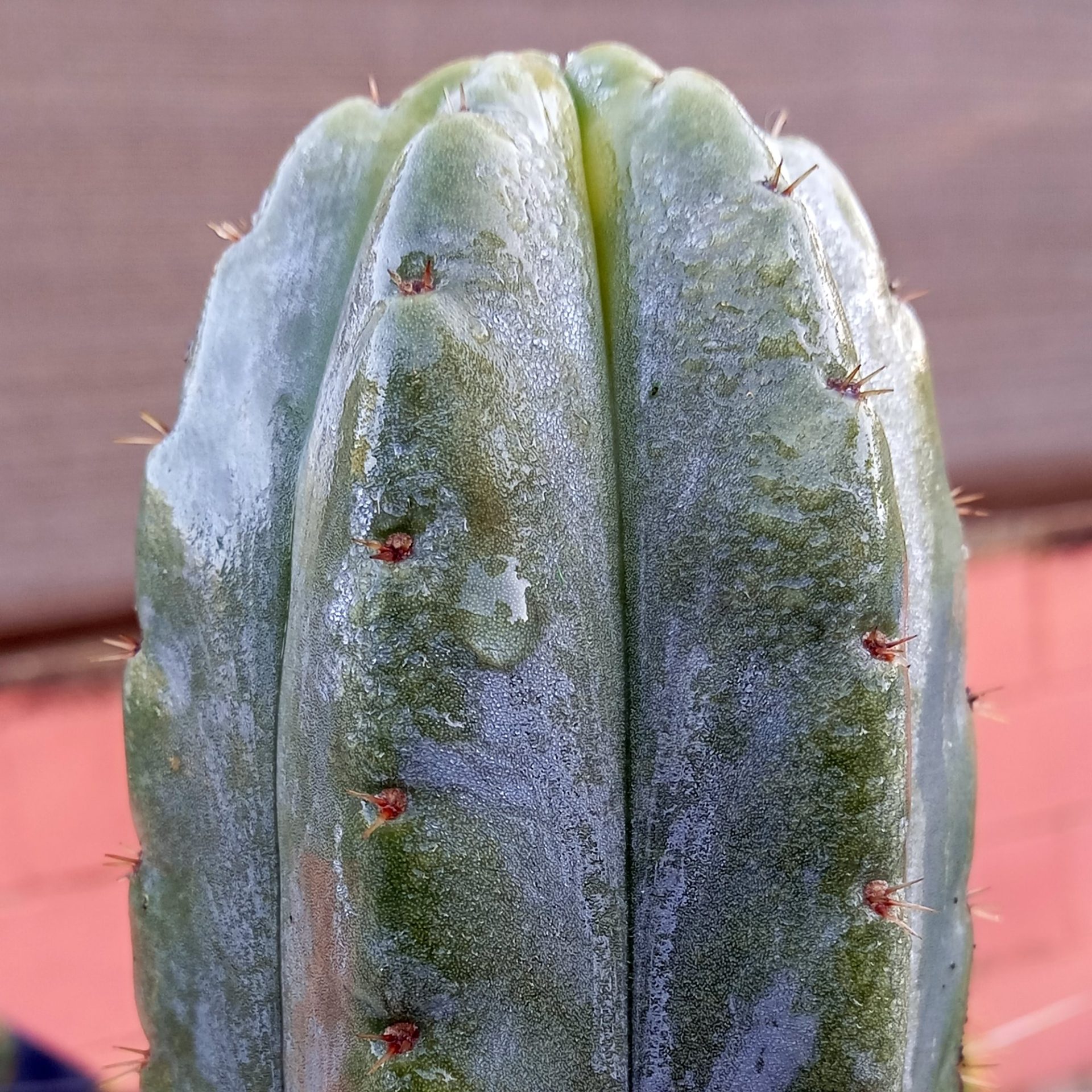
As its name suggests, the principal attraction is the unusually pronounced blue-grey coating covering much of the stem. This waxy, glaucous bloom gives the plant a frosted appearance, with brighter green areas visible where the coating is less pronounced. Rather than appearing uniformly blue, the epidermis often shows an attractive mixture of silvery-blue and fresh green tones, particularly around the growing tip.
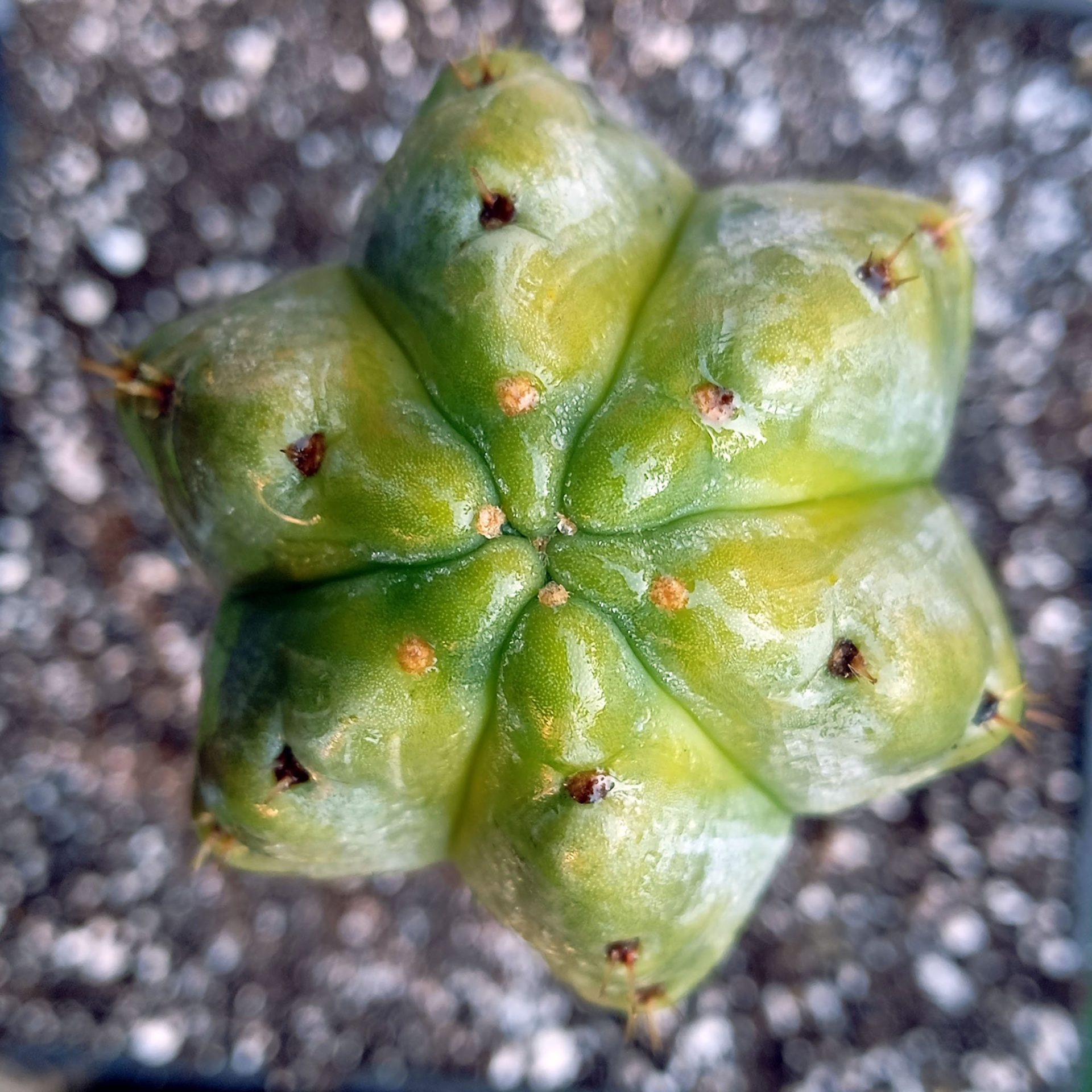
The stems are stout and upright, with broad, smoothly rounded ribs separated by deep, narrow grooves. Small reddish-brown areoles are spaced regularly along the ribs, each carrying a few remarkably short, pale ivory to tan spines. These are very much present, although easily overlooked at first glance. Shallow depressions above the areoles give the rib margins a gently scalloped appearance.
The photographs show these characteristics particularly clearly. Viewed from above, the broad ribs converge around a compact green apex; from the side, the tiny spines stand out against the blue-green stem surface. The glaucous coating varies with growth conditions and may become uneven through ordinary exposure and handling.
Origin and Provenance
We acquired our original ‘Blue Epidermis’ plant from a German nursery under that name, without any further information identifying the original breeder, selector or earlier collection history. We therefore retain the name under which it reached us, but do not claim that the clone originated in Germany or assign it an undocumented wild locality.
Its established appearance and continued propagation in our collection make ‘Blue Epidermis’ a useful individual clone rather than simply a descriptive name for any particularly blue Trichocereus pachanoi.
We maintain several other glaucous pachanoi selections with quite different acquisition histories. Our Trichocereus pachanoi cv. ‘Nudal’ is another German-sourced clone notable for its broad stems and restrained spination, while T. pachanoi cv. ‘Arrostito’ is an independently sourced Spanish selection with attractive glaucous growth, reddish-brown areoles and short golden-tan spines. These are separate genetic lines, not alternative names for ‘Blue Epidermis’.
About Trichocereus pachanoi
Trichocereus pachanoi, commonly known as ‘San Pedro’, is a vigorous columnar cactus native to the Andean regions of southern Ecuador and Peru. It is familiar in cultivation for its broad, usually green to blue-green stems, relatively modest spination and tendency to develop substantial branching specimens over time.
Typical stems have broad, rounded ribs with small areoles and sometimes conspicuous transverse notches immediately above them. Spine development varies considerably between plants, from almost inconspicuous armature to more prominent yellowish or brown spines. Glaucous colouration is also variable, although it is especially pronounced in selected clones such as ‘Blue Epidermis’.
Mature T. pachanoi plants produce large, predominantly white flowers which open mainly during the evening and night. This is a characteristic of the species rather than a claim that our particular ‘Blue Epidermis’ mother plant has been observed flowering.
The species has a long history of cultivation in South America and an equally complicated taxonomic history. Britton and Rose described Trichocereus pachanoi in 1920, while later botanical treatments placed it within Echinopsis or treated it as part of a broader Trichocereus macrogonus complex.
Kew’s Plants of the World Online currently accepts Echinopsis pachanoi as a distinct species and includes Trichocereus pachanoi and Trichocereus macrogonus subsp. pachanoi among its synonyms. We retain the established Trichocereus pachanoi name for our nursery material because it remains useful for distinguishing and documenting the many separately maintained ‘San Pedro’ clones.
Our pachanoi catalogue archive brings together other plants, named clones, hybrids and related material associated with this species. Unlike our seed-grown Trichocereus pachanoi, where each plant represents a different genetic individual, ‘Blue Epidermis’ is maintained as a single, identifiable clonal selection.
Cultivation
In our experience, ‘Blue Epidermis’ is a robust and straightforward Trichocereus to cultivate. We have grown our original plant outdoors throughout the year, where it has tolerated brief periods of mild frost as well as considerable seasonal rainfall. These are observations from our own growing conditions, not a guarantee of frost resistance in other climates.
Give the plant abundant light and a freely draining, well-aerated substrate. We generally grow our Trichocereus plants in approximately equal proportions of soil and perlite, providing both suitable drainage and enough nutrition to support vigorous columnar growth.
Water thoroughly during active growth, allowing the substrate to dry sufficiently between waterings. Occasional feeding during the growing season and adequate room for root development encourage healthy, firm growth. Plants moved from sheltered conditions should be acclimatised gradually to strong direct sunlight.
Reduce watering considerably as temperatures and daylight decline. Although our established mother plant has proved reasonably tolerant of cool, damp weather, prolonged cold combined with saturated compost remains a significant risk. Protect plants appropriately where sustained frost or winter waterlogging is likely.
For a more detailed explanation of light, watering, substrates and seasonal growing conditions, see our guide to caring for Trichocereus cacti.
About Trichocereus
Trichocereus is a diverse group of predominantly South American columnar cacti, represented in cultivation by botanical species, locality collections, historic nursery lines, selected clones and numerous hybrids. Their growth habits, stem colours, rib structures and spination can vary remarkably, even among plants associated with the same species.
Named selections such as ‘Blue Epidermis’ are particularly interesting because vegetative propagation allows distinctive characteristics to be preserved and compared with other established genetic lines. This differs fundamentally from raising plants from seed, where the resulting offspring are genetically individual and may show a broad range of traits.
For further information on the group, including its complicated nomenclature and the relationship between traditional horticultural names and modern botanical treatments, see our illustrated Trichocereus species guide.
Unless stated otherwise, plants ship bare-root to supported EU destinations. Outside our delivery area? Ask about seed-only orders or join our email list for shipping updates. Photos are representative unless an exact specimen is specified; ask for current specimen photos. Some plants are cut to order where noted. Save 10-35% automatically on qualifying live plants, with bonus seeds and at least one bonus cactus in every live plant order.
Product Details
| Product Type | |
|---|---|
| Amount | 1 unrooted cutting |
| Size | Size is added here when this item is in stock. |
| Common Name | |
| Family | |
| Genus | |
| Species | |
| Clone/Variety/Cultivar | |
| Form | |
| Flower | |
| Collection |
Only logged in customers who have purchased this product may leave a review.
You May Also Appreciate
-


Lophophora williamsii ‘RS 378’ | ‘Peyote’ | Live plant
€32.00 Add to basket -

Trichocereus rowleyi ‘P134’ (ex. var. pumila) | ‘Red Torch’ | Live plant
€18.00 Add to basket -

Trichocereus atacamensis subsp. pasacana ‘TB 1099.3’ | ‘Cardón Grande’ | Live plant
10% OFF until 30 Nov Original price was: €18.00.€16.20Current price is: €16.20. Add to basket -

Opuntia microdasys cv. ‘Rufida’ | ‘Mexican Bunny Ears Cactus’ | Live plant
€11.25 Add to basket -

Trichocereus cordobensis cv. ‘Helon’ | Australian Clone | Live plant
10% OFF until 30 Nov Original price was: €55.00.€49.50Current price is: €49.50. Add to basket -
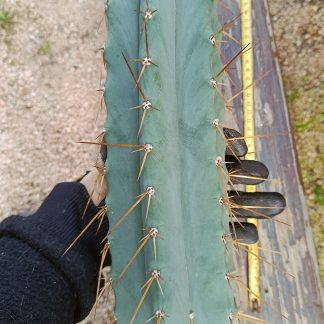
Trichocereus bridgesii cv. ‘Deutsche’ | Unrooted Cutting | Exact Specimen FCES0002
€66.00 Add to basket -

Trichocereus atacamensis ‘TB 1320.2’ | ‘Cardón Grande’ | Live plant
€8.00 Add to basket -

Trichocereus pachanoi cv. ‘Mujica’ | ‘San Pedro’ | Live plant
10% OFF until 30 Nov Original price was: €22.50.€20.25Current price is: €20.25. Add to basket -

Trichocereus bridgesii f. semi-monstrosa cv. ‘RAP’ | ‘Monstrose Bolivian Torch’ | Live plant
10% OFF until 30 Nov Original price was: €81.00.€72.90Current price is: €72.90. Add to basket -
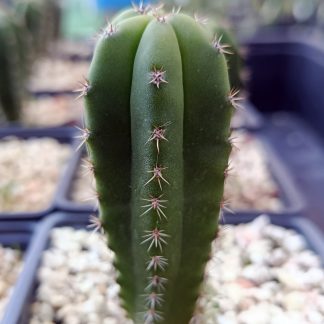
Trichocereus cordobensis | Live plant
€14.00 Add to basket -

Trichocereus faundezii ‘GM 1849’ | Live plant
From €21.00 Browse options This product has multiple variants. The options may be chosen on the product page -
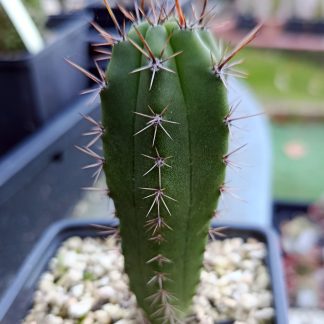
Trichocereus knuthianus | Live plant
€20.00 Add to basket
Reviews
There are no reviews yet