


Echinopsis leucantha | ‘Easter Lily Cactus’ | Live plant
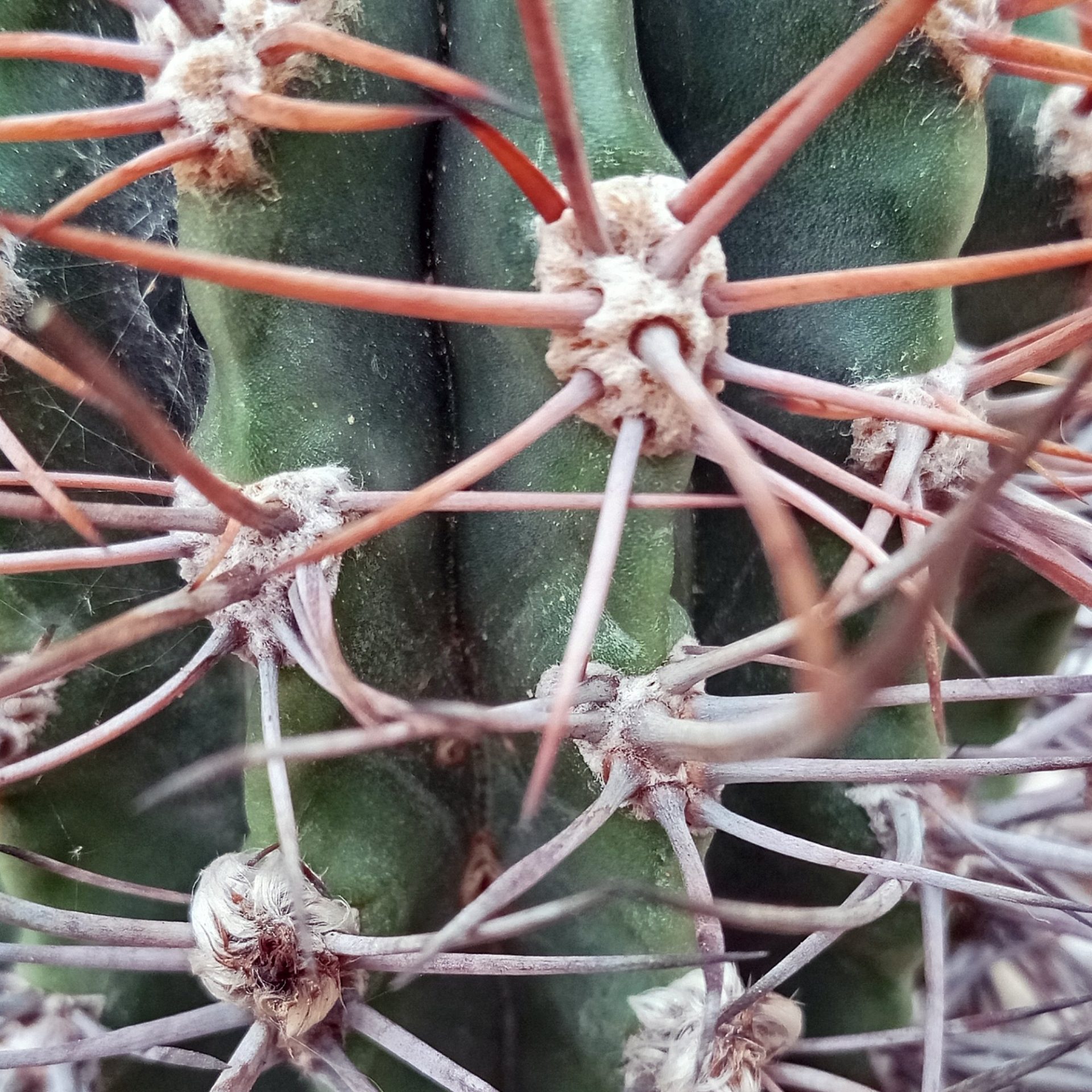
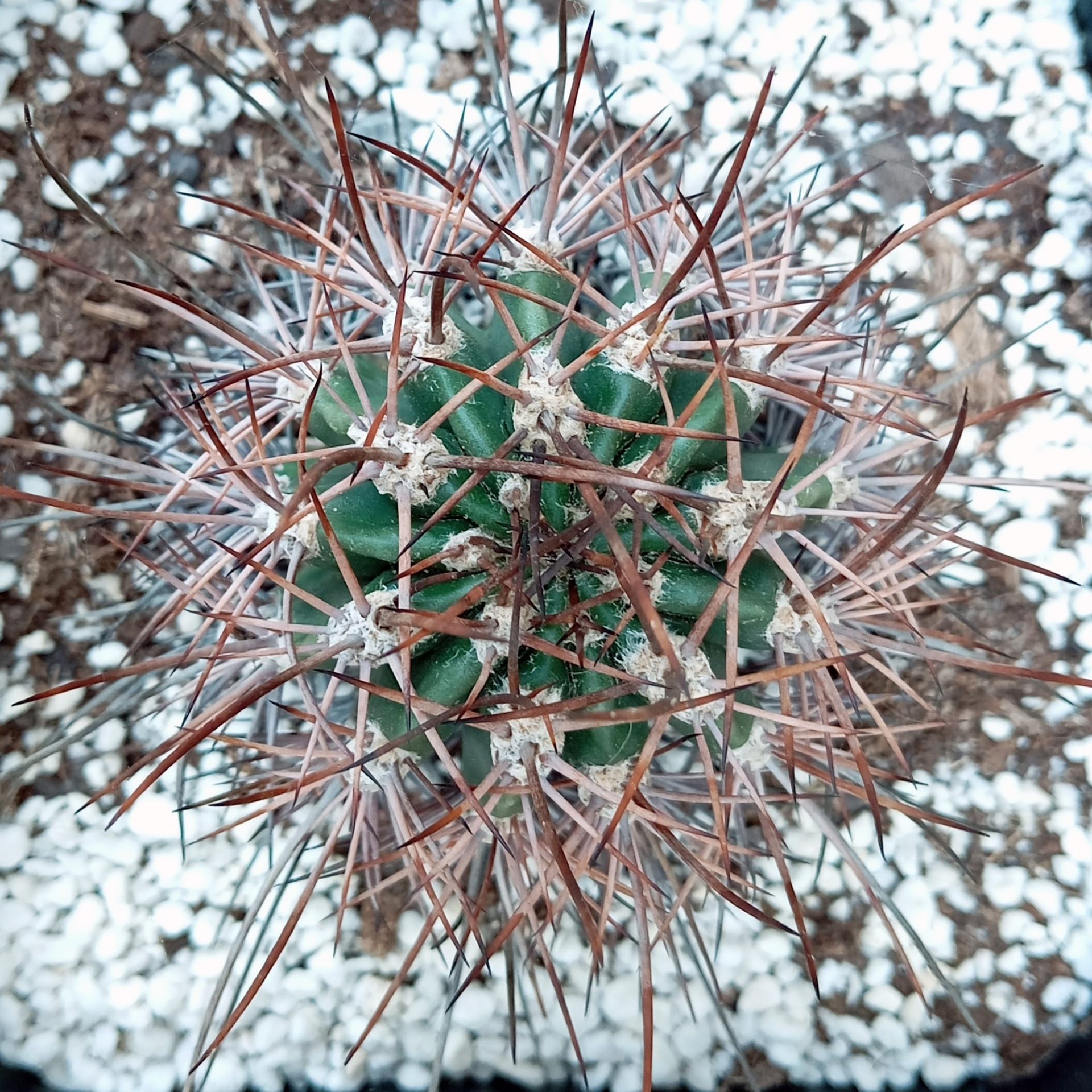
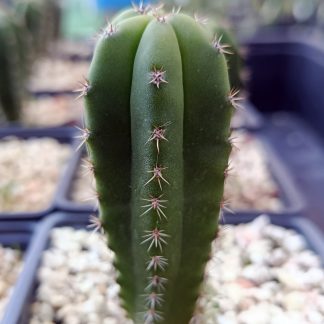
Echinopsis leucantha (syn. Acanthocalycium leucanthum), a distinctive Argentine cactus with deeply ribbed, dark green to grey-green stems and formidable yellowish to brown spination. Initially globular, it develops an increasingly cylindrical habit with age, eventually becoming a substantial specimen. Mature plants produce magnificent, long-tubed white to pale pinkish flowers, usually opening during the evening or night. A particularly attractive species from the dry Monte landscapes of Argentina.
Currently unavailable.
Product Features
Echinopsis leucantha is a handsome Argentine cactus with strongly ribbed, dark green to grey-green stems and an impressive arrangement of stout, often curved spines. Initially globular, it gradually develops a more cylindrical habit, becoming a substantial and rather formidable plant with age. Its large, predominantly white flowers provide a striking contrast to the heavily armed stems.
Unlike many of the smaller, freely clustering Echinopsis familiar in cultivation, E. leucantha often retains a solitary main stem for many years, although older plants can eventually develop additional growth around the base. Its combination of pronounced ribs, heavy spination and an increasingly columnar habit makes it an especially attractive species even outside the flowering season.
Growth and appearance
The stems are usually dark green, olive-green or grey-green, sometimes developing a subtle glaucous coating. Young plants are rounded, gradually becoming taller as successive growing seasons add to the stem. Established specimens can reach considerable proportions, with old plants in habitat sometimes exceeding a metre in height.
Typically, around 10–15 substantial ribs run vertically along the stem, separated by pronounced furrows. The ribs are relatively rounded rather than sharply angular, giving mature plants a robust, deeply sculpted appearance.
Spination is one of the species’ defining features. Pale, woolly areoles carry several stiff radial spines, accompanied by stronger central spines that may curve conspicuously upwards or inwards. Young spines are often yellowish, horn-coloured or brown, gradually weathering towards grey as they age.
Some plants develop particularly prominent central spines that arch towards the crown, creating an interlocking arrangement around the growing point. The strength, curvature and colouring of the spines vary between individuals and populations, contributing to the considerable diversity of E. leucantha in cultivation.
Flowers and fruit
The name leucantha refers to the species’ pale flowers, deriving from the Greek words for white and flower. Mature plants produce long-tubed, funnel-shaped blooms, generally white or occasionally showing delicate pinkish tones.
The flowers can reach approximately 18–22 cm in length, emerging from areoles towards the upper portion of the stem. They generally open during the evening or night, when their comparatively delicate appearance provides a remarkable contrast to the cactus’s heavy spination.
Following successful pollination, the species produces fleshy fruits that may develop orange, reddish or purplish colouring as they mature. These contain numerous small, dark seeds.
Distribution and natural habitat
Echinopsis leucantha is native to Argentina, where it is characteristic of the dry landscapes associated with the Monte phytogeographical region. Its recorded distribution extends through western and north-western Argentina, with populations occurring in provinces including Salta, Catamarca, La Rioja, San Juan, Mendoza and farther south.
The species inhabits arid scrubland, rocky slopes, gravelly ground and sandy or stony plains, often among scattered shrubs and other drought-adapted vegetation. These environments are characterised by considerable seasonal variation in temperature and rainfall, with long periods of limited available moisture.
Although traditionally associated especially with north-western and central Argentina, the species has a wider distribution than is sometimes suggested in horticultural descriptions. A botanical study published in 2024 documented additional populations in Río Negro, extending its known range in northern Patagonia. The plants were recorded among basaltic rocks and characteristic Monte vegetation near Ministro Ramos Mexia.
This geographical breadth helps explain some of the variation encountered among plants bearing the leucantha name. Stem proportions, spination and growth habit can differ across its natural range, particularly between populations occupying different environments.
Botanical history and taxonomy
The species was originally published as Echinocactus leucanthus by Gillies ex Salm-Dyck in 1834, before being transferred to Echinopsis by Wilhelm Gerhard Walpers in 1843.
It has accumulated a substantial number of botanical synonyms over the intervening years, reflecting the variation found across its extensive distribution. Names such as Echinopsis cordobensis, Echinopsis melanopotamica and Echinopsis spegazziniana have subsequently been included within the broader concept of E. leucantha.
More recent classifications have placed the species in Acanthocalycium, under the combination Acanthocalycium leucanthum, published by Boris Schlumpberger in 2012. This is the name currently accepted by Plants of the World Online.
We retain Echinopsis leucantha for our catalogue because it remains a well-established horticultural name and preserves the identity under which much of this material has circulated. The differing generic placements do not change the underlying species or its distinctive characteristics.
Cultivation
In cultivation, Echinopsis leucantha appreciates bright conditions, good ventilation and a freely draining substrate. Its natural association with arid, rocky and gravelly environments makes reliable drainage particularly important, although established plants can respond well to regular watering during warm periods of active growth.
A mineral-rich compost with a suitable proportion of organic material provides a useful balance between drainage and nutrient availability. During spring and summer, thorough watering followed by an appropriate drying period encourages steady growth without keeping the roots persistently wet.
Strong light helps maintain compact development and robust spination. Plants grown under shelter benefit from gradual acclimatisation before exposure to intense direct sunshine, particularly during the hottest part of summer.
Growth slows considerably during cooler weather. A substantially drier winter rest suits the species well, especially where temperatures remain low for extended periods. Although wild populations experience considerable temperature variation, prolonged cold combined with wet roots is best avoided, and protection from hard frost remains advisable.
With adequate light, a suitable seasonal rhythm and room for its developing stem, E. leucantha can become a particularly impressive long-lived cactus. Its heavy spination and increasingly substantial proportions give it a character quite different from the more familiar compact, clustering members of the traditional Echinopsis group.
More Echinopsis at Freaky Cacti
Our Echinopsis collection includes botanical species, historical horticultural selections and numerous flowering hybrids. For a closer comparison of their growth, flowers and changing botanical classifications, explore our Echinopsis species guide.
Unless stated otherwise, plants ship bare-root to supported EU destinations. Outside our delivery area? Ask about seed-only orders or join our email list for shipping updates. Photos are representative unless an exact specimen is specified; ask for current specimen photos. Some plants are cut to order where noted. Save 10-35% automatically on qualifying live plants, with bonus seeds and at least one bonus cactus in every live plant order.
Product Details
| Product Type | |
|---|---|
| Amount | 1 rooted plant |
| Size | Size is added here when this item is in stock. |
| Family | |
| Genus | |
| Species | |
| Flower | |
| Collection |
Only logged in customers who have purchased this product may leave a review.
You May Also Appreciate
-

Trichocereus bridgesii cv. ‘Deutsche’ | Unrooted Cutting | Exact Specimen FCES0002
€66.00 Add to basket -

Trichocereus cordobensis cv. ‘Helon’ | Australian Clone | Live plant
10% OFF until 30 Nov Original price was: €55.00.€49.50Current price is: €49.50. Add to basket -

Lophophora williamsii ‘RS 378’ | ‘Peyote’ | Live plant
€32.00 Add to basket -

Trichocereus bridgesii f. semi-monstrosa cv. ‘RAP’ | ‘Monstrose Bolivian Torch’ | Live plant
10% OFF until 30 Nov Original price was: €81.00.€72.90Current price is: €72.90. Add to basket -

Trichocereus atacamensis subsp. pasacana ‘TB 1099.3’ | ‘Cardón Grande’ | Live plant
10% OFF until 30 Nov Original price was: €18.00.€16.20Current price is: €16.20. Add to basket -

Trichocereus faundezii ‘GM 1849’ | Live plant
From €21.00 Browse options This product has multiple variants. The options may be chosen on the product page -

Trichocereus pachanoi cv. ‘Mujica’ | ‘San Pedro’ | Live plant
10% OFF until 30 Nov Original price was: €22.50.€20.25Current price is: €20.25. Add to basket -

Opuntia microdasys cv. ‘Rufida’ | ‘Mexican Bunny Ears Cactus’ | Live plant
€11.25 Add to basket -
Trichocereus knuthianus | Live plant
€20.00 Add to basket -

Trichocereus atacamensis ‘TB 1320.2’ | ‘Cardón Grande’ | Live plant
€8.00 Add to basket -
Trichocereus cordobensis | Live plant
€14.00 Add to basket -

Trichocereus rowleyi ‘P134’ (ex. var. pumila) | ‘Red Torch’ | Live plant
€18.00 Add to basket
Reviews
There are no reviews yet