
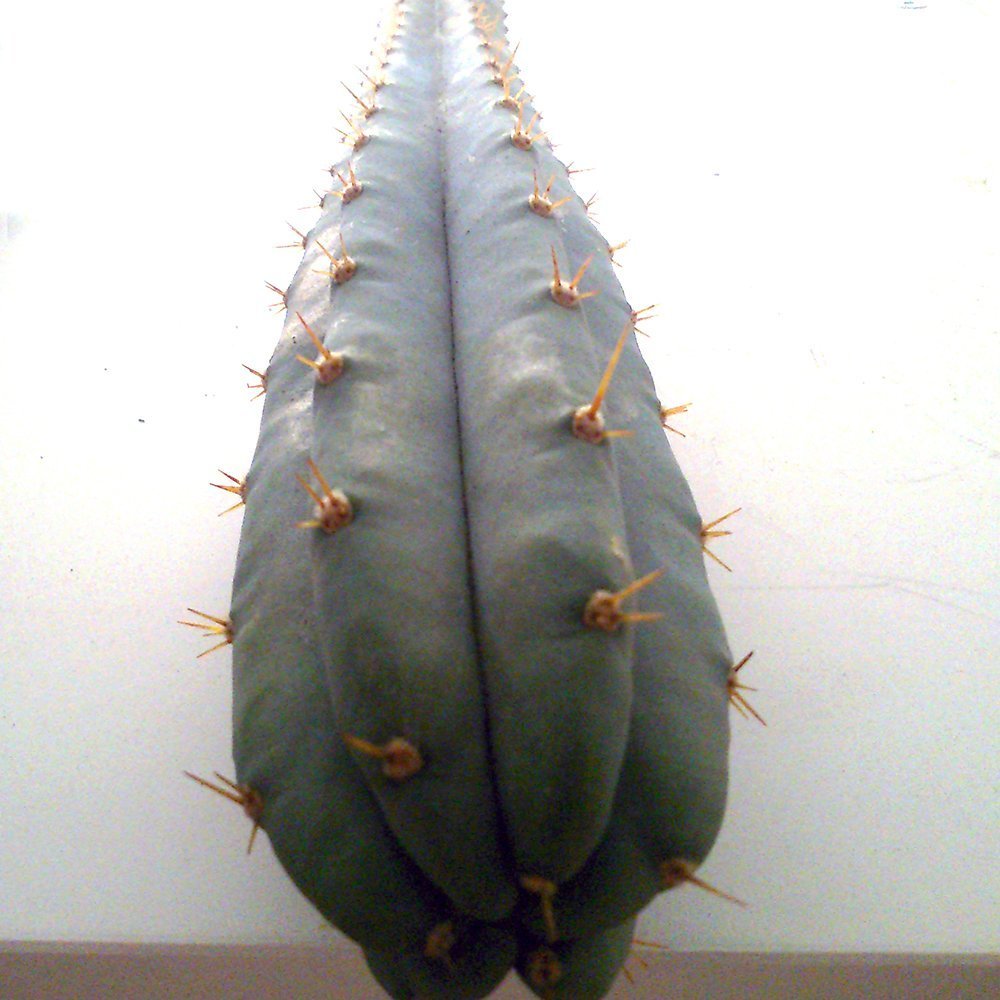
Trichocereus pachanoi ‘Terrassa’ | ‘San Pedro’ | Live plant
Trichocereus pachanoi ‘Terrassa’ is a vigorous San Pedro clone which we originally obtained from a grower in Terrassa, Catalonia. The name records its horticultural source, and the plant is maintained clonally as a distinct European line. Live plant.
Currently unavailable.
Product Features
Trichocereus pachanoi ‘Terrassa’ is a vigorous San Pedro clone which we originally obtained from a grower in Terrassa, Catalonia. We have maintained that individual clonally, with the Terrassa name preserving its horticultural source rather than implying that it represents a formally named cultivar or South American locality.
It is one of several separately maintained European Trichocereus pachanoi lines in our collection. Keeping these clones distinct allows their individual growth, proportions and cultivation histories to remain traceable rather than reducing them all to anonymous San Pedro.
Growth & appearance
‘Terrassa’ develops substantial upright green columns with the broad rounded ribs and relatively modest spination characteristic of T. pachanoi. Fresh growth can be lighter green, while established stems become deeper green and increasingly substantial as they mature.
The areoles remain comparatively small and the spines are generally short. Rib number, stem girth and spine development can all vary as the plant ages, and strong light usually produces firmer, broader growth than prolonged shade.
Established plants branch readily and can eventually form large multi-column specimens. As with many San Pedro clones, young growth may look considerably slimmer than mature stems, so the distinctive proportions become clearer after several seasons of strong growth.
About ‘Terrassa’
The name ‘Terrassa’ records where we sourced the plant in cultivation. Terrassa is a city in Catalonia, and our mother plant came to us from a grower there.
We use the name as a source-derived clonal identifier. It should not be interpreted as a botanical variety, a formal cultivar name or evidence that the genetics originated naturally in Catalonia.
The clone belongs within our European Trichocereus genetics collection, which records horticultural provenance rather than native distribution.
Flowers
Mature T. pachanoi produces very large white to whitish flowers from established stems. The flowers have elongated tubes clothed externally with scales and hairs and usually open from evening into the night.
Flowering generally requires substantial mature growth. Once a clone reaches that stage it can also be retained as a traceable breeding parent, allowing its particular genetics to remain identifiable in later crosses.
San Pedro
Trichocereus pachanoi, commonly known as San Pedro, is native to Ecuador and Peru. It is a vigorous branching columnar cactus with broad ribs, comparatively restrained spination and considerable variation between individual cultivated lines.
Long cultivation has produced a large number of separately maintained clones. Some are associated with older collections or specific growers, while others are newer horticultural selections. Source names such as ‘Terrassa’ remain useful because they preserve information about how particular genetics entered and moved through cultivation.
Taxonomy
The traditional name Trichocereus pachanoi remains firmly established in cactus cultivation. Current botanical treatments also recognise the species as Echinopsis pachanoi.
Some classifications have placed T. pachanoi within a broader T. macrogonus concept, but we retain the familiar Trichocereus pachanoi identity because it remains both botanically useful and horticulturally precise for these plants.
‘Terrassa’ is simply the name of this particular clonally maintained line and does not represent a separate botanical taxon.
Cultivation
‘Terrassa’ is vigorous under good conditions. Give it abundant light, gradually acclimating plants to strong direct sun, and use an open, well-aerated substrate which drains freely after watering.
During active growth we water thoroughly and then allow the substrate to dry sufficiently before watering again. Moderate feeding and adequate root space encourage broad, firm stems and strong seasonal growth.
Reduce watering substantially as temperatures and light decline. Strong light generally encourages sturdier growth, while prolonged shade can produce thinner and softer stems.
Our Trichocereus cultivation guide covers substrates, watering, feeding, light, acclimatisation and seasonal care in greater detail.
About Trichocereus
Trichocereus cultivation includes species material, locality lines, old nursery plants, named clones and generations of hybrids. ‘Terrassa’ is a straightforward example of why horticultural provenance is worth retaining – it preserves the identity of one particular T. pachanoi clone and the route through which it entered our collection.
Unless stated otherwise, plants ship bare-root to supported EU destinations. Outside our delivery area? Ask about seed-only orders or join our email list for shipping updates. Photos are representative unless an exact specimen is specified; ask for current specimen photos. Some plants are cut to order where noted. Save 10-35% automatically on qualifying live plants, with bonus seeds and at least one bonus cactus in every live plant order.
Product Details
| Product Type | |
|---|---|
| Amount | 1 rooted plant |
| Size | ~10 cm tall |
| Common Name | |
| Family | |
| Genus | |
| Species | |
| Clone/Variety/Cultivar | |
| Form | |
| Flower | |
| Collection | Trichocereus Genetics from Europe, Trichocereus Genetics from Spain |
Only logged in customers who have purchased this product may leave a review.
You May Also Appreciate
-
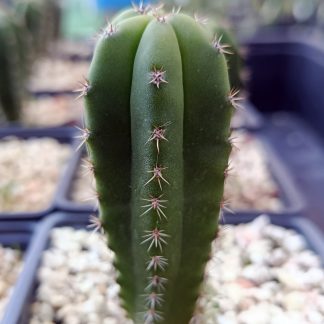

Trichocereus cordobensis | Live plant
€14.00 Add to basket -

Opuntia microdasys cv. ‘Rufida’ | ‘Mexican Bunny Ears Cactus’ | Live plant
€11.25 Add to basket -

Trichocereus bridgesii f. semi-monstrosa cv. ‘RAP’ | ‘Monstrose Bolivian Torch’ | Live plant
10% OFF until 30 Nov Original price was: €81.00.€72.90Current price is: €72.90. Add to basket -

Trichocereus faundezii ‘GM 1849’ | Live plant
From €21.00 Browse options This product has multiple variants. The options may be chosen on the product page -

Trichocereus atacamensis subsp. pasacana ‘TB 1099.3’ | ‘Cardón Grande’ | Live plant
10% OFF until 30 Nov Original price was: €18.00.€16.20Current price is: €16.20. Add to basket -
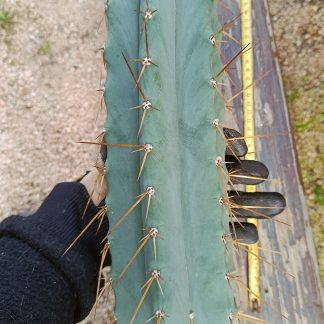
Trichocereus bridgesii cv. ‘Deutsche’ | Unrooted Cutting | Exact Specimen FCES0002
€66.00 Add to basket -

Trichocereus rowleyi ‘P134’ (ex. var. pumila) | ‘Red Torch’ | Live plant
€18.00 Add to basket -
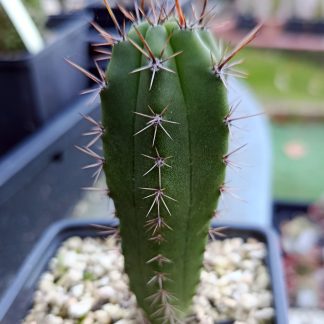
Trichocereus knuthianus | Live plant
€20.00 Add to basket -

Trichocereus pachanoi cv. ‘Mujica’ | ‘San Pedro’ | Live plant
10% OFF until 30 Nov Original price was: €22.50.€20.25Current price is: €20.25. Add to basket -

Trichocereus cordobensis cv. ‘Helon’ | Australian Clone | Live plant
10% OFF until 30 Nov Original price was: €55.00.€49.50Current price is: €49.50. Add to basket -

Trichocereus atacamensis ‘TB 1320.2’ | ‘Cardón Grande’ | Live plant
€8.00 Add to basket -

Lophophora williamsii ‘RS 378’ | ‘Peyote’ | Live plant
€32.00 Add to basket
Reviews
There are no reviews yet