
Trichocereus smrzianus ‘Campo Quijano, El Puyil’ | Live plant
€20.00
Seed-grown Trichocereus smrzianus ‘Campo Quijano, El Puyil’, raised from documented locality seed from Salta, Argentina. Our young plants show upright green cylindrical growth, broad ribs and fine straw-yellow to golden spination. Each is a genetically distinct individual rather than a clone. Live plant.
Plant photos are representative unless an exact specimen is specified. Want to see a particular available plant? Ask for current specimen photos.
Product Features
Trichocereus smrzianus ‘Campo Quijano, El Puyil’ is seed-grown locality material from Salta Province in north-western Argentina. Our plants were raised from seed distributed under the recorded locality Campo Quijano, El Puyil, and each is therefore a genetically distinct individual rather than a vegetative copy of one plant.
‘Campo Quijano, El Puyil’ is retained as the locality identity of this seed line. The quotation marks follow our catalogue convention for named plant identities and do not imply that the locality is a formal cultivar or clone. No field number, named collector or precise elevation accompanied the seed identity available to us, so we preserve the provenance that is documented without extending it beyond the original record.
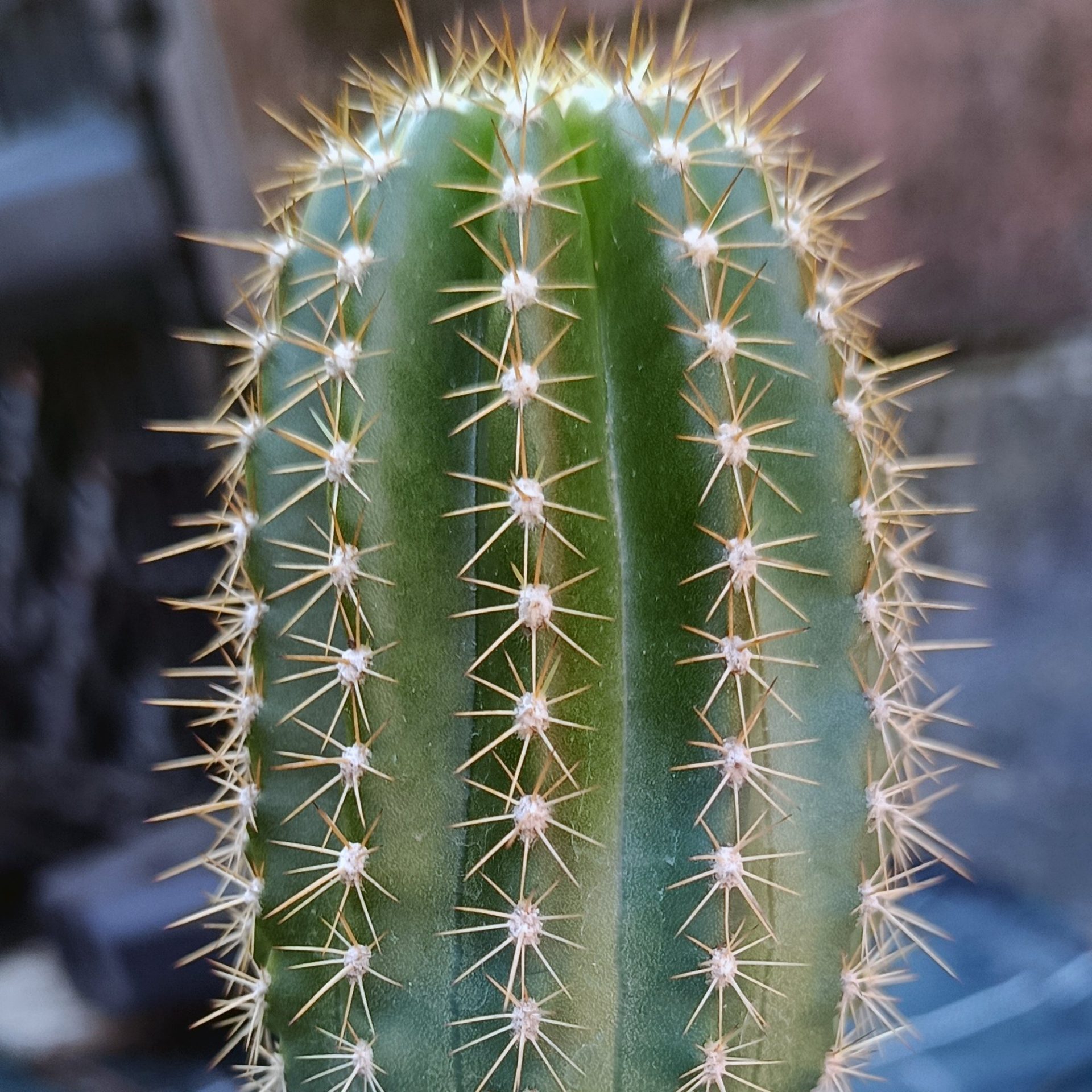
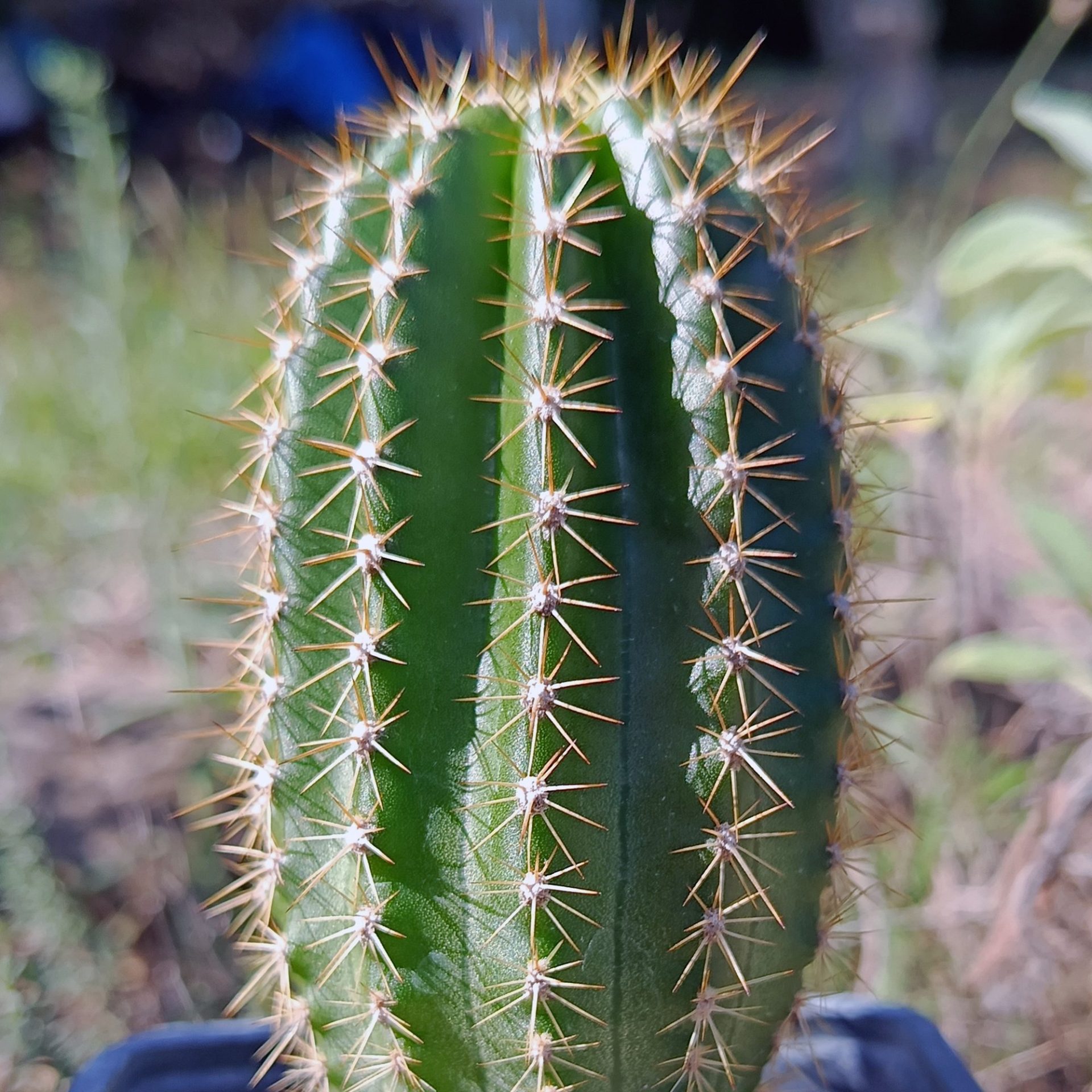
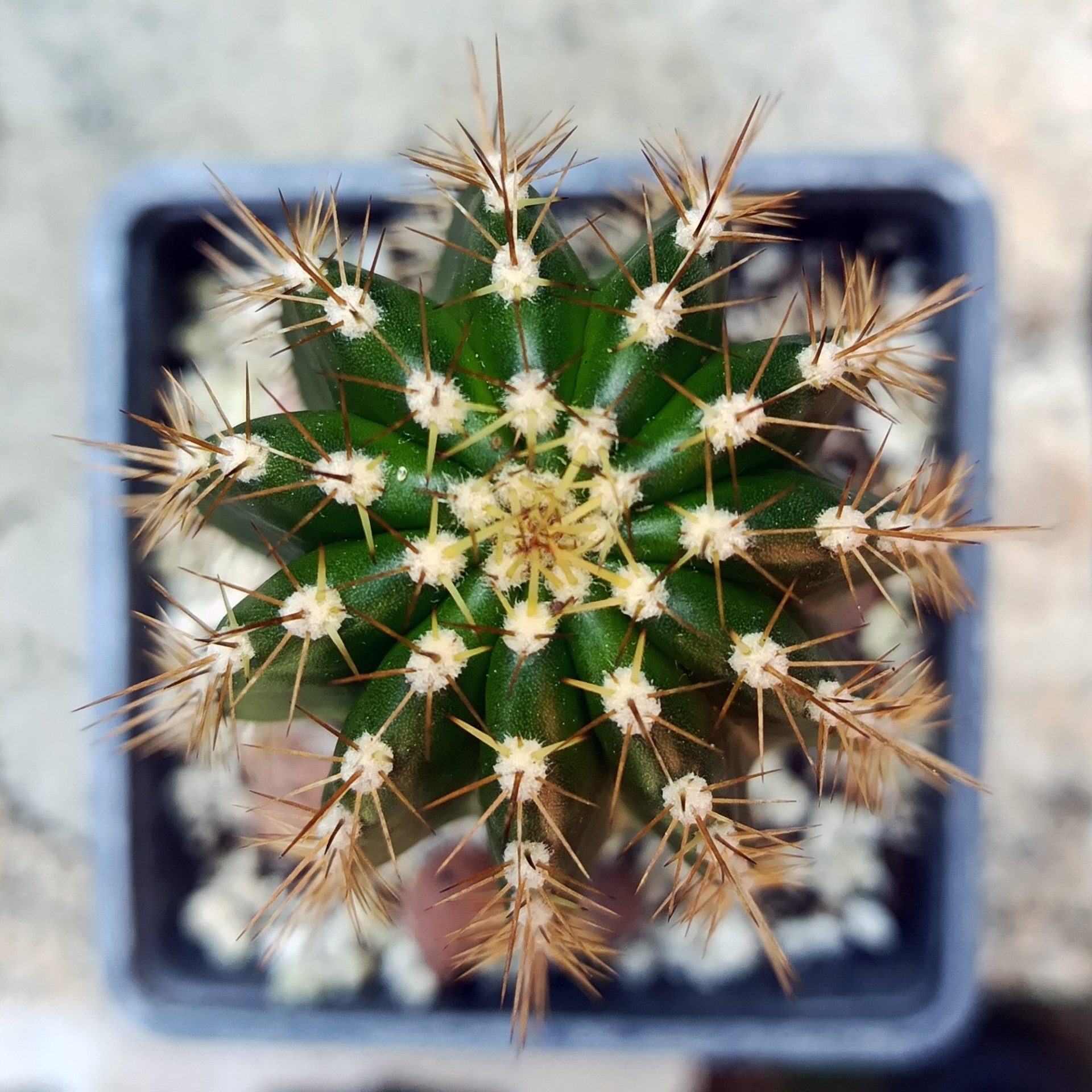
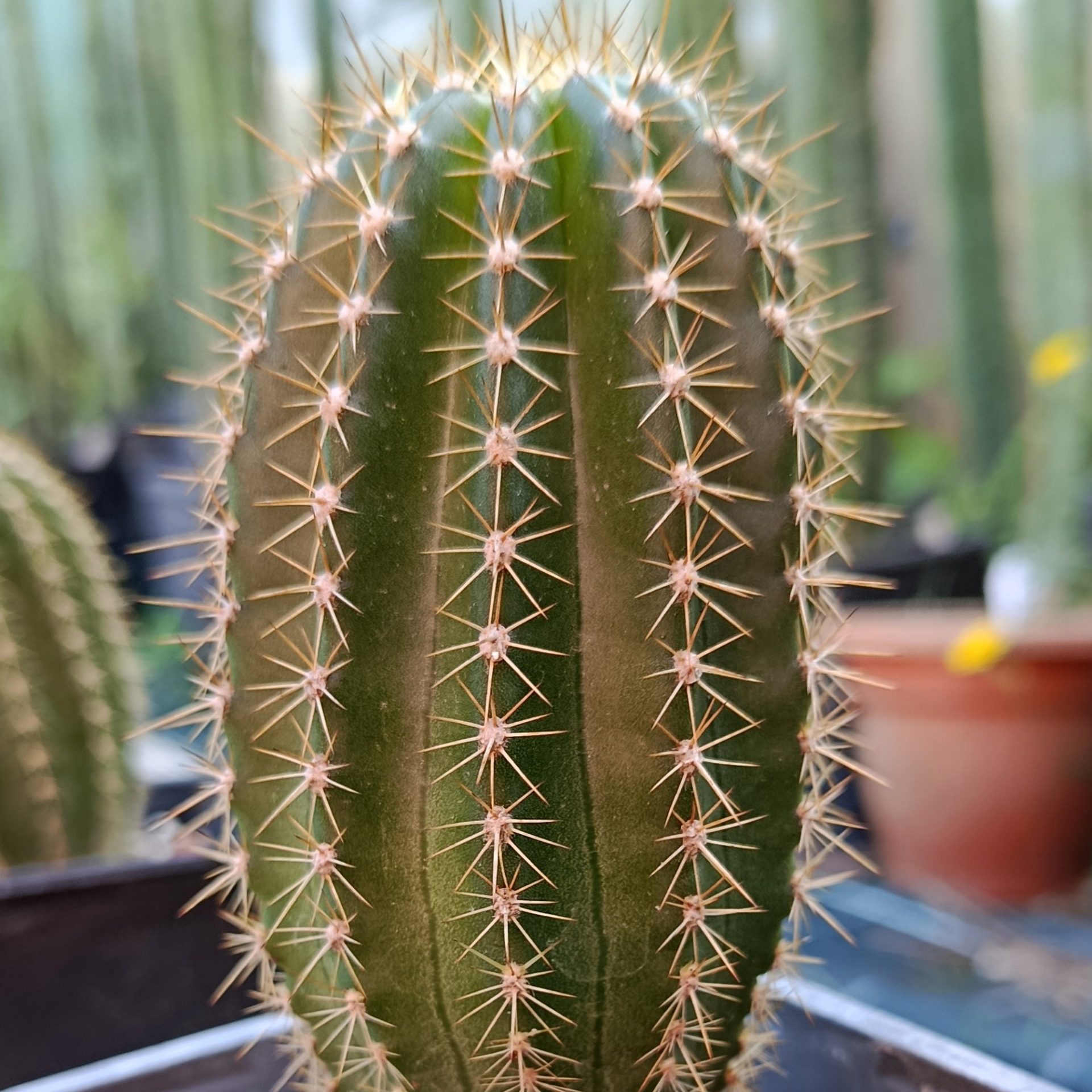
The young plants photographed from this line are developing sturdy upright green to slightly blue-green cylindrical stems with broad, clearly defined ribs. Their closely spaced pale-woolled areoles carry numerous fine straw-yellow to golden spines, with somewhat longer and warmer-coloured spines particularly conspicuous around fresh apical growth.
Visible differences are already developing between individual seedlings in stem proportions, rib structure, spine length and density. That variation is entirely appropriate for seed-grown locality material: plants sharing the same recorded geographic origin are related representatives of the same seed line, not genetically identical clones.
‘Campo Quijano, El Puyil’ locality material
Campo Quijano lies in Salta Province in north-western Argentina, within a region particularly rich in Trichocereus diversity. The seed from which these plants were raised was specifically distributed as Trichocereus smrzianus ‘Campo Quijano, El Puyil’, so we preserve that fuller locality identity with the resulting plants.
This makes the line considerably more informative than T. smrzianus of unspecified origin while remaining different from a field-numbered accession. A locality name can preserve valuable geographic context without necessarily identifying one uniquely documented collection event, and we therefore do not attach a collector, collection number or elevation where those details were not supplied with the seed.
The distinction is worth maintaining because different T. smrzianus populations and cultivated seed lines should not be collapsed into one anonymous species entry simply because their plants may look broadly similar when young. Keeping ‘Campo Quijano, El Puyil’ attached to these seedlings preserves the provenance under which they entered cultivation.
About Trichocereus smrzianus
Trichocereus smrzianus is an uncommon Argentine member of the wider schickendantzii group. It develops cylindrical green stems which can remain relatively compact individually before established plants begin branching from the base and forming broader multi-stemmed clumps.
Mature plants typically develop approximately 10–15 broad ribs with relatively closely spaced areoles. The spines are generally finer than the heavy armature associated with species such as T. terscheckii or T. tarijensis, commonly passing through yellowish, cream and whitish tones as they mature.
Our ‘Campo Quijano, El Puyil’ seedlings fit that general pattern well at their present stage. The photographed plants have conspicuous but comparatively slender golden to straw-coloured spines which leave the rib structure and green epidermis clearly visible. Some individuals are broader and more rounded, while others are more elongated, and the prominence of longer central spines also varies between seedlings.
Established T. smrzianus produces large white to whitish flowers on characteristically long, woolly floral tubes. The flowers can become particularly substantial relative to the comparatively manageable stems, and successful pollination produces rounded green fruit.
We maintain several different examples of smrzianus genetics, including documented field-numbered accessions, locality material, seed and hybrids. Keeping ‘Campo Quijano, El Puyil’ separate from those other lines preserves the geographic identity actually associated with these plants rather than treating all cultivated smrzianus as interchangeable.
Seed-grown variation
Every plant offered through this listing is a separate seed-grown individual. Differences in stem diameter, rib development, spine length and colour, vigour, tendency to offset and eventual flowering characteristics should therefore be expected between siblings.
The photographs already show some of this variation. Individual plants differ subtly in girth, rib prominence, overall proportions and the density and length of their spination. These differences are part of the value of maintaining a locality seed population rather than something to be standardised away.
If an especially interesting plant is later propagated vegetatively, its cuttings would preserve that particular genotype. Another seed-grown T. smrzianus ‘Campo Quijano, El Puyil’ remains a genetically different individual sharing the same recorded locality background.
Taxonomic note
Trichocereus smrzianus has had a complicated taxonomic history. Curt Backeberg originally described the plant as Echinopsis smrziana in 1936. It was subsequently combined as Soehrensia smrziana and later as Trichocereus smrzianus.
Different authors have interpreted its relationship with Trichocereus schickendantzii in different ways. Some broader treatments have included smrzianus within that species, while other taxonomic work has recognised it at subspecific rank as T. schickendantzii subsp. smrzianus.
Current Plants of the World Online treatment accepts Echinopsis smrziana Backeb. as a distinct species native to north-western Argentina, with Soehrensia smrziana and Trichocereus smrzianus treated as homotypic synonyms.
We retain Trichocereus smrzianus because it remains the most useful horticultural identity for this material and preserves continuity with the name under which the locality seed was distributed and raised. The change from smrzianus to smrziana in the Echinopsis combination reflects grammatical agreement with the feminine genus name rather than a different plant.
Cultivation
Grow T. smrzianus ‘Campo Quijano, El Puyil’ under the general conditions we use for Argentine Trichocereus: abundant light, good air movement and a freely draining cactus substrate. During active growth, water thoroughly and then allow the root zone to dry substantially before watering again.
Strong light encourages compact cylindrical growth, clearly developed ribs and good spine formation. Plants moved from more sheltered conditions should nevertheless be acclimatised gradually before exposure to intense direct sunlight.
Moderate feeding during active growth supports steady development without encouraging excessively soft growth. As plants mature and begin to offset, additional root space can help them develop the broader clumping habit characteristic of established smrzianus.
Reduce watering substantially as temperatures and light levels fall. Our cold-hardiness references treat T. smrzianus as comparatively cold-tolerant for a cactus, but any minimum-temperature figure remains only a working guide. Plant size, acclimatisation, exposure duration, humidity and particularly root-zone moisture all materially affect cold tolerance.
A dry, established plant is considerably better equipped for low temperatures than one sitting in persistently wet substrate. Avoid prolonged combinations of cold and saturated roots.
Our Trichocereus cultivation guide covers watering, light, substrates, feeding, acclimatisation and winter treatment in greater detail.
About Trichocereus
Trichocereus is central to our collection, encompassing botanical species, locality and field material, established clones, mutants and generations of deliberate hybrids.
Locality-labelled seed-grown plants such as T. smrzianus ‘Campo Quijano, El Puyil’ are particularly useful because they preserve geographic information while retaining natural genetic variation between individual plants. This line belongs within our Trichocereus Genetics from Salta, Argentina and Trichocereus Genetics from South America collections.
Explore our Trichocereus smrzianus archive for the other locality lines, field-numbered material, seeds and hybrids involving the species represented in the catalogue.
Unless stated otherwise, plants ship bare-root to supported EU destinations. Outside our delivery area? Ask about seed-only orders or join our email list for shipping updates. Photos are representative unless an exact specimen is specified; ask for current specimen photos. Some plants are cut to order where noted. Save 10-35% automatically on qualifying live plants, with bonus seeds and at least one bonus cactus in every live plant order.
Product Details
| Product Type | |
|---|---|
| Amount | 1 rooted plant |
| Size | ~5 cm diameter, ~10 cm tall |
| Family | |
| Genus | |
| Species | |
| Clone/Variety/Cultivar | |
| Form | |
| Flower | |
| Collection | Trichocereus Genetics from Salta, Argentina, Trichocereus Genetics from South America |
You May Also Appreciate
-


Trichocereus pachanoi cv. ‘Mujica’ | ‘San Pedro’ | Live plant
€22.50 Add to basket -

Trichocereus faundezii ‘GM 1849’ | Live plant
From €21.00 Browse options This product has multiple variants. The options may be chosen on the product page -

Trichocereus species ‘Vicuña’ (Long Spines) | Live plant
€13.75 Add to basket -

Trichocereus atacamensis subsp. pasacana ‘TB 1099.3’ | ‘Cardón Grande’ | Live plant
€18.00 Add to basket -

Trichocereus pachanoi ‘ALP 3079’ | ‘San Pedro’ | Seeds
From €7.50 Browse options This product has multiple variants. The options may be chosen on the product page -

Trichocereus peruvianus ‘Matucana’ f. variegata | ‘Variegated Peruvian Torch’ | Live plant
€72.00 Add to basket -

Trichocereus terscheckii ‘TB 0003.3’ | ‘Cardón Grande’ | Live plant
10% OFF until 30 Nov Original price was: €15.00.€13.50Current price is: €13.50. Add to basket -
Trichocereus bridgesii ‘KPVC 2611’ | ‘Bolivian Torch’ | Seeds
€7.50 Add to basket -

Trichocereus atacamensis subsp. pasacana ‘JN 1128’ | ‘Cardón Grande’ | Live plant
€21.00 Add to basket -

Trichocereus vatteri ‘R 122’ / ‘WR 122’ | Live plant
10% OFF until 30 Nov Original price was: €16.00.€14.39Current price is: €14.39. Add to basket -

Trichocereus pachanoi ‘Pumacayán’ (MT07) × Trichocereus ‘Lemmy’ (MT19) | Live plant
From €17.50 Browse options This product has multiple variants. The options may be chosen on the product page -
Trichocereus pachanoi ‘KPVC 2520’ | ‘San Pedro’ | Seeds
€7.50 Add to basket
