

Trichocereus knuthianus cv. ‘Fields’ | Live plant
€114.00
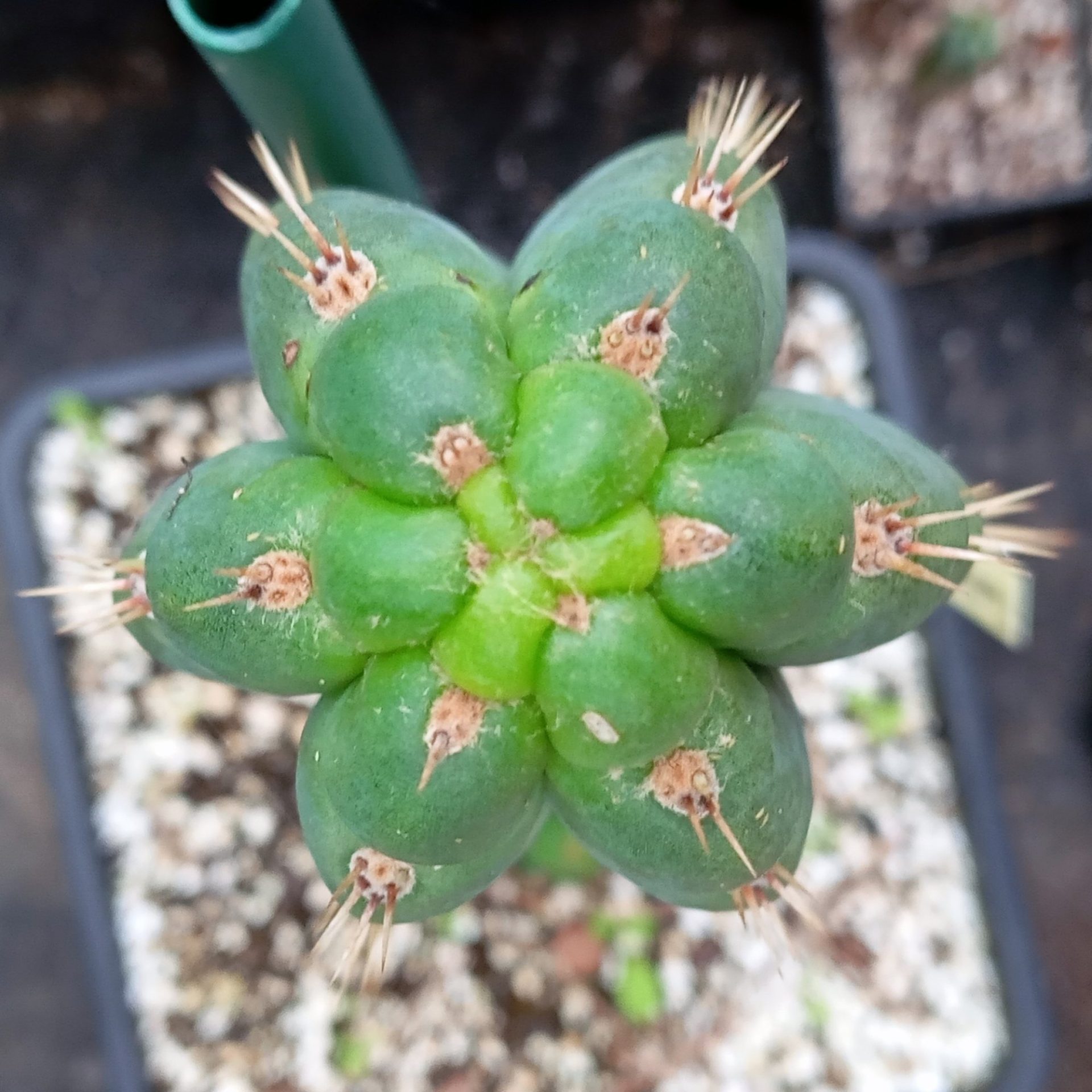
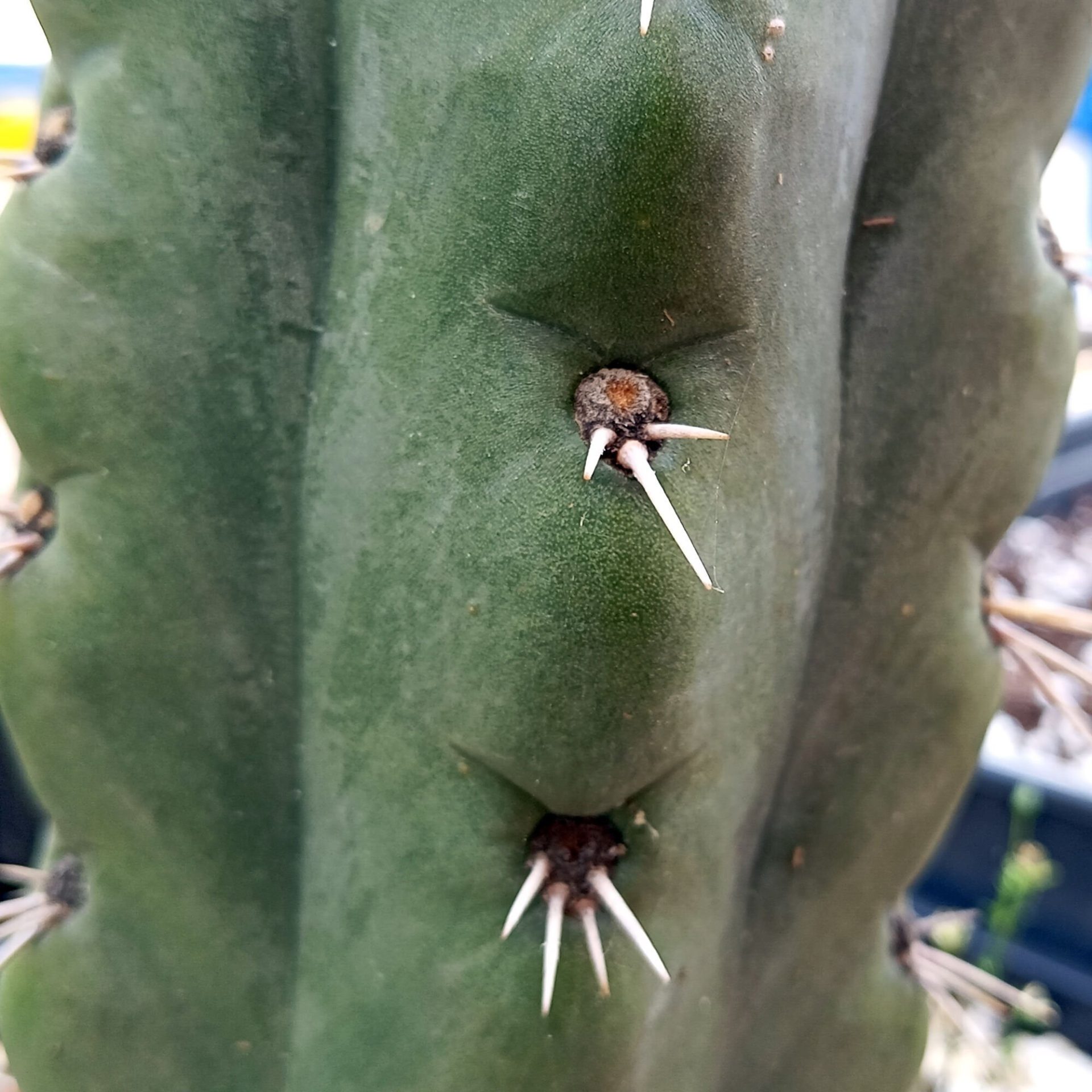
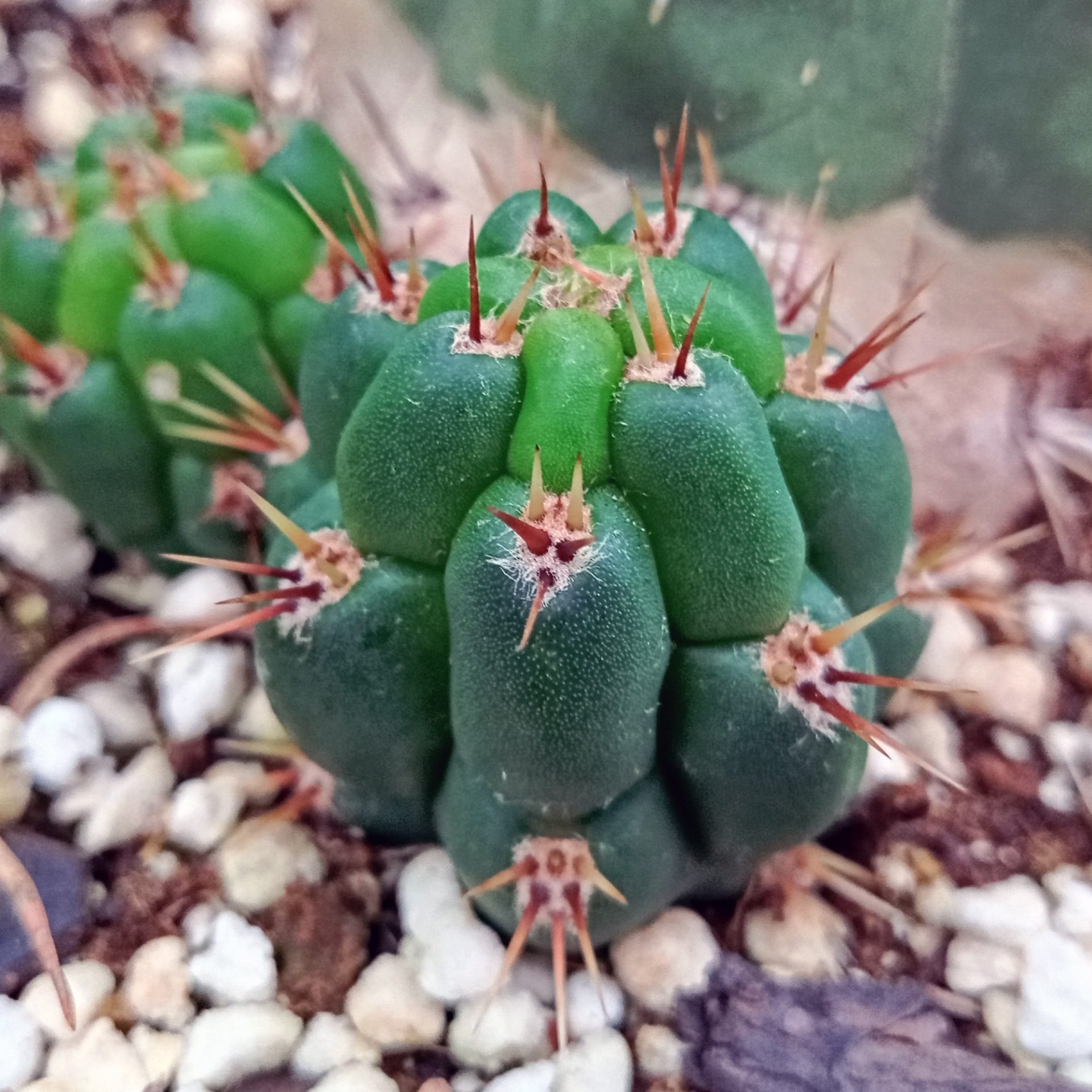
Trichocereus knuthianus cv. ‘Fields’ is a historic Australian clone originating from the Fields cactus collection, with glaucous blue-green columnar growth, pronounced rib structure and pale spination. A distinct old knuthianus lineage maintained vegetatively.
Plant photos are representative unless an exact specimen is specified. Want to see a particular available plant? Ask for current specimen photos.
Product Features
Trichocereus knuthianus cv. ‘Fields’ is a clonal line originating from the historic Australian Fields cactus collection. It combines the strongly glaucous blue-green colour, conspicuous rib structure and distinctive spination associated with cultivated T. knuthianus with a particularly valuable piece of Australian Trichocereus history.
‘Fields’ identifies the particular old Australian Trichocereus knuthianus clone preserved from the Fields collection, and we maintain it vegetatively so that this identity and provenance remain attached to the material.
The clone develops upright columnar stems with a pale green to strongly blue-green epidermis, broad ribs and the somewhat knobbly or notched rib architecture characteristic of knuthianus. Areoles are well separated and carry yellowish to pale grey spines which can vary appreciably in length as the stem matures. Older plants can branch and ultimately develop a considerably larger, more tree-like habit.
The strong glaucous coating can be especially attractive under good light, while the pronounced transitions around the areoles give the ribs considerably more texture than the smoother pachanoid Trichocereus. Mature knuthianus produces large pale, typically white to whitish flowers.
The Australian Fields collection
The historic Fields cactus collection at Tennyson in northern Victoria occupies an important place in Australian Trichocereus history. A number of old South American columnar cacti maintained there were subsequently propagated and circulated among Australian growers, eventually becoming established horticultural clones in their own right.
T. knuthianus ‘Fields’ is one of those plants. The same collection is associated with several other longstanding Trichocereus lines, including material circulated as ‘Fields’ macrogonus, pachanoi, bridgesii, lamprochlorus and validus. Several plants from the wider Fields collection also survive in Australian institutional and private collections.
Horticultural accounts associate parts of the original Fields collection with South American material obtained through early collecting expeditions, but the surviving provenance does not justify assigning this particular clone a precise wild locality or collection number. We therefore preserve what is securely useful: this is the established Australian ‘Fields’ knuthianus clone.
You can browse our Fields archive for other genetics associated with this historic collection, or our Trichocereus Genetics from Australasia collection for the wider range of Australian and New Zealand material represented in the nursery.
A distinct knuthianus line
Several different T. knuthianus accessions circulate internationally, so the ‘Fields’ identity is worth retaining rather than collapsing them all into a generic species listing. Friedrich Ritter distributed knuthianus material under the field number FR567, while Sacred Succulents later established the well-known ‘SS03’ clone. ‘Fields’ represents a separate Australian horticultural lineage and should not be assumed to be identical to either of those plants.
The clone has also been used in Australian breeding. Historical Australian seed lists record ‘Fields’ knuthianus in crosses with other knuthianus, T. scopulicola and other established Trichocereus, demonstrating that the plant has remained part of the active Australian breeding pool rather than surviving only as a collector specimen.
Taxonomic note
Trichocereus knuthianus was published by Curt Backeberg in 1937 and named for F. M. Knuth. The name has subsequently been interpreted in several different ways, including as Trichocereus cuzcoensis var. knuthianus, and the plant has long been discussed alongside T. tarmaensis and other related Peruvian columnar taxa.
Current Kew treatment places Trichocereus knuthianus in the synonymy of Echinopsis cuzcoensis. We nevertheless retain T. knuthianus here because it preserves the established horticultural identity of the Fields clone and distinguishes it from the many other cultivated plants historically grouped around cuzcoensis.
That distinction is particularly useful with old collection material. The current accepted botanical name communicates one taxonomic interpretation; ‘Fields’ knuthianus records which actual cultivated lineage has been preserved.
Cultivation
Grow ‘Fields’ in a freely draining cactus substrate with good air movement and plenty of light. Strong light encourages compact growth, defined rib structure, robust spination and the glaucous epidermal colour for which the clone can be particularly attractive. Plants moved from more sheltered conditions should nevertheless be acclimatised gradually before prolonged exposure to intense direct sun.
During active growth we water thoroughly and then allow the substrate to dry substantially before watering again. Established plants respond well to periodic feeding and sufficient root space as they develop into increasingly substantial columns.
Reduce watering considerably as temperatures and light fall. As with other large Andean Trichocereus, cool conditions are considerably safer when the root zone is kept appropriately dry than when cold is combined with persistently saturated substrate.
Our Trichocereus cultivation guide covers substrates, watering, feeding, light, acclimatisation and seasonal care in greater detail.
About Trichocereus
Trichocereus forms the core of our collection and includes wild-origin material, locality accessions, historic clones, deliberate hybrids and plants preserved through generations of specialist cultivation.
Old Australian clones such as ‘Fields’ are particularly useful because their horticultural names preserve a history which a species name alone cannot. This plant is significant not merely as an example of T. knuthianus, but as surviving vegetative material from one of the classic Australian cactus collections.
Unless stated otherwise, plants ship bare-root to supported EU destinations. Outside our delivery area? Ask about seed-only orders or join our email list for shipping updates. Photos are representative unless an exact specimen is specified; ask for current specimen photos. Some plants are cut to order where noted. Save 10-35% automatically on qualifying live plants, with bonus seeds and at least one bonus cactus in every live plant order.
Product Details
| Product Type | |
|---|---|
| Amount | 1 rooted plant |
| Size | ~6 cm diameter, ~38 cm tall |
| Family | |
| Genus | |
| Species | |
| Clone/Variety/Cultivar | |
| Form | |
| Collection |
Only logged in customers who have purchased this product may leave a review.
You May Also Appreciate
-


Trichocereus bridgesii f. semi-monstrosa cv. ‘RAP’ | ‘Monstrose Bolivian Torch’ | Live plant
10% OFF until 30 Nov Original price was: €81.00.€72.90Current price is: €72.90. Add to basket -

Trichocereus atacamensis subsp. pasacana ‘JN 1128’ | ‘Cardón Grande’ | Live plant
€21.00 Add to basket -

Trichocereus atacamensis subsp. pasacana ‘TB 1099.3’ | ‘Cardón Grande’ | Live plant
10% OFF until 30 Nov Original price was: €18.00.€16.20Current price is: €16.20. Add to basket -

Trichocereus cordobensis cv. ‘Helon’ | Australian Clone | Live plant
€55.00 Add to basket -

Trichocereus pachanoi cv. ‘Mujica’ | ‘San Pedro’ | Live plant
10% OFF until 30 Nov Original price was: €22.50.€20.25Current price is: €20.25. Add to basket -

Trichocereus faundezii ‘GM 1849’ | Live plant
From €21.00 Browse options This product has multiple variants. The options may be chosen on the product page -

Trichocereus bridgesii f. monstrosa cv. ‘Rusty’ | ‘Monstrose Bolivian Torch’ | Live plant
10% OFF until 30 Nov Original price was: €77.00.€69.30Current price is: €69.30. Add to basket -

Opuntia microdasys cv. ‘Rufida’ | ‘Mexican Bunny Ears Cactus’ | Live plant
€11.25 Add to basket -

Trichocereus atacamensis ‘TB 1320.2’ | ‘Cardón Grande’ | Live plant
€8.00 Add to basket -

Trichocereus smrzianus ‘Campo Quijano, El Puyil’ | Live plant
€20.00 Add to basket -

Trichocereus rowleyi ‘P134’ (ex. var. pumila) | ‘Red Torch’ | Live plant
€18.00 Add to basket -

Lophophora williamsii ‘RS 378’ | ‘Peyote’ | Live plant
€32.00 Add to basket

Reviews
There are no reviews yet