
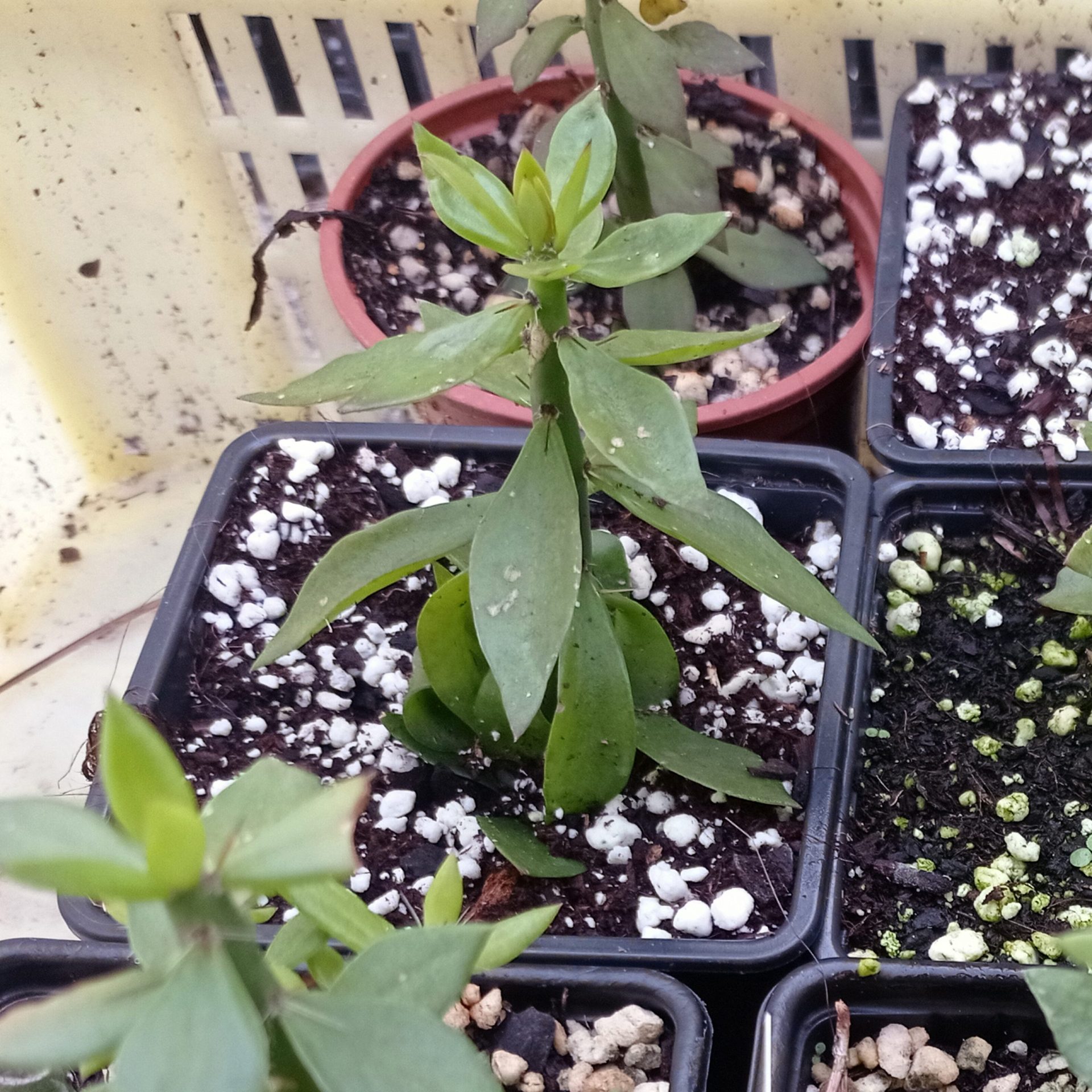
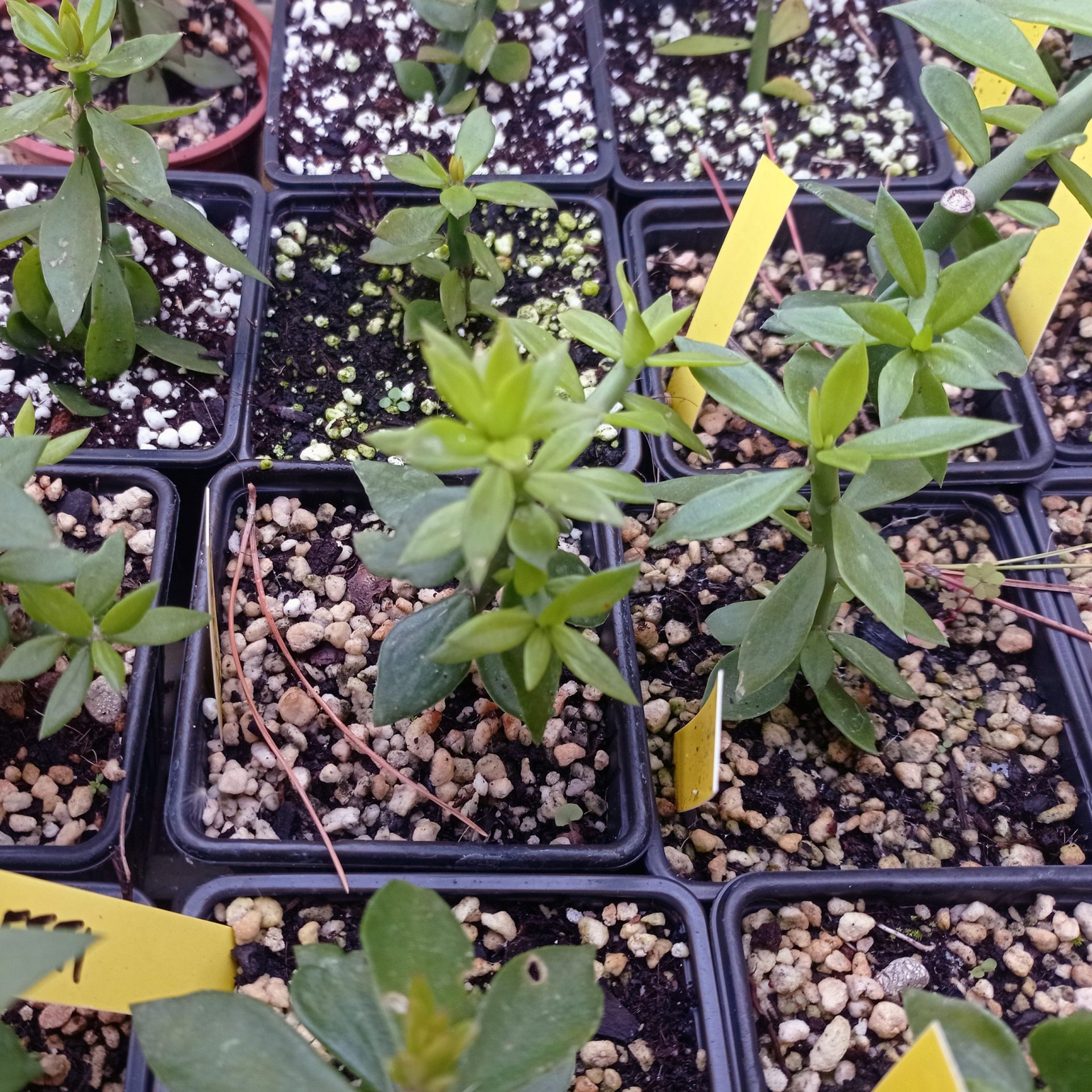
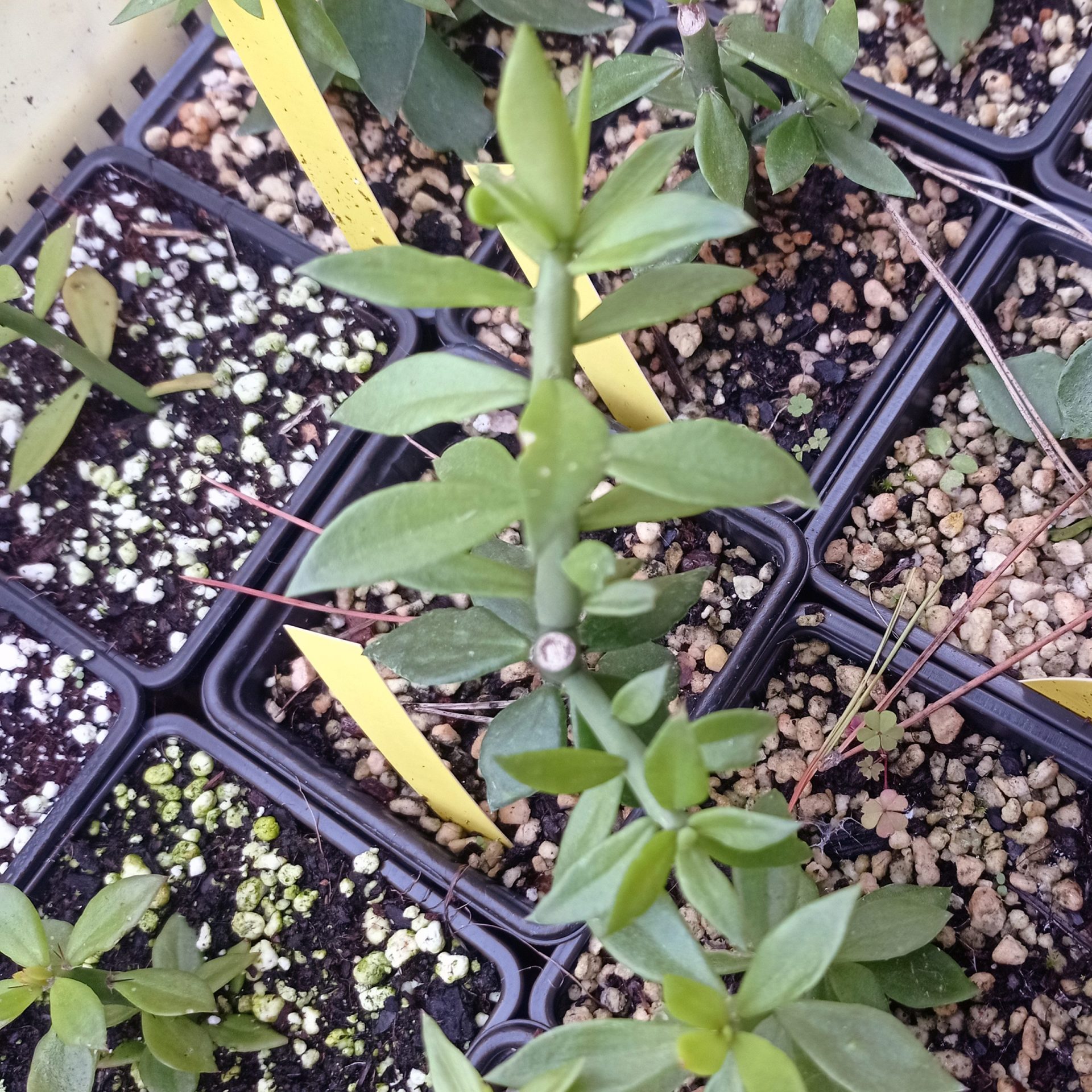
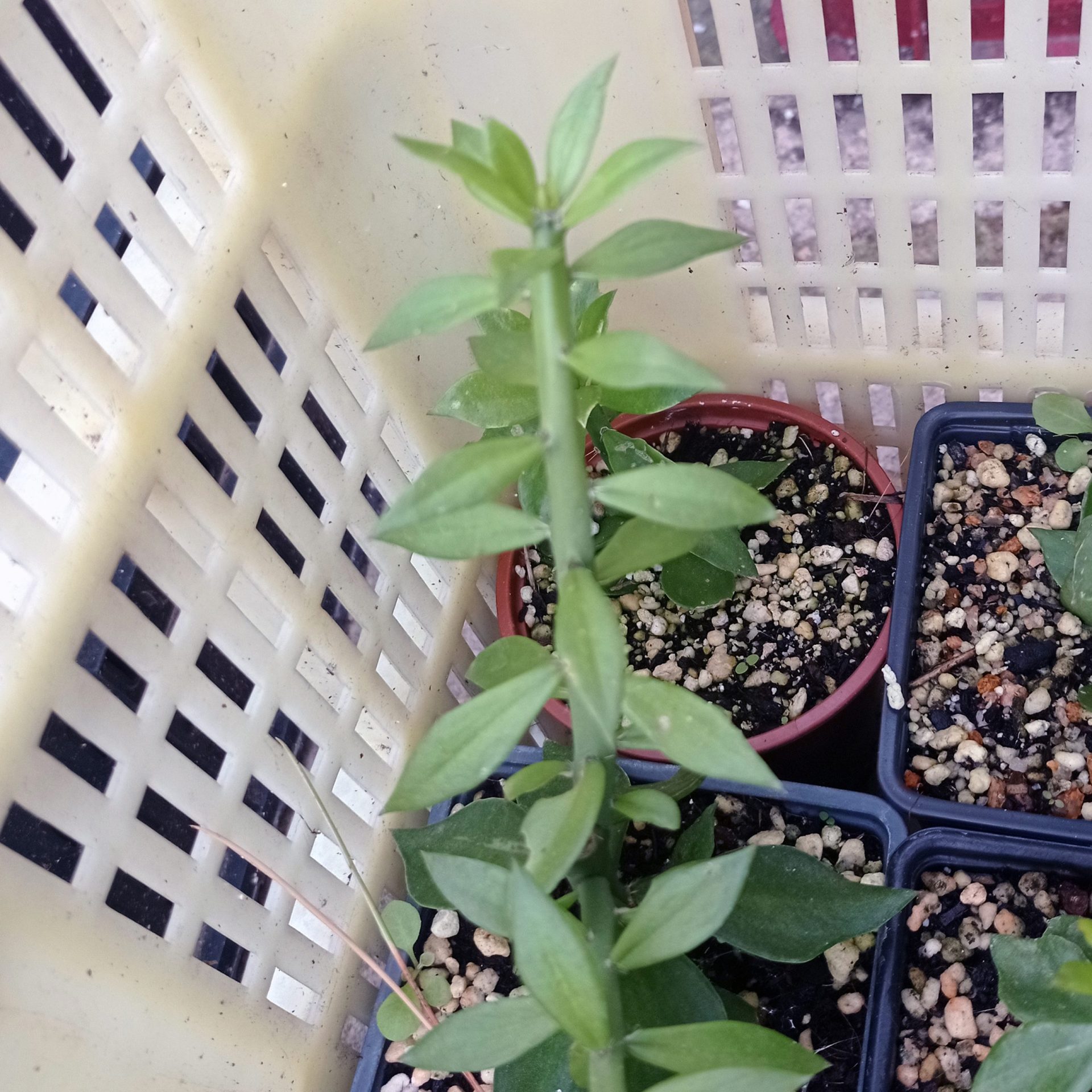
Pereskiopsis diguetii | ‘Alfilerillo’ | Live plant
Pereskiopsis diguetii, ‘Alfilerillo’, is a vigorous leafy cactus with branching stems, fleshy green leaves, numerous glochids and yellow flowers. The currently accepted species also encompasses the familiar horticultural Pereskiopsis spathulata. Live plant.
Currently unavailable.
Product Features
Pereskiopsis diguetii, known in Mexico by vernacular names including ‘Alfilerillo’, is a vigorous leafy cactus with a strikingly different appearance from the conventional image of the family. It develops branching succulent stems bearing conspicuous green leaves, while its woolly areoles carry numerous glochids and longer spines. Given warmth, water and sufficient root space, it can develop rapidly into a substantial shrubby plant.
Established specimens can reach approximately 1–3 metres tall and form dense branching growth. Young stems are green to reddish-green, becoming increasingly woody and brown with age. The fleshy leaves are generally elliptical to ovate and can reach several centimetres long, giving actively growing plants an almost conventional leafy-shrub appearance until the cactus areoles and armature are examined more closely.
The areoles carry numerous fine reddish glochids together with stronger dark-brown to almost black spines, particularly on older stems. These glochids deserve the same respect as those of Opuntia: they detach readily and can be extremely irritating, so plants are best handled with appropriate tools rather than bare hands.
Mature P. diguetii produces yellow flowers, followed by fleshy fruits that can mature through yellow-green and orange to reddish tones. The combination of leafy growth, conspicuous flowers and opuntioid fruit makes the species particularly useful for understanding how diverse cactus morphology becomes beyond the familiar globular and columnar forms.
Our Pereskiopsis diguetii species archive brings together the genetics and material we maintain under the currently accepted species name, while our Pereskiopsis genus archive provides the broader route through the different species and horticultural forms represented in our collection.
P. diguetii is especially relevant to growers familiar with Pereskiopsis spathulata ‘Patilón’. Current botanical treatment places P. spathulata within P. diguetii, although the spathulata name remains deeply established in cactus cultivation. Our ornamental variegated P. spathulata is maintained separately for the same reason: the horticultural identities remain useful even though current taxonomy brings them into a single species.
Like other vigorous Pereskiopsis, this species is also of considerable interest for cactus grafting. Rapid growth, persistent leaves and readily rooted stems make the genus exceptionally useful for pushing small or slow-growing scions, particularly during their early development. P. diguetii is equally worthwhile as a botanical specimen, however, and mature plants demonstrate a side of the cactus family that small grafting-stock cuttings scarcely suggest.
Taxonomic note
Pereskiopsis diguetii (F.A.C.Weber) Britton & Rose is a currently accepted species. It was originally described as Opuntia diguetii before Britton and Rose transferred it to Pereskiopsis in 1907.
Current Kew treatment includes Pereskiopsis spathulata within the synonymy of P. diguetii, together with names including Pereskia spathulata, Pereskiopsis velutina and the more recent combination Pereskiopsis diguetii subsp. spathulata. We retain P. spathulata on plants historically received and circulated under that identity while using P. diguetii for material maintained under the accepted species name.
‘Alfilerillo’ is a vernacular name rather than a cultivar designation. Mexican sources record several common names for P. diguetii, including ‘alfilerillo’, ‘patilón’, ‘tasajillo’, ‘nopaleta’ and ‘cola de diablo’. We therefore use ‘Alfilerillo’ as the common-name element of this listing rather than as the name of a particular clone.
Cultivation
P. diguetii grows particularly strongly when treated as an actively growing leafy cactus rather than an extremely xeric desert species. Use a freely draining but reasonably fertile substrate and provide regular water during warm active growth, allowing excess moisture to drain freely. Periodic feeding and adequate root space can produce rapid development.
Provide plenty of light for sturdy growth, although plants can perform well with some protection from the fiercest midday sun in very hot conditions. Actively growing stems carry their best foliage when warm and adequately watered; drought, cold or other stress can cause leaves to be shed.
Stem cuttings root readily under suitable warm conditions, making the plant straightforward to propagate. When grown specifically for grafting stock, maintaining vigorous leafy growth before grafting is generally preferable to keeping the stock excessively dry or nutrient-starved.
Protect plants from frost and prolonged low temperatures. Reduce watering substantially when cool conditions halt active growth, then increase water and feeding as warmth returns and new leafy shoots begin developing.
About Pereskiopsis
Pereskiopsis is an accepted genus of six species in current Kew treatment, distributed principally from Mexico into Central America, with P. diguetii also recorded from Bolivia. Its persistent leaves, glochid-bearing areoles and rapid growth make the genus one of the cactus family’s more unusual lineages and an exceptionally useful group for propagation. Explore our complete Pereskiopsis collection for the wider range.
Unless stated otherwise, plants ship bare-root to supported EU destinations. Outside our delivery area? Ask about seed-only orders or join our email list for shipping updates. Photos are representative unless an exact specimen is specified; ask for current specimen photos. Some plants are cut to order where noted. Save 10-35% automatically on qualifying live plants, with bonus seeds and at least one bonus cactus in every live plant order.
Product Details
| Product Type | |
|---|---|
| Amount | 1 rooted plant |
| Size | ~10 cm tall |
| Common Name | |
| Family | |
| Genus | |
| Species | |
| Form | |
| Flower |
Only logged in customers who have purchased this product may leave a review.
You May Also Appreciate
-


Trichocereus species ‘Vicuña’ (Long Spines) | Live plant
€13.75 Add to basket -

Trichocereus pachanoi cv. ‘Mujica’ | ‘San Pedro’ | Live plant
€22.50 Add to basket -

Trichocereus atacamensis subsp. pasacana ‘TB 1099.3’ | ‘Cardón Grande’ | Live plant
€18.00 Add to basket -

Opuntia microdasys cv. ‘Rufida’ | ‘Mexican Bunny Ears Cactus’ | Live plant
€11.25 Add to basket -

Trichocereus knuthianus cv. ‘Fields’ | Live plant
€114.00 Add to basket -

Trichocereus atacamensis subsp. pasacana ‘JN 1128’ | ‘Cardón Grande’ | Live plant
€21.00 Add to basket -

Trichocereus bridgesii f. semi-monstrosa cv. ‘RAP’ | ‘Monstrose Bolivian Torch’ | Live plant
10% OFF until 30 Nov Original price was: €81.00.€72.90Current price is: €72.90. Add to basket -

Trichocereus smrzianus ‘Campo Quijano, El Puyil’ | Live plant
€20.00 Add to basket -

Trichocereus cordobensis cv. ‘Helon’ | Australian Clone | Live plant
€55.00 Add to basket -

Trichocereus peruvianus ‘Matucana’ f. variegata | ‘Variegated Peruvian Torch’ | Live plant
€72.00 Add to basket -

Trichocereus bridgesii f. monstrosa cv. ‘Rusty’ | ‘Monstrose Bolivian Torch’ | Live plant
10% OFF until 30 Nov Original price was: €77.00.€69.30Current price is: €69.30. Add to basket -

Trichocereus faundezii ‘GM 1849’ | Live plant
From €21.00 Browse options This product has multiple variants. The options may be chosen on the product page
Reviews
There are no reviews yet