
Echinopsis hybrid cv. ‘Windigo’ | Live plant
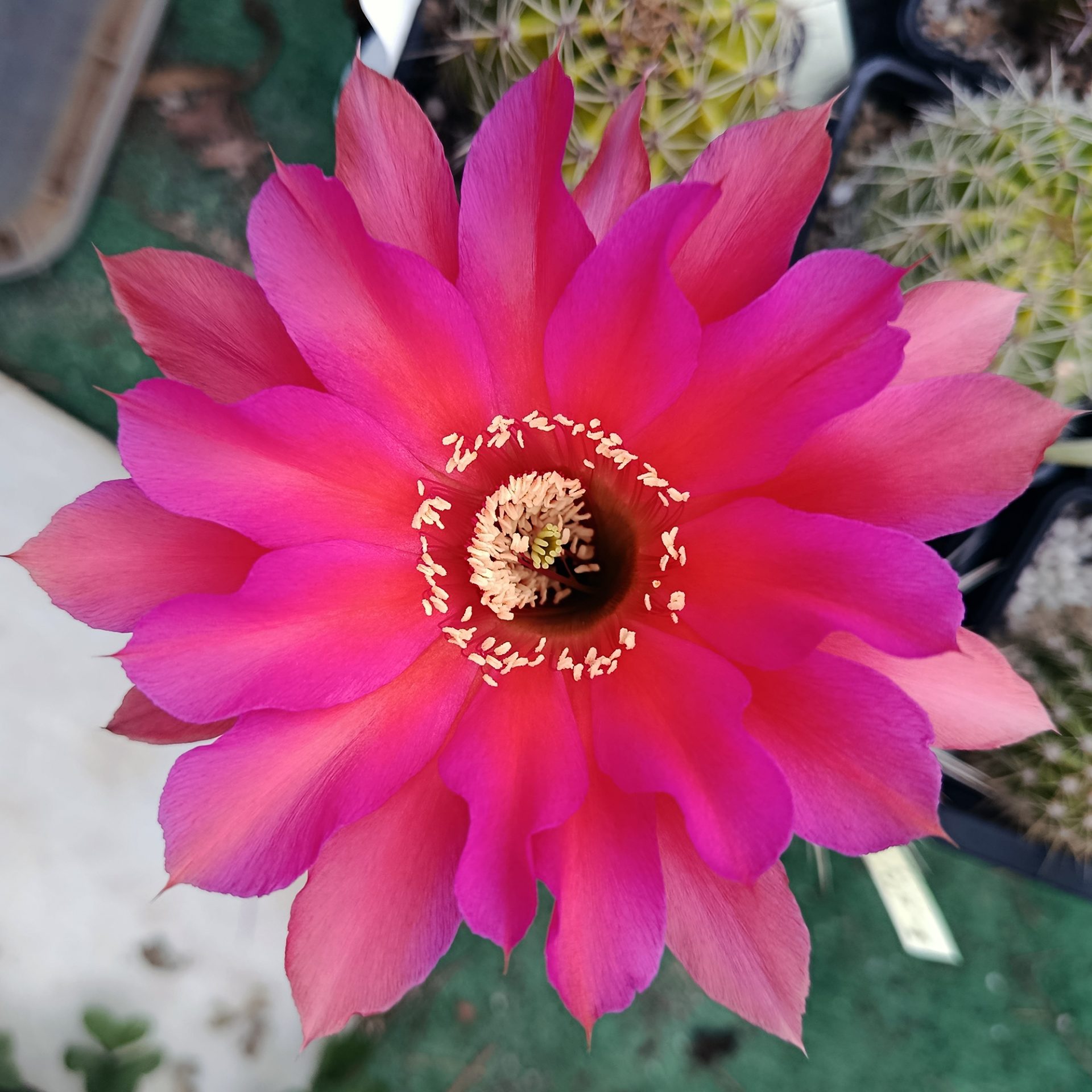
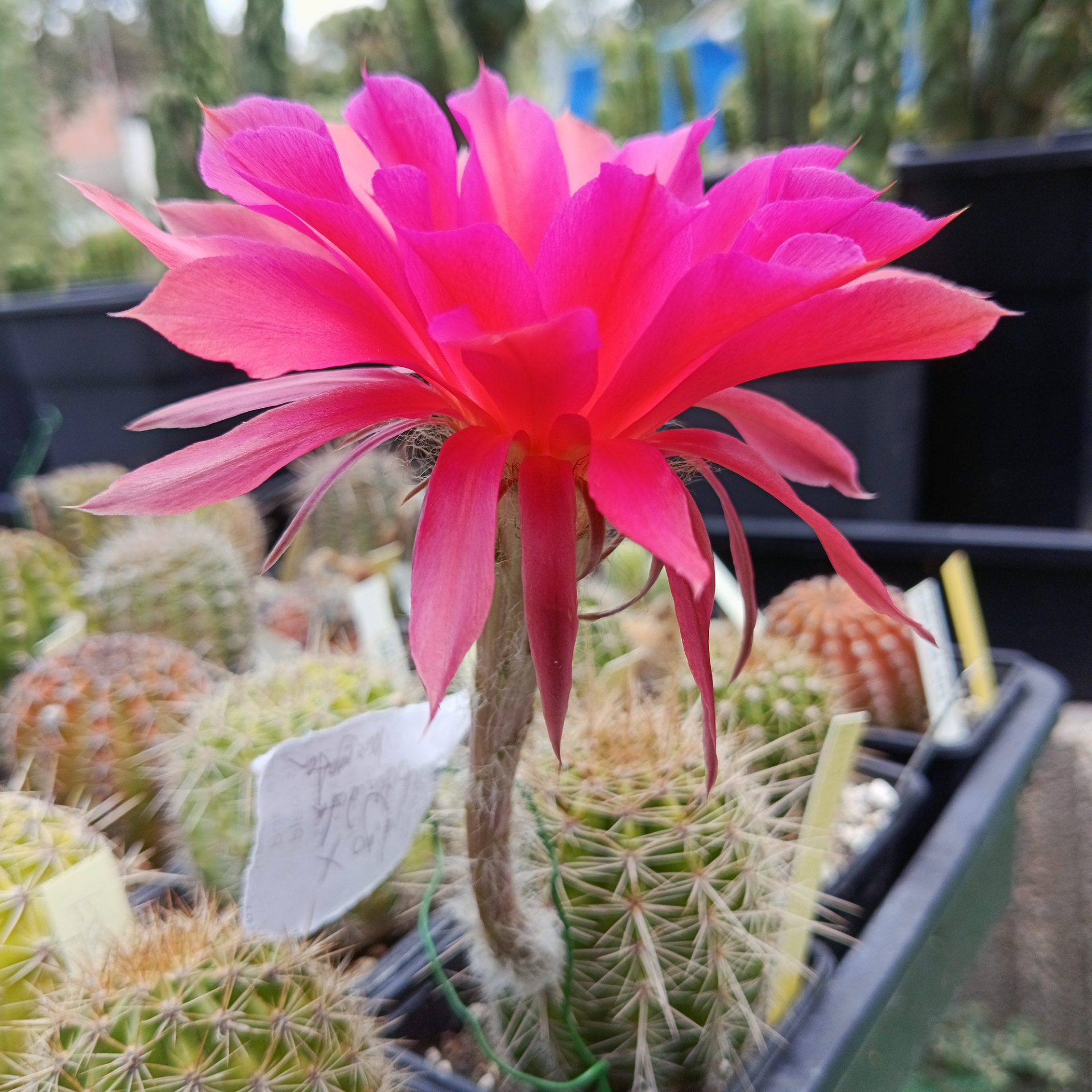
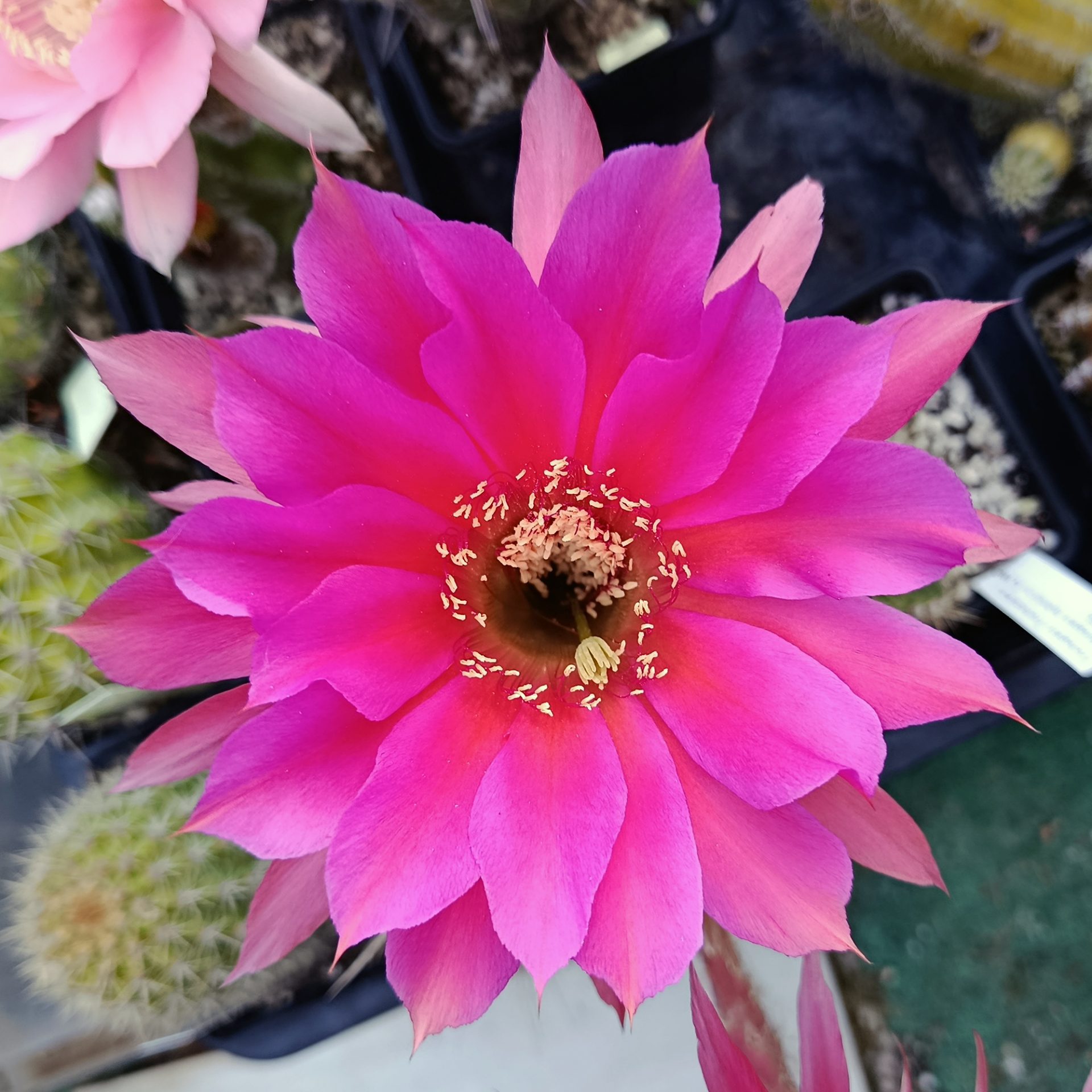
Echinopsis hybrid cv. ‘Windigo’ is Robert Schick’s documented ISI 2000-30 / HBG 85203 / Schick 1227-62 cultivar, producing exceptionally impressive ruffled flowers combining magenta, bronze, orange, red and pink. Even among the hundreds of cactus flowers we see each year, it is outstanding. We used ‘Windigo’ in several of our own crosses for the first time in 2026. Live plant.
Currently unavailable.
Product Features
Echinopsis hybrid cv. ‘Windigo’ is one of Robert Schick’s outstanding flowering cactus cultivars, combining large, heavily ruffled flowers with an extraordinary mixture of magenta, bronze, orange, red and pink. We see hundreds of different cactus flowers around the nursery each year, and ‘Windigo’ still manages to stand out among them: mature blooms have a depth of colour, texture and overall presence which is considerably more impressive in person than photographs tend to convey.
After growing and flowering the clone for years, we used ‘Windigo’ in our own breeding for the first time in 2026. We successfully incorporated it into several crosses during the season, adding these distinctive Schick genetics to the expanding group of flowering-cactus hybrids we are producing at Freaky Cacti.
The plant itself is a genuine named clone, so our stock is maintained through vegetative propagation. Every authentic ‘Windigo’ propagation preserves the same Robert Schick selection rather than representing seedlings merely descended from it.
Browse our ‘Windigo’ archive for this cultivar and any related genetics represented in our catalogue.
‘Windigo’ develops comparatively compact, somewhat columnar green stems reaching approximately 9 cm in diameter. Central spines can approach 27 mm long, giving the plant a noticeably stronger armature than many of the almost spineless flowering Echinopsis hybrids while remaining readily manageable in cultivation.
The flowers are the reason to grow it. The original Huntington description records blooms reaching more than 13 cm across, with ruffled inner petals and a complex bicoloured pattern. Rather than displaying one simple flower colour, individual petals combine magenta with bronzy orange through red, often with paler midribs, while the outer petals introduce further reddish and light-magenta tones.
The stamens continue the colour scheme, with red to dark-magenta filaments surrounding a contrasting light-green stigma. The overall effect is remarkably rich: warm bronze and orange sit against cooler magenta and purple-pink tones, with different parts of the flower changing emphasis according to light, temperature and stage of opening.
This variation is normal for Schick hybrids. Flower colour in Echinopsis hybrids can shift with temperature and growing conditions, so successive blooms on the same clone need not look absolutely identical. That variability is part of their appeal rather than evidence that a plant has been incorrectly labelled.
Our Robert Schick Echinopsis hybrid flower gallery brings together ‘Windigo’ with the other Schick cultivars we grow and flower at the nursery.
‘Windigo’ is also represented within our wider Robert Schick / International Succulent Introductions archive, alongside many of the other cultivars resulting from Schick’s extraordinary flowering-cactus breeding programme.
Because ‘Windigo’ originated within Robert Schick’s North American breeding work and was introduced through the Huntington Botanical Gardens’ International Succulent Introductions programme, it belongs within our Trichocereus Genetics from North America collection.
Robert Schick and International Succulent Introductions
Robert Schick developed one of the most important collections of modern Echinopsis hybrids while working with the Huntington Botanical Gardens in California. His breeding built particularly upon the earlier flowering hybrids of Harry Johnson and subsequent generations derived from them, selecting individual seedlings for exceptional flower colour, form, size and overall horticultural quality.
‘Windigo’ carries several useful identifiers from that programme: ISI 2000-30, HBG 85203 and Schick 1227-62. These numbers preserve different parts of the cultivar’s history rather than representing alternative cultivar names.
ISI 2000-30 records its introduction through International Succulent Introductions in 2000. HBG 85203 is the Huntington Botanical Gardens accession number, while Schick 1227-62 comes from Schick’s own breeding records.
Schick’s numbering system records the parental cross followed by the individual seedling selected from that cross. The fact that ‘Windigo’ survived this selection process and was subsequently named and formally distributed is significant: Schick raised enormous numbers of seedlings, while only a small proportion became named cultivars.
The precise parents of ‘Windigo’ are not preserved in the source material we currently have available. We therefore retain the cultivar’s documented Schick and ISI identities without attempting to reconstruct a pedigree from appearance or from related hybrids.
This is preferable to attaching speculative parents to an established clone. ‘Windigo’ itself is completely traceable as a Schick selection even where its deeper breeding formula has been lost or remains unpublished.
Flowers and our breeding work
We first bred with ‘Windigo’ in 2026, using it several times during our annual pollination work. This is precisely the kind of established cultivar we want represented in future generations: it combines proven floriferousness with a genuinely unusual palette and strongly ruffled flower structure.
The attraction goes beyond colour alone. Plenty of cactus hybrids produce attractive reds, oranges or pinks; ‘Windigo’ combines several of those colours within the same bloom while also producing broad, textured petals whose overlapping and ruffled structure gives the flower substantial depth.
Even against the hundreds of different cactus flowers we see around the nursery each year, mature ‘Windigo’ blooms are exceptional. The flower has enough scale to be impressive from a distance, but much of its quality becomes apparent closer up, where the bronzy-orange, red and magenta zones interact across individual petals.
Using the clone in breeding allows those traits to be recombined with other flowering genetics. The resulting seedlings will not themselves be ‘Windigo’: each seed represents a new genotype combining this cultivar with the other recorded parent.
This distinction is fundamental. A cutting from our mother plant remains cv. ‘Windigo’; a seedling produced using ‘Windigo’ as mother or father is a descendant of ‘Windigo’ and should retain the complete cross formula rather than inheriting the cultivar name by itself.
Clonal identity
Named Schick hybrids are cultivars selected as individual seedlings and subsequently maintained vegetatively. This means authentic ‘Windigo’ is one genotype reproduced through offsets and cuttings.
This matters because seedlings from named Echinopsis cultivars have sometimes been distributed incorrectly under their parent’s cultivar name. Even self-pollination does not recreate the parental clone: sexual reproduction reshuffles the genome and produces new individuals.
Appearance alone is likewise insufficient to authenticate a named hybrid. Thousands of colourful Echinopsis hybrids have been produced, and unrelated seedlings can occasionally resemble established cultivars surprisingly closely.
Maintaining a continuous propagation history is therefore the reliable way to preserve old hybrids such as ‘Windigo’. Our plants are propagated as the named cultivar rather than raised from seed and subsequently matched to photographs.
Cultivation
‘Windigo’ is straightforward to grow and flower when given strong light, excellent drainage, good airflow and adequate nutrition during active growth.
Use a freely draining cactus substrate. Water thoroughly during active growth and then allow the substrate to dry substantially before watering again. Avoid allowing water to remain continually around the roots.
Schick Echinopsis hybrids develop vigorous root systems and can become pot-bound surprisingly quickly. Repotting established plants when the root system has filled the container can improve both general vigour and flowering performance.
Bright conditions encourage compact growth and strong flowering, although plants moved from protected cultivation should be acclimatised gradually before exposure to intense direct sunlight.
Feed periodically through the active growing season. Flowering hybrids are often noticeably more responsive to suitable nutrition than plants maintained indefinitely in exhausted substrate, particularly where they are expected to produce repeated flushes of large flowers.
Older Schick hybrids can flower several times through a growing season under favourable conditions. A mature, well-established plant with sufficient light, root space and nutrition has considerably greater flowering potential than a recently rooted propagation.
Reduce watering substantially during cool winter conditions and allow the plant a drier seasonal rest. Protect from sustained or severe frost, particularly when the substrate is damp.
Offsets or stem sections can be propagated vegetatively to preserve the cultivar. Allow any cut surface to callus thoroughly before rooting in a dry, freely draining medium.
About Echinopsis
‘Windigo’ represents exactly why the old flowering Echinopsis hybrid programmes remain so important. The underlying South American cactus genetics were transformed through decades of deliberate breeding and selection into flowers displaying colours and forms rarely encountered in the botanical species themselves.
Robert Schick’s cultivars remain particularly valuable because they are named, documented selections with preserved horticultural identities. ‘Windigo’ can be traced through Schick 1227-62, HBG 85203 and ISI 2000-30 rather than surviving merely as an anonymous colourful hybrid.
After finally incorporating it into our own breeding in 2026, it has also become part of the next generation of flowering-cactus work at Freaky Cacti. Given the extraordinary quality of its flowers, we expect these genetics to remain an important part of our breeding collection.
Explore our complete Echinopsis collection for the wider range of botanical species and flowering hybrids maintained in the nursery.
Unless stated otherwise, plants ship bare-root to supported EU destinations. Outside our delivery area? Ask about seed-only orders or join our email list for shipping updates. Photos are representative unless an exact specimen is specified; ask for current specimen photos. Some plants are cut to order where noted. Save 10-35% automatically on qualifying live plants, with bonus seeds and at least one bonus cactus in every live plant order.
Product Details
| Product Type | |
|---|---|
| Amount | 1 rooted plant |
| Size | Size is added here when this item is in stock. |
| Family | |
| Genus | |
| Clone/Variety/Cultivar | |
| Form | |
| Flower | Magenta to magentaish, Multicoloured / Blended, Orange to orangeish, Pink to pinkish, Purple to purplish, Ragged, ruffled and/or mutant tendency, Red to reddish |
| Breeder/Source | |
| Collection |
Only logged in customers who have purchased this product may leave a review.
You May Also Appreciate
-


Trichocereus pachanoi hybrid cv. ‘Schöne’ | ‘San Pedro’ | Live plant
10% OFF until 30 Nov Original price was: €48.00.€43.20Current price is: €43.20. Add to basket -

Echinopsis hybrid cv. ‘Gossamer’ | Live plant
€7.50 Add to basket -

Echinopsis hybrid f. monstrosa cristata cv. ‘Circle’ | Live plant
€15.75 Add to basket -

Echinopsis hybrid cv. ‘Statesman’ | Live plant
€7.00 Add to basket -

Trichocereus peruvianus ‘Icaros DNA’ × Trichocereus cv. ‘Colossus’ | Live plant
€56.00 Add to basket -

Trichocereus hybrid cv. ‘Imperialis’ | Live plant
€16.00 Add to basket -

Trichocereus tarmaensis × Trichocereus peruvianus | Live plant
€18.00 Add to basket -

Echinopsis hybrid cv. ‘Gypsy’ × Echinopsis hybrid cv. ‘Pooka’ | Live plant
€10.00 Add to basket -

Echinopsis hybrid cv. ‘Pooka’ | Live plant
€7.50 Add to basket -

Echinopsis hybrid cv. ‘Romance’ | Robert Schick | Live plant
€6.00 Add to basket -

Trichocereus pachanoi ‘Pumacayán’ (MT07) × Trichocereus ‘Lemmy’ (MT19) | Live plant
From €17.50 Browse options This product has multiple variants. The options may be chosen on the product page -

Trichocereus hybrid cv. ‘Herzog Gold’ | Live Plant
€10.00 Add to basket
Reviews
There are no reviews yet