
Jardins de Mossèn Costa i Llobera is one of our favourite places in Barcelona and one of the city’s most remarkable collections of cacti and other succulent plants. Spread across the steep, sea-facing side of Montjuïc, the gardens combine mature xerophytic plants, an unusually favourable local climate and magnificent views across Barcelona’s port and coastline.
The photographs below come from several of our earlier visits, including trips in 2019 and 2020, and concentrate particularly on the Trichocereus and related plants which inevitably attracted most of our attention. Some are labelled only to genus because we would rather preserve an honest uncertainty than turn an old photograph into a confidently incorrect identification.
We have since returned to the garden and published a separate gallery from our May 2025 visit. That later page records how parts of the collection appeared after several more years of maintenance and change, and includes some particularly impressive plants labelled as Trichocereus validus.
One of Europe’s Great Cactus & Succulent Gardens
Jardins de Mossèn Costa i Llobera opened in 1970 and was developed through the work of architect and landscape designer Joaquim Maria Casamor together with Joan Pañella, a gardening-school teacher, technician and specialist in succulent plants. The collection drew on plants already being tested in Barcelona as well as material from the Canary Islands, Andalusia, other Mediterranean nurseries and the Pallanca collection in Italy.
The garden takes its name from the Mallorcan poet Miquel Costa i Llobera. Its position on the maritime side of Montjuïc is particularly important to what can be grown there. The slope faces towards the sea and benefits from a local microclimate generally reported as around two to three degrees Celsius warmer than much of the surrounding city, while the topography also provides a degree of protection from wind.
That climatic advantage allows an extraordinary range of plants from arid, semi-arid, subtropical and even high-altitude habitats to live outside in Barcelona. Modern descriptions of the collection commonly refer to more than 800 species of cacti and other succulents, making it one of Europe’s more important specialist public collections.
The setting is almost as memorable as the plants. Paths descend through the steep garden towards the port, with old cacti, aloes, agaves, euphorbias, palms and other drought-adapted plants appearing against a backdrop of sea, city and industrial harbour. It is a rather unlikely little paradise only a short distance from central Barcelona.
The Great Freezes of 1985 & 1987
The sheltered position should not be mistaken for complete protection from winter cold. The gardens suffered particularly destructive freezes in 1985 and 1987. Published accounts associated with the city record sustained temperatures of around -6°C during the earlier event, followed by another severe frost before the collection had fully recovered.
The combined damage was enormous. Contemporary and later accounts report that the diversity of the collection was reduced by almost forty percent, with many plants subsequently needing to be replaced. For a garden devoted so heavily to frost-sensitive material from warm climates, it was a brutal demonstration of what an exceptional cold event can do even in an otherwise favourable Mediterranean microclimate.
The gardens have undergone substantial restoration, remodelling and replanting since then. Their present appearance therefore represents both the survival of old established plants and decades of work rebuilding and maintaining the collection.
For cactus growers, the history is particularly interesting because it mirrors what happens in private collections on a much larger scale. A species may tolerate ordinary local winters for decades, yet still be vulnerable to an exceptional combination of duration, minimum temperature, moisture and previous stress. Our separate cactus cold-hardiness reference discusses the same problem from a cultivation perspective.
Trichocereus at Mossèn Costa i Llobera
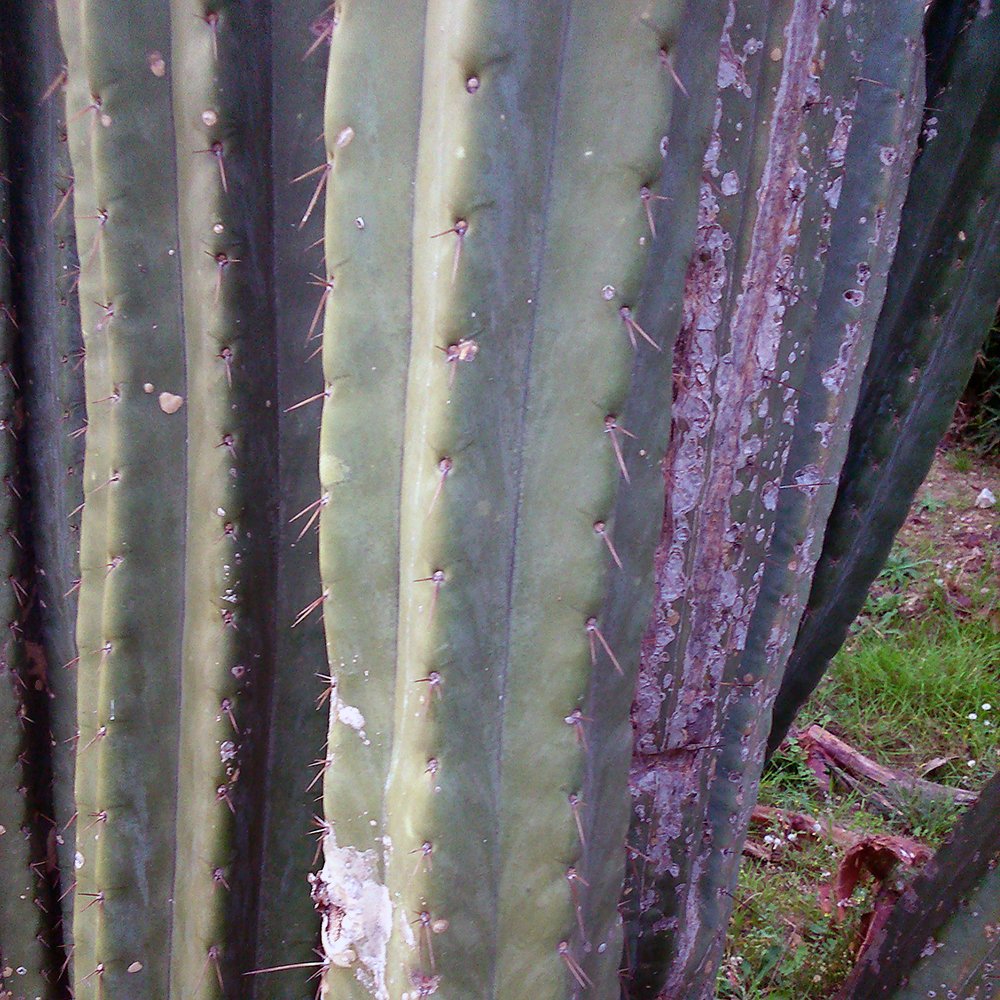
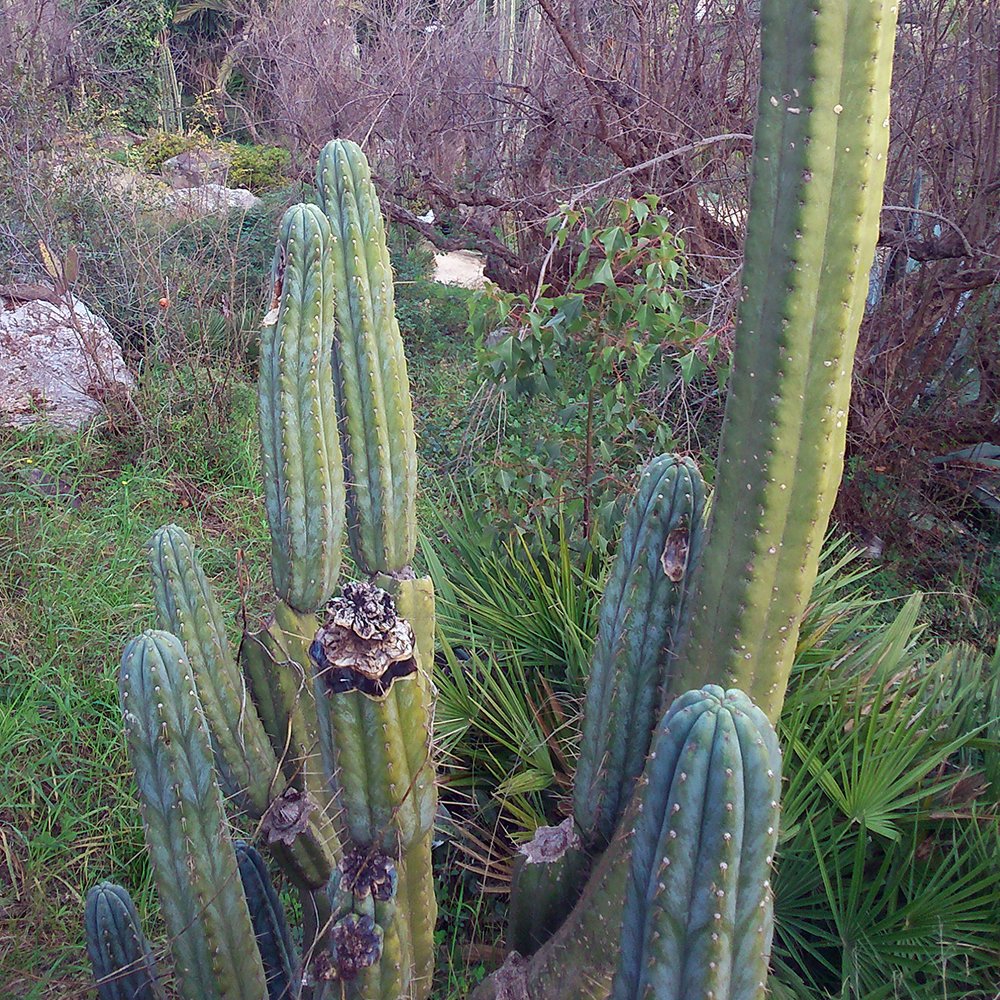
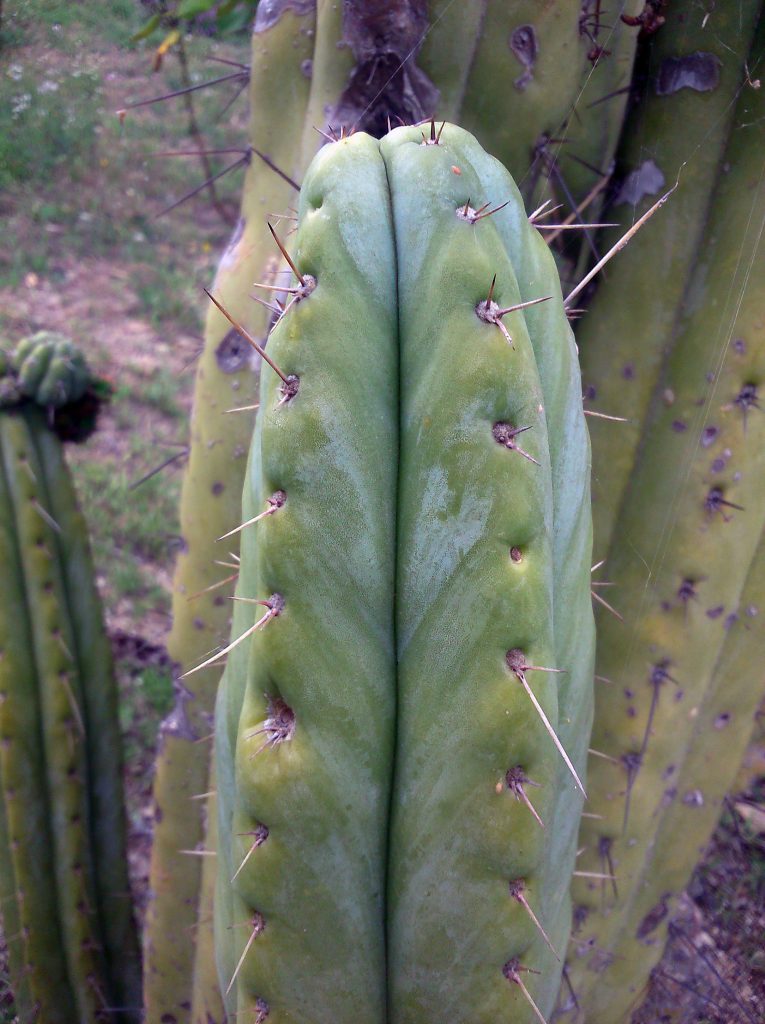
Naturally, our own attention tends to become disproportionately occupied by Trichocereus. Over different visits we have seen plants labelled, identified or remembered as material associated with T. bridgesii, T. cuzcoensis, T. pachanoi, T. peruvianus, T. santiaguensis, T. spachianus, T. terscheckii, T. validus and other forms which were not straightforward for us to identify.
That list should not be read as a current botanical inventory of the garden. It combines observations and memories accumulated across several visits, and both the collection and its labels have changed over time. Some old plants have apparently disappeared or moved, while others may have been relabelled as taxonomic treatments changed.
There have also been plants which looked suggestive of hybrid ancestry to us, although appearance alone is nowhere near sufficient to establish parentage in an old public collection. Unless a plant carries trustworthy provenance, we prefer to enjoy the speculation without quietly turning it into fact.
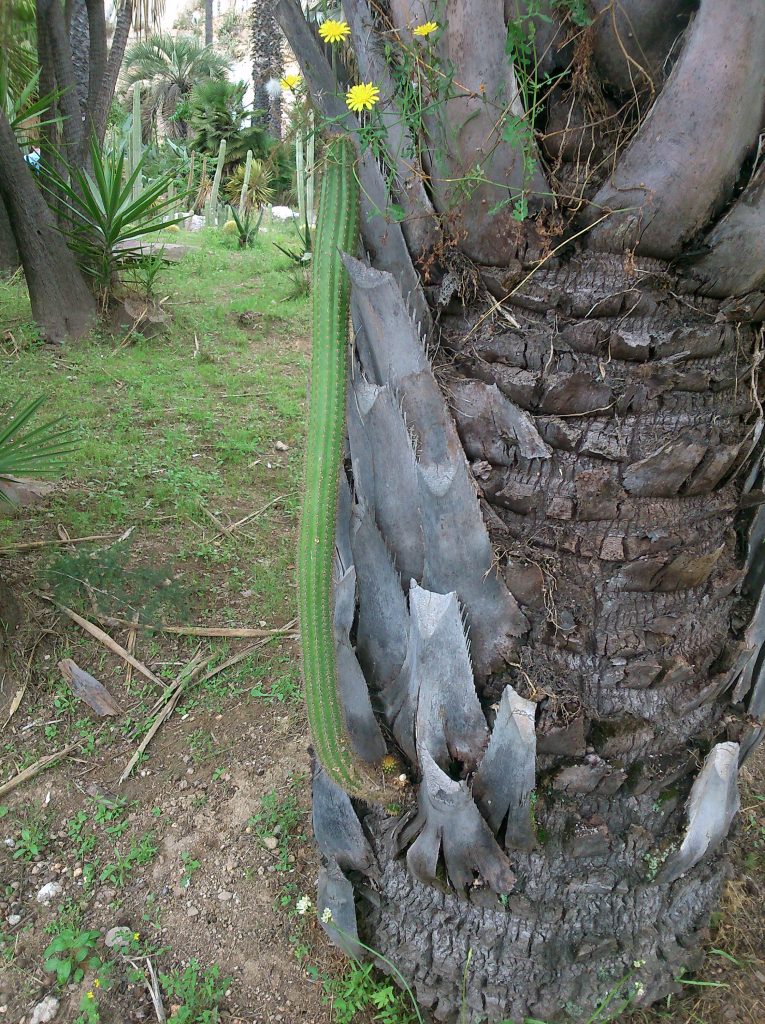
Among the stranger specimens documented during these earlier visits was a Trichocereus-like plant growing from the remains of a palm trunk some distance above ground. It was exactly the sort of horticultural oddity which makes repeated visits to an old living collection worthwhile.
We were also once told that somebody living not particularly far from us had supplied significant plant material to the gardens during their earlier history. We have never been able to verify the details sufficiently to turn that intriguing story into a firm claim, but it remains exactly the sort of provenance trail we would be delighted to investigate properly one day.
A Note on the Identifications Below
Most of the Trichocereus photographs below are deliberately captioned simply as Trichocereus species. We no longer possess all of the corresponding label photographs and notes, and several plants belong to groups whose identification from appearance alone can be extremely uncertain.
That restraint is intentional. Mature cultivated plants may differ greatly from textbook examples, old botanical-garden labels can preserve historical names, and many familiar Trichocereus names have themselves been moved, synonymised or interpreted differently by successive authors.
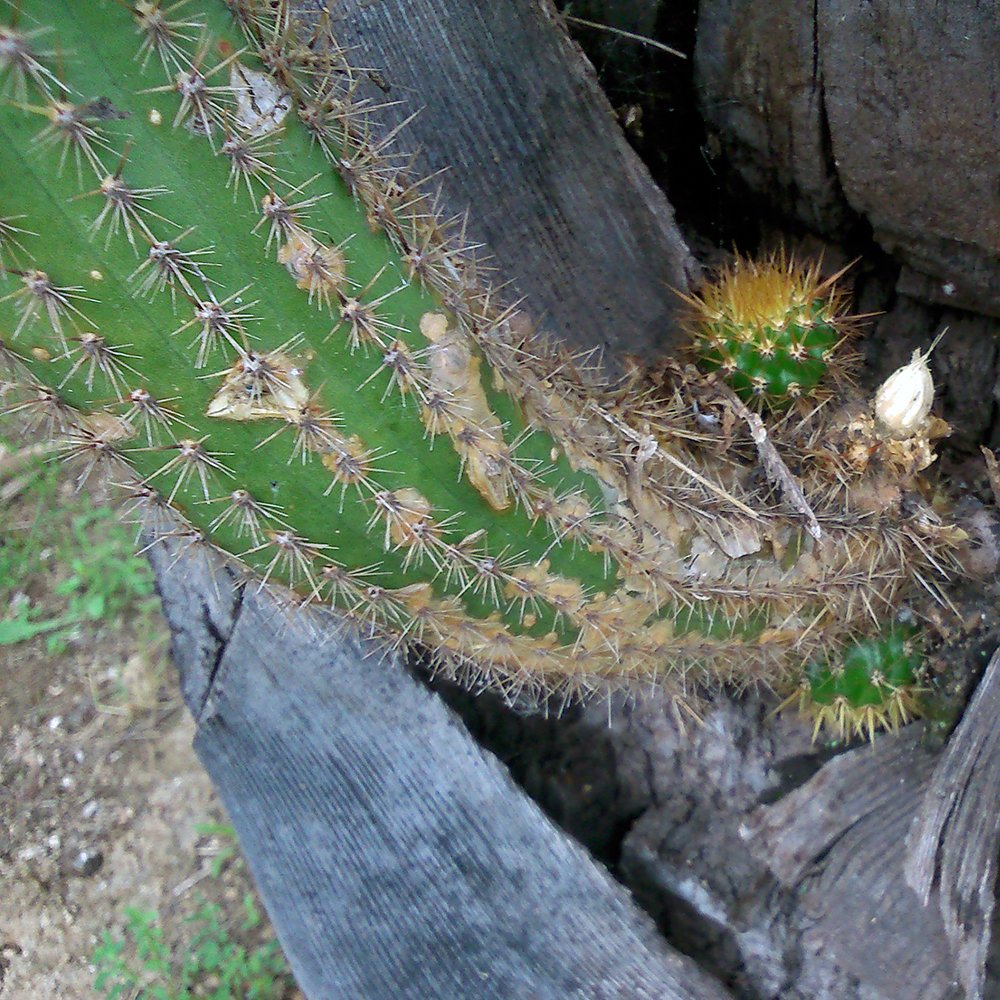
One photograph also shows extremely proliferative abnormal growth which resembles what cactus growers commonly call witches’ broom. We cannot diagnose its cause retrospectively from a photograph alone, so the revised caption describes the visible growth rather than declaring a particular disease.
Trichocereus & Related Cacti






Opuntia in the Garden
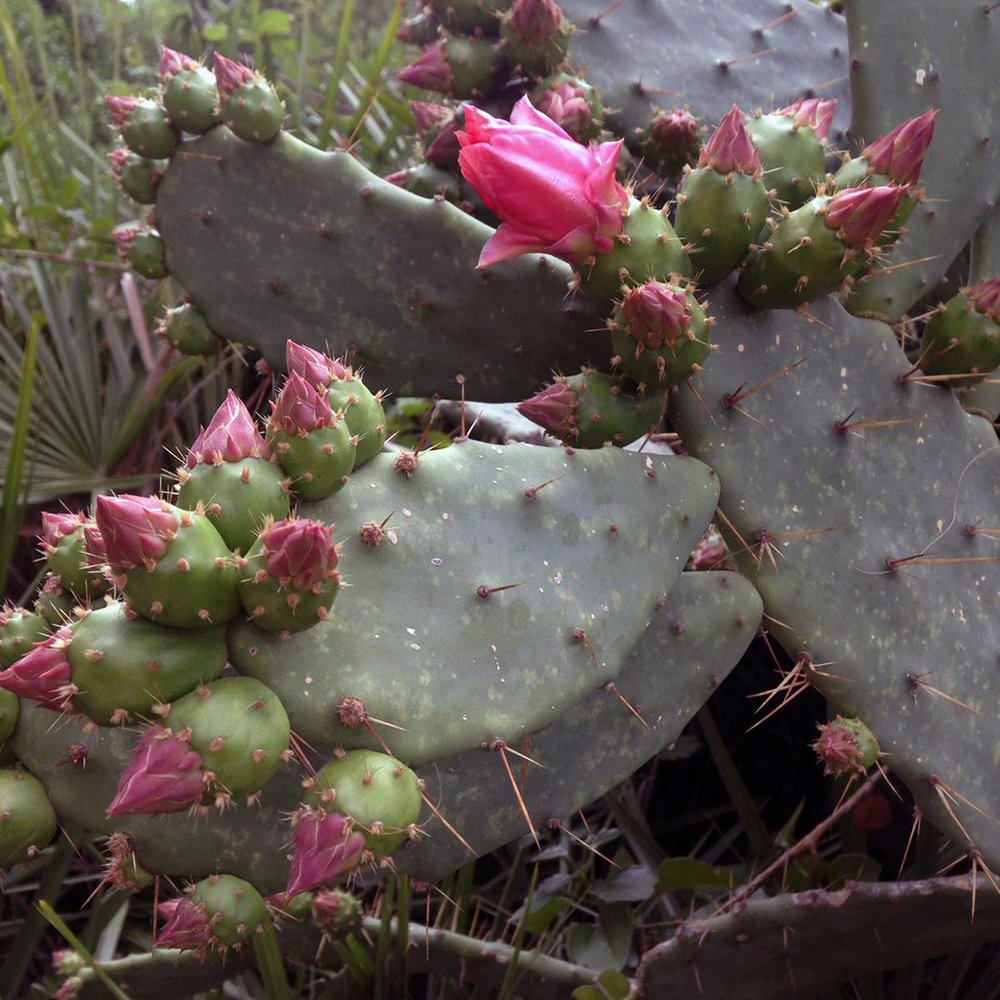
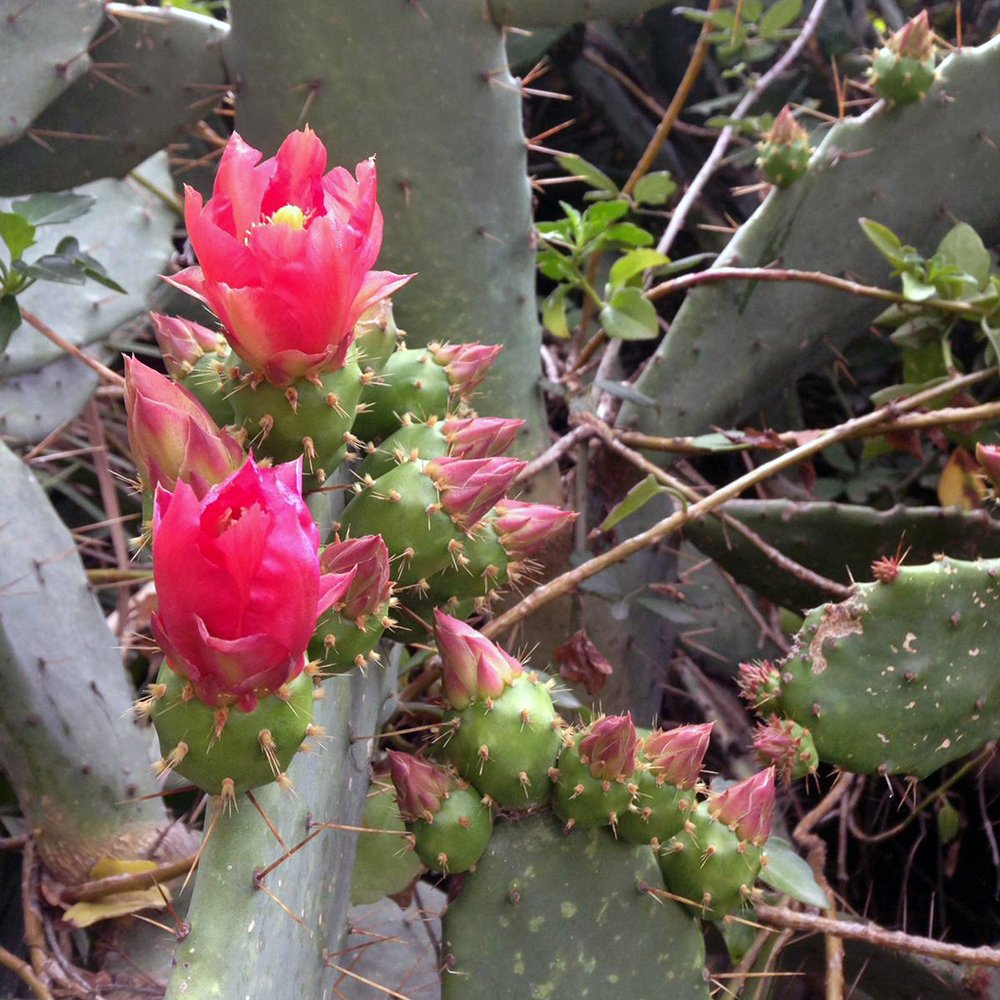
Although Trichocereus tends to monopolise our camera, the garden contains an enormous diversity of other cacti and succulent plants. These Opuntia photographs provide a small reminder of how much else there is to see, including the rather pleasing spectacle of flower buds and open blooms during visits at the right time of year.

Visiting Jardins de Mossèn Costa i Llobera
The gardens are on Montjuïc at Carretera de Miramar, 38, Barcelona, close to the port-facing side of the hill. Because public-garden opening arrangements can change, we recommend checking Barcelona City Council’s current information before making a special journey.
Allow more time than you expect. The garden rewards slow wandering, and anyone with an unhealthy interest in cactus labels can lose a considerable portion of an afternoon comparing plants, photographing old specimens and wondering whether something is genuinely unusual or whether the sun has simply been working too hard.
Montjuïc also contains several other important gardens within walking distance, making the area particularly worthwhile for anyone interested in plants, landscape design or simply escaping the denser parts of the city for a few hours.
More from Jardins de Mossèn Costa i Llobera
For a more recent look at the collection, continue to our May 2025 Jardins de Mossèn Costa i Llobera gallery. That visit includes crested Echinocactus platyacanthus, Trichocereus candicans, old hybrid material and a particularly well-documented group of plants labelled T. validus.
You can also explore our List of Botanical Gardens in Europe, browse Trichocereus from our own collection, or visit the wider Freaky Cacti Information Library.