
Cacti are often described simply as plants which survive difficult environments. In the ecosystems where they occur naturally, however, many are also participants in surprisingly complicated networks of animals, insects, fungi and other plants.
The details vary enormously between species and habitats. A giant Carnegiea gigantea in the Sonoran Desert, a clump of Copiapoa on the hyper-arid Chilean coast and a small globose cactus growing among rocks in Argentina do not perform identical ecological jobs. Some cacti provide important seasonal nectar or fruit; some become nesting structures; some create cooler refuges; some support specialised insects; and some contribute relatively little above their own immediate patch of ground.
The useful question is therefore not whether cacti are “good for biodiversity” in the abstract, but what particular cactus is doing, which organisms interact with it and how those relationships change through flowering, fruiting, growth, damage, decay and eventually death.
Cacti as Part of an Ecological Network
A living cactus can simultaneously be a food plant, pollination resource, seed source, perch, refuge, nesting structure, shade source and host to herbivores, predators and decomposers.
Those interactions are not necessarily all beneficial to the cactus. A moth larva eating fruit, an ant carrying seed, a bird taking nectar, a parasitic plant growing over a stem and a lizard sheltering in its shade are very different relationships. Ecology becomes more interesting once we stop trying to classify every organism as either a “friend” or a “pest”.
Recent work on nineteen species of Copiapoa in Chile’s Atacama Desert illustrates this particularly well. Researchers recorded flower visitors, fruit and seed consumers, ants moving seeds, insectivorous birds, parasitic and climbing plants, lichens and ectothermic vertebrates using the cacti as thermal refuges. In an exceptionally resource-poor environment, individual cacti can become concentrated centres of biological activity.
Cactus Flowers & Pollinators
Cactus flowers support a wide range of pollinators. Across the family, documented pollinator groups include bees, birds, moths, bats and other insects. Bees are particularly widespread, while bird and bat pollination become important in many tropical and subtropical species.
It is tempting to assign every flower to one neat pollination category from its colour and shape, but real systems are frequently less tidy. A flower which looks adapted to birds can still receive useful visits from bees, while a nocturnal columnar-cactus flower associated with bats may also be pollinated by moths or daytime visitors.
A review of published cactus pollination studies covering 148 species found bees, birds, moths and bats to be the most frequently recorded pollinator guilds. That diversity makes broad statements such as “cacti are bat-pollinated” or “red cactus flowers are hummingbird-pollinated” much too simple for the family as a whole.

The Saguaro Example
The saguaro, Carnegiea gigantea, provides one of the best-known examples. Its flowers are visited and pollinated by nectar-feeding bats, birds and insects. Individual flowers open for only a relatively short period, so successful animal visitation has direct consequences for fruit and seed production.
Long-nosed bats visit saguaro and other columnar-cactus flowers for nectar and pollen, transferring pollen as they move between flowers. Birds including white-winged doves also visit the flowers, while bees contribute to pollination during daylight.
The precise importance of each pollinator can vary with location, season and flowering phenology. This is a useful reminder that pollination is an ecological process rather than a permanent label attached to a plant name.
Cactus Fruits as Food & Seed-Dispersal Systems
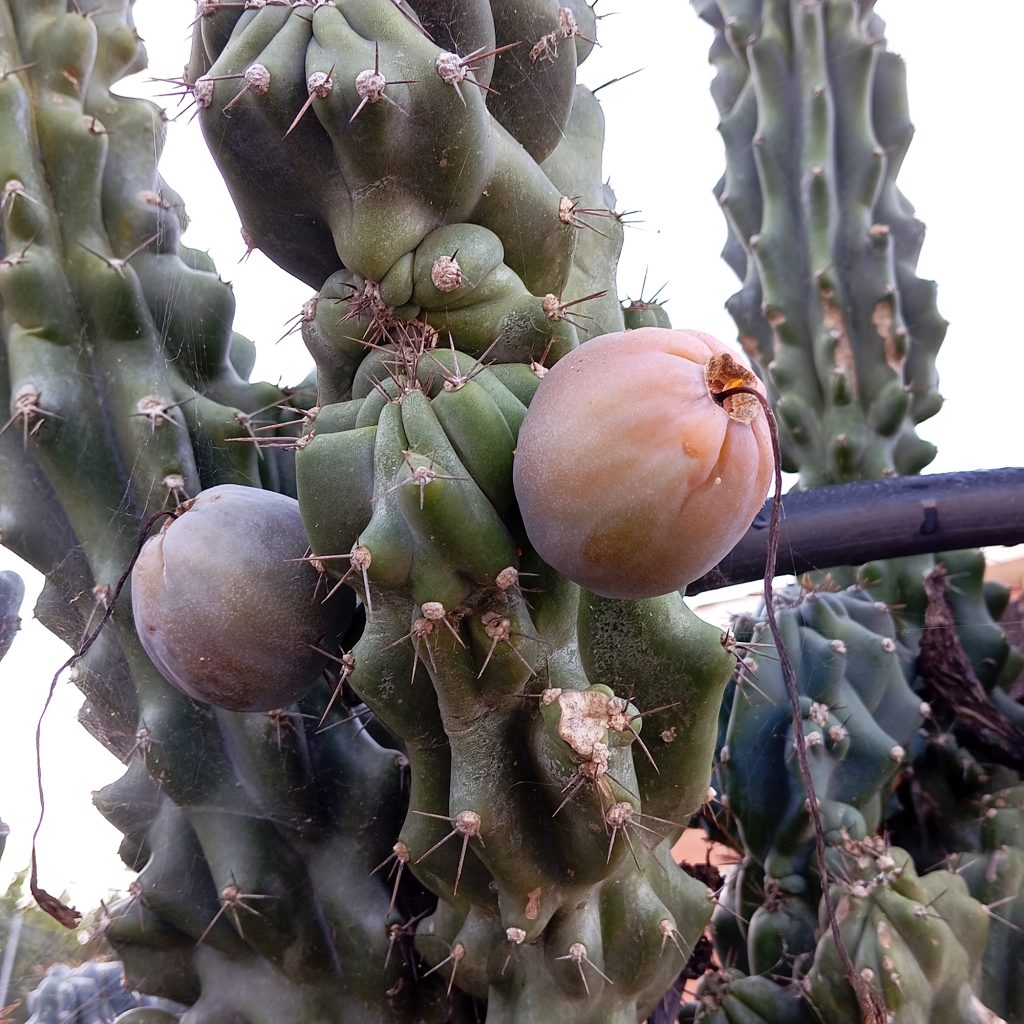
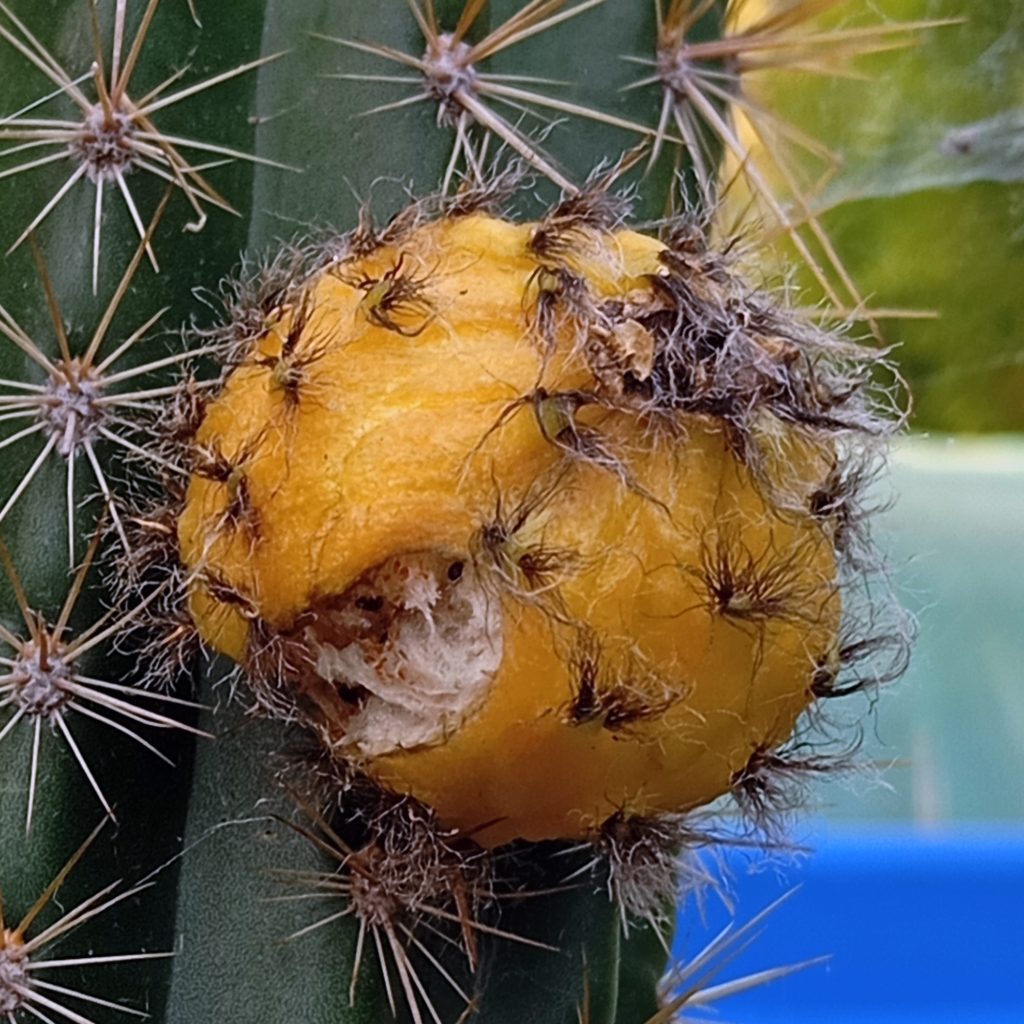
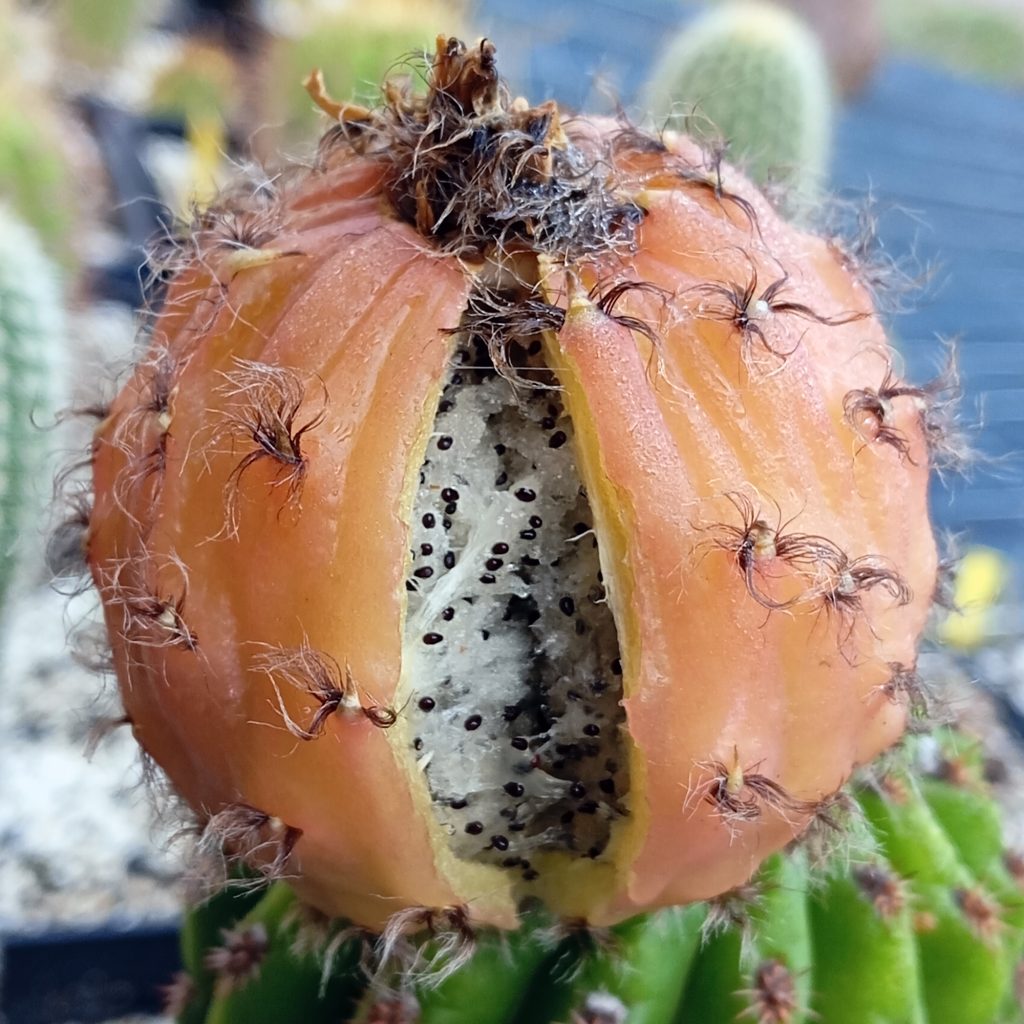
Many cacti produce fleshy fruits which are eaten by birds, bats, reptiles and mammals. For the animal, the attraction may be sugars, nutrients or moisture. For the cactus, an animal which carries or passes viable seeds away from the parent plant can become a dispersal agent.
This relationship is not automatically mutualistic. The ecological outcome depends on what happens to the seed.
Some animals swallow seeds and later deposit them intact elsewhere. Others destroy most of the seeds while feeding. A 2025 study of the columnar cactus Pilosocereus leucocephalus, for example, found that birds and a fruit-eating bat passed substantial numbers of intact seeds, while the rodent tested destroyed all of the seeds recovered from its faeces.
“Something eats the fruit” therefore does not tell us whether that animal is an effective seed disperser, a seed predator or something between the two.

Cacti as Nesting Sites
Large columnar cacti can become substantial pieces of habitat in their own right.
Saguaros are perhaps the clearest example. Gila woodpeckers and gilded flickers excavate nest cavities within their stems. The cactus responds around the wound by forming hardened tissue, creating the familiar internal structure sometimes called a saguaro boot.
Once the original excavator has left, abandoned cavities can be occupied by other cavity-nesting birds including elf owls, purple martins and various small passerines. The same cactus can therefore provide nesting opportunities to several species over many years.
Larger birds use saguaros differently. Hawks and other birds may build stick nests among the arms or use the plant as an elevated hunting or observation perch.
Chollas and other densely branched cacti can also provide physically protected sites for bird nests. Spines which discourage a mammalian predator from climbing into a plant can make the same plant quite attractive to a bird capable of approaching it from the air.
Shade, Temperature & Microhabitats
A cactus also changes the physical environment immediately around itself.
Its stem can cast shade, interrupt wind, alter surface temperatures and create crevices and sheltered spaces which differ from exposed ground only a short distance away. In extremely open environments, those small differences can matter to animals trying to avoid lethal daytime heat or cold night-time conditions.
Thermal imaging of wild Copiapoa in the Atacama has shown animals using cactus-associated microhabitats as thermal refuges during different parts of the day and night. The same study documented lichens, climbing plants and parasitic plants using the cacti themselves as substrate.
A saguaro nest cavity provides another kind of modified microclimate. The surrounding cactus tissue insulates the cavity and can buffer the occupant from some of the temperature extremes outside.
Insects Living on, in & Around Cacti
Cacti support much more than their obvious pollinators.
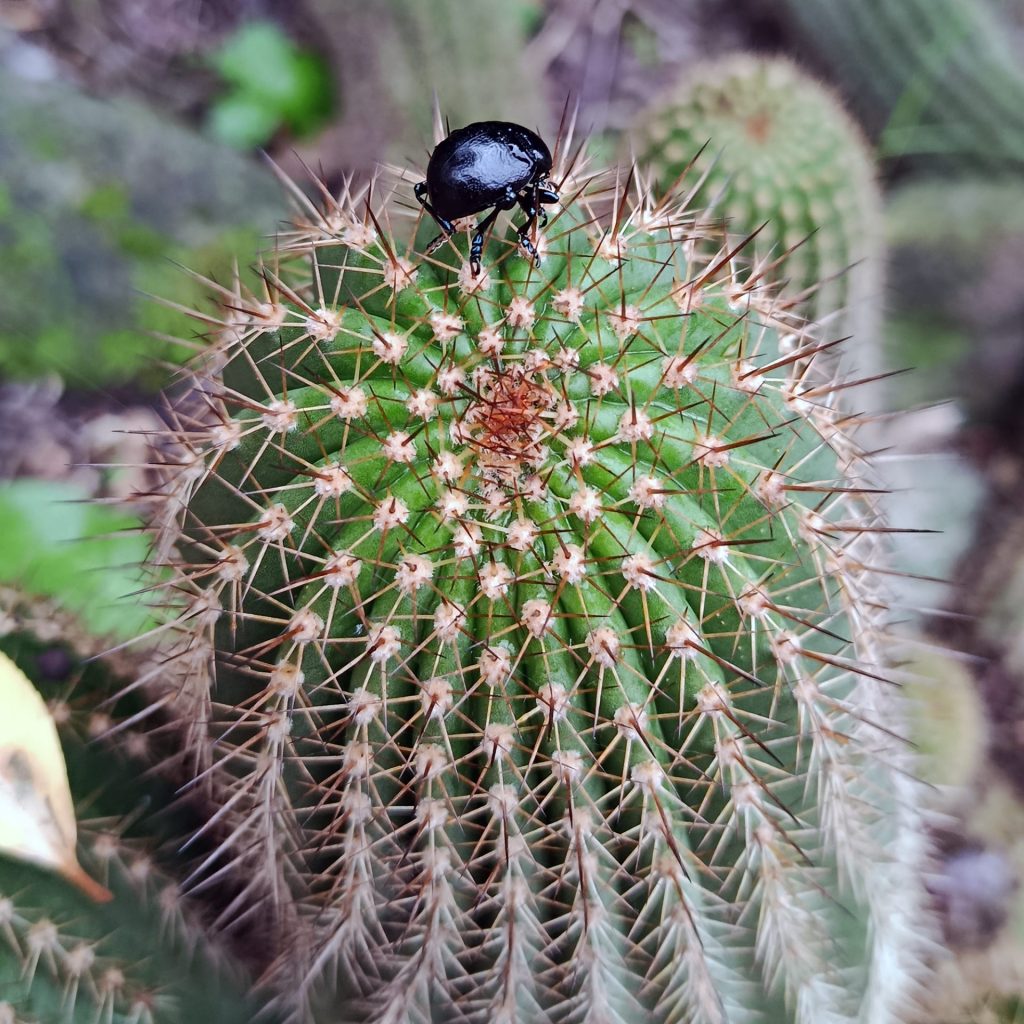
Flowers can support nectar and pollen feeders. Fruits support fruit-feeding insects and the predators or parasitoids which attack them. Stems can host sap-feeding insects, beetles and other herbivores. Predatory insects and spiders can in turn exploit those populations.
Even a cactus which has begun to rot remains ecologically active. Decaying cactus tissue supports specialised communities of flies, beetles and other organisms able to exploit an unusually wet and nutrient-rich resource surrounded by much drier habitat.
A substantial review of insects associated with decaying cacti describes these rotting stems as distinctive microhabitats supporting diverse decomposer communities. Death is therefore not the precise point at which a cactus stops participating in the ecosystem.
Predators Use Cacti Too
Where insects gather, their predators tend not to be far behind.
Spiders, predatory beetles, birds, lizards and other insectivores may forage around cactus flowers, fruits, stems and accumulated debris. Some of these relationships become multi-layered: a herbivorous insect may feed inside cactus fruit while a bird or predatory insect searches for the herbivore.
This is one reason a cactus should not be viewed only through the organisms feeding directly on it. The plant can influence animals several trophic levels away.
Cacti & Nurse Plants
The relationship between cacti and microclimate also works in the opposite direction.
Many young cacti establish preferentially beneath shrubs, trees, grasses or beside rocks which protect seedlings from extreme solar radiation, temperature and sometimes herbivory. These protective neighbours are usually described as nurse plants or nurse structures.
Saguaro establishment beneath nurse plants is a classic example, but comparable relationships occur in other North and South American cactus communities. Recent experimental work with the threatened Mexican cactus Coryphantha maiz-tablasensis found dramatically greater juvenile survival beneath a mesquite nurse plant under simulated warming than in exposed ground.
The relationship is not universal. Some cactus species are only facultatively associated with nurses, some respond more strongly to rocks than shrubs, and an association which helps a seedling can become neutral or competitive as the cactus grows.
This matters because “cacti create beneficial microclimates” is only half the story. Many cacti survive their most vulnerable years precisely because another plant created one first.
Do Cacti Provide Water for Wildlife?
Sometimes, but this claim needs considerably more qualification than it usually receives.
Cactus stems can store enormous quantities of water as part of the plant’s drought-survival strategy. That stored water is not automatically an accessible drinking reservoir for wildlife.
Some animals obtain moisture by eating cactus fruits or succulent tissues, particularly during dry periods. Saguaro fruits, for example, provide both energy and moisture during the Sonoran summer, and mammals may consume cactus tissues when other resources are scarce.
That is different from saying that cacti generally “provide water to the ecosystem”. Water stored inside living tissue remains physiologically controlled by the plant until something eats, damages or decomposes that tissue.
Cacti, Soil & Erosion
Cacti can influence soil stability, but this is another subject where broad claims need context.
Established plants intercept rainfall, reduce some surface exposure and contribute roots and organic material to soil structure. Dense plantings of prickly pears have also been used deliberately in arid and semi-arid agriculture for contour planting, land rehabilitation and erosion reduction.
There is good evidence for such uses of Opuntia, particularly O. ficus-indica, in managed dryland systems around the Mediterranean and elsewhere.
That does not mean planting cactus is a universal erosion-control prescription. Site, species, rainfall, soil, surrounding vegetation and invasion risk all matter, and replacing a functioning native plant community with dense cactus would hardly constitute ecological restoration.
Not All Cacti Live in Deserts
The ecological shorthand “cactus equals desert” also obscures a substantial part of the family.
Cactaceae includes species from dry grasslands, rocky Andean slopes, coastal fog deserts, tropical and subtropical forests and other habitats. Epiphytic cacti such as Rhipsalis, Schlumbergera and related genera occupy ecological settings very different from saguaros or Copiapoa.
The animals, fungi, neighbouring plants and environmental processes associated with them differ accordingly. There is no single “cactus ecosystem”.
Native Cacti & Invasive Cacti Are Not Ecologically Equivalent
Perhaps the most important qualification to any discussion of cactus wildlife is that a cactus which performs valuable ecological functions within its native community can become damaging when introduced elsewhere.
Several opuntioid cacti have become serious invasive plants outside the Americas. Dense invasive stands can displace native vegetation, alter habitat structure, restrict animal movement and injure wildlife and livestock with spines and glochids.
Opuntia stricta, for example, has caused major ecological and pastoral problems in parts of Africa and historically formed enormous infestations in Australia.
A plant being drought-tolerant, useful to wildlife somewhere, or capable of stabilising soil does not make introducing it into an unrelated ecosystem environmentally beneficial.
Any restoration or wildlife planting should use species appropriate to the local ecosystem and comply with local invasive-species and conservation rules.
Wild Cacti Are More Than Individual Plants
The ecological relationships described above matter when cactus populations decline.
A mature cactus removed from habitat is not merely one fewer specimen. Depending on the species, it may also mean fewer flowers for pollinators, fewer fruits for seed dispersers, one less nesting structure, the loss of a thermal refuge and the disappearance of a long-established collection of insects, lichens or other organisms associated with that plant.
The first global assessment of the cactus family published through the IUCN process found 31% of assessed cactus species threatened with extinction. Habitat loss and conversion, livestock, agriculture and collection for horticultural trade were among the important pressures identified.
That assessment dates from 2015 rather than representing a newly calculated 2026 family-wide percentage, but it remains the principal comprehensive global cactus assessment cited by the IUCN Cactus and Succulent Plants Specialist Group.
For collectors, this is one of the strongest arguments for documented cultivated propagation. A nursery-grown cactus can preserve genetics and satisfy horticultural demand without removing a long-lived plant and its ecological relationships from the landscape in which they developed.
Cacti & Wildlife in Cultivation
A cultivated cactus collection can develop its own, much smaller ecological network.
Flowers may attract native bees, hoverflies, moths and other insects. Spiders establish webs between pots and stems. Predatory insects hunt pests. Birds investigate fruit, insects and sheltered structures. Lizards, amphibians and other animals may use the warm, dry and shaded spaces created around benches, walls and containers.
We document some of those encounters in our Cactus Wildlife records, including predators, visitors, herbivores and animals which simply decided that the cactus collection was a convenient place to live.
A nursery is not a substitute for native habitat, and the organisms visiting a cultivated plant in Europe are obviously not the community surrounding the same species in Bolivia, Argentina, Mexico or Chile. The interactions are nevertheless worth observing. They are also useful reminders that a greenhouse or garden is never quite as biologically isolated as its labels and pots suggest.
Encouraging Wildlife Around a Cactus Collection
If wildlife is welcome around a cultivated collection, several fairly ordinary practices are more useful than attempting to manufacture an artificial desert ecosystem.
- Allow flowering plants to flower. Cactus flowers and other suitable garden plants can provide nectar and pollen to local insects.
- Grow a diversity of plants. A garden containing only cacti provides a narrower range of resources than one containing locally appropriate flowering plants, shrubs and ground cover as well.
- Avoid unnecessary broad-spectrum pesticide use. Treatments which kill a pest can also remove predatory insects and other non-target visitors.
- Retain safe refuges where practical. Walls, stones, undisturbed corners and vegetation can provide shelter for insects, reptiles and other small animals.
- Use local native plants where appropriate. They usually have far longer ecological histories with local pollinators and herbivores than imported ornamental cacti do.
- Do not release or allow invasive cacti to escape. Responsible cultivation includes knowing whether a species poses a local environmental risk.
- Observe before intervening. Not every insect on a cactus is eating it, and not every spider between the pots requires eviction.
What Cacti Actually Contribute
There is no single ecological service performed by every cactus. Across the family, however, documented roles include:
- nectar and pollen for bees, birds, bats, moths and other flower visitors;
- fruit and seeds for birds, mammals, reptiles and insects;
- seed dispersal through some fruit-eating animals;
- nest cavities, nest supports and elevated perches;
- shade and thermal refuges;
- habitat for herbivorous, predatory and decomposer insects;
- substrate for lichens, climbing plants and other organisms in some habitats;
- moisture and nutrients when fruits or tissues are consumed;
- changes to local soil, shade and surface conditions; and
- in appropriate managed systems, contributions to dryland rehabilitation and erosion control.
The interesting part is not that cacti are universally “important to wildlife”. It is the extraordinary number of different relationships which have evolved around particular cactus species in particular places.
Related Freaky Cacti References
For a broader look at human, ecological and horticultural uses of the family, see What Are Cacti Useful For? Food, Ecology, Agriculture & Other Uses.
For cactus structure and the adaptations behind stems, roots, areoles, spines, flowers and fruit, see Cacti Morphology: The Key Parts of a Cactus.
For our own observations of animals living around the collection, browse Cactus Wildlife.
Sources & Further Reading
- U.S. National Park Service – Saguaro: wildlife interactions and reproduction
- U.S. National Park Service – Bats of Saguaro National Park
- Gorostiague P, Ollerton J & Ortega-Baes P – Latitudinal gradients in biotic interactions: are cactus pollination systems more specialised in the tropics?
- Gorostiague P & Ortega-Baes P – How specialised is bird pollination in the Cactaceae?
- Effect of birds and mammals on seed integrity and germination in the columnar cactus Pilosocereus leucocephalus
- Copiapoa cacti as multitrophic interaction hubs and thermal refugia in the hyper-arid Atacama Desert
- A review of the entomofauna associated with decaying cacti in New World deserts
- Plant facilitation in extreme environments: the distribution of saguaro cacti beneath nurse plants
- Do nurse plants enhance cactus survival under global warming? Experimental evidence from Coryphantha maiz-tablasensis
- The role of Opuntia in erosion control, land reclamation and rehabilitation in the Mediterranean Basin
- IUCN – Global Cactus Assessment and threats to wild cactus populations